KOTH Réacteurs
King of the Hill mode for three teams of 4-5 players: reactor capture, convoy escort, cash economy and square root scoring.
Mini GDD of a UEFN mode (not produced), last year school project inspired by Wardogs
[ TL;DR ]
- Role
- Game Designer (all roles)
- Design problem
- Design a three-team mode where a lead in score never turns into domination: reward performance without condemning the teams behind, on a realistic 30-day scope in UEFN.
- 3 key decisions
- A convoy to escort instead of a carrier, launchable from 25 % charge: leave early and light or wait and convoy heavy, with a square root score that keeps both choices viable.
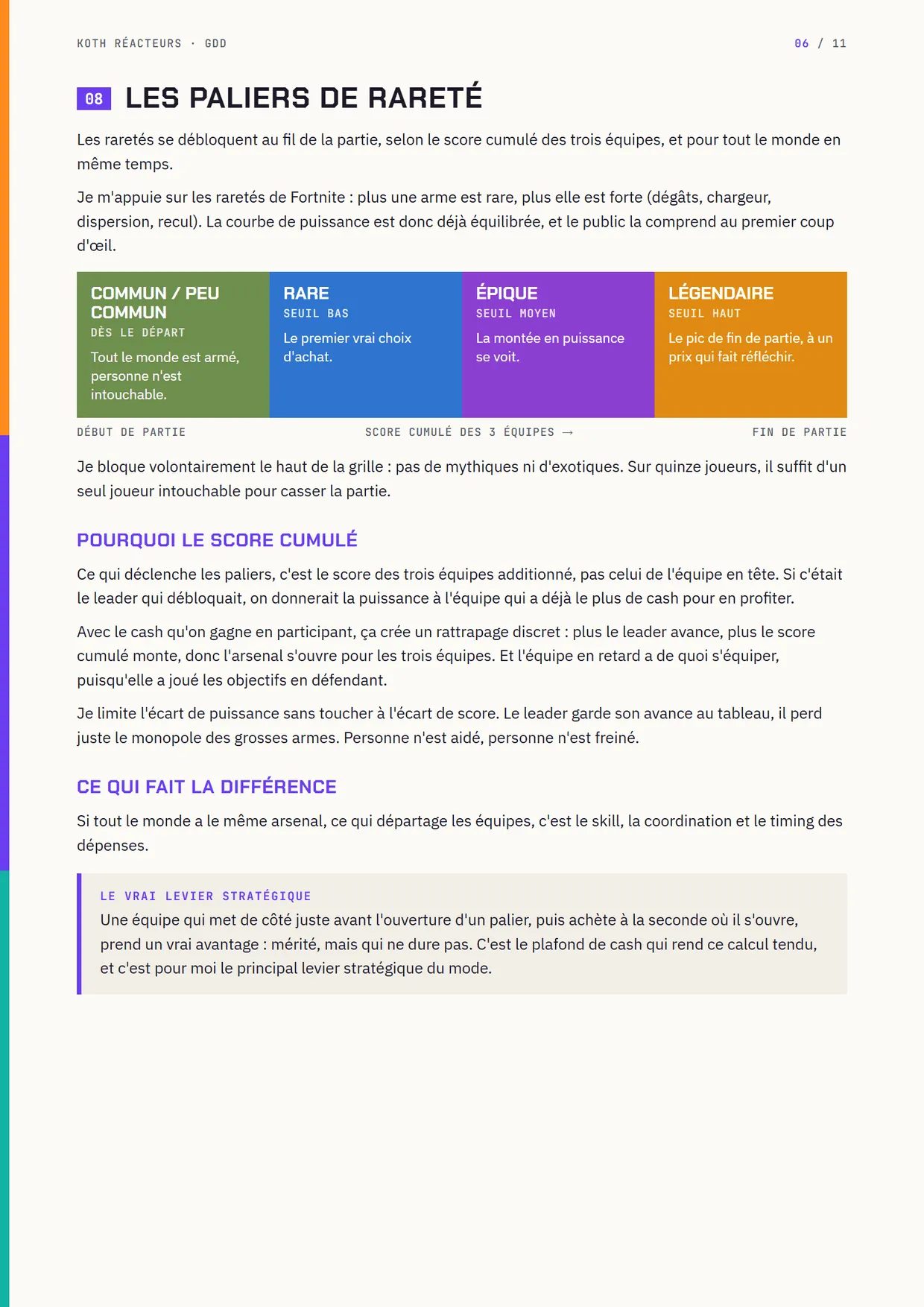
- Weapon tiers unlocked by the combined score of the three teams, not the leader's: the arsenal evens out and the timing of spending makes the difference.
- Cash earned through participation, and capped: playing the objectives pays even when losing, and the cap turns wealth into pressure to spend.
- Result
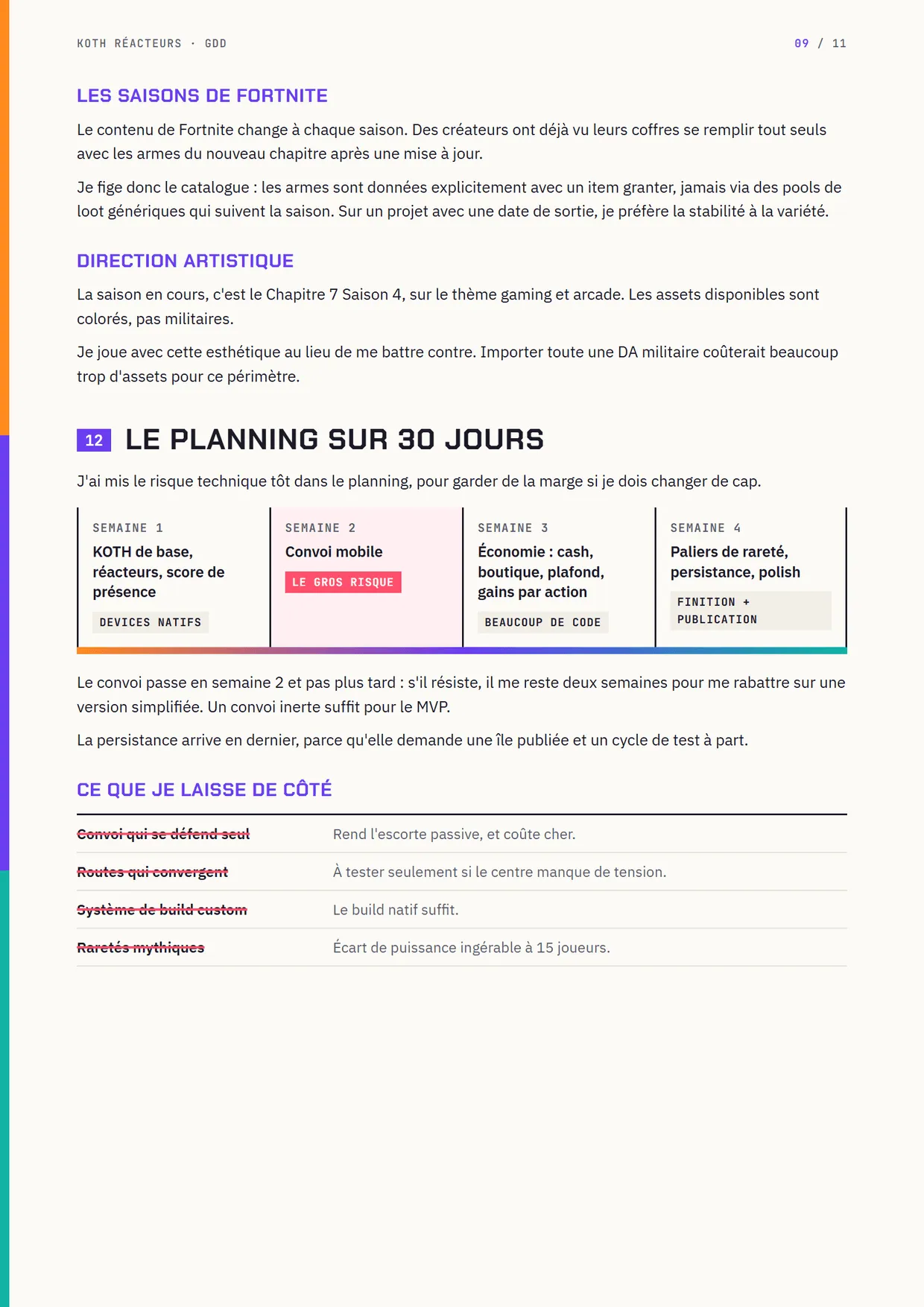
- An 11-page mini GDD ready for production: starting values in numbers, feasibility in UEFN devices and Verse, and the main risk (the convoy) placed in week 2 of the schedule. Project not produced.
Original document in French
Context
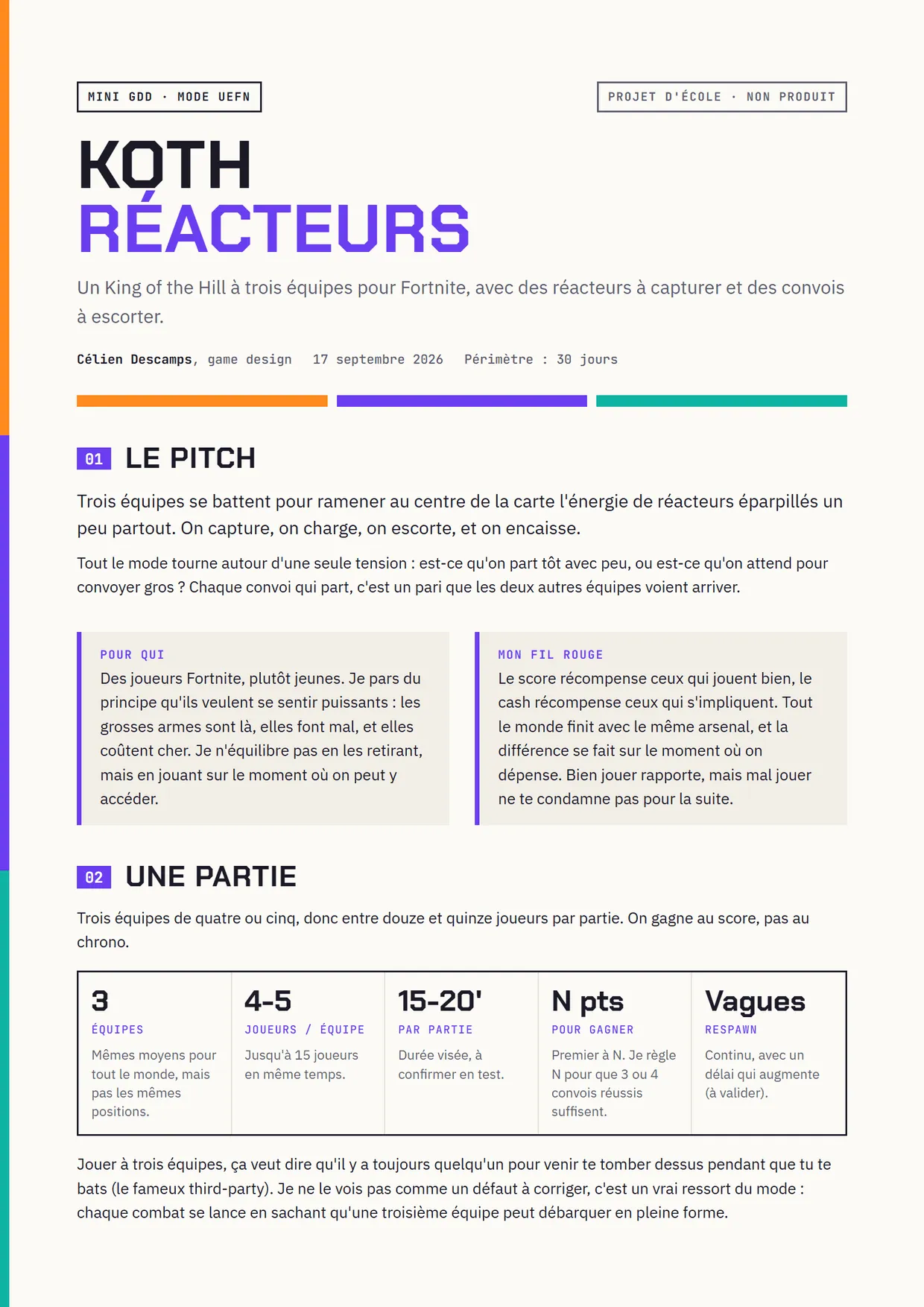
KOTH Réacteurs (“reactors” in French) is an 11-page mini GDD, written solo for a UEFN (Fortnite) mode inspired by Wardogs, as part of a last year school project. The mode was not produced: the document is meant as a base ready to start, on a 30-day scope.
Design intentions
A simple tension: leave early with little, or wait and convoy big. The target audience, rather young Fortnite players, likes the satisfaction of power. So the big weapons exist, but the balance comes from the pace of access, not from taking things away.
Guideline: the score rewards performance, cash rewards engagement, the arsenal evens out for everyone, and the timing of spending makes the difference. Playing well pays, playing badly never condemns you.
Key systems
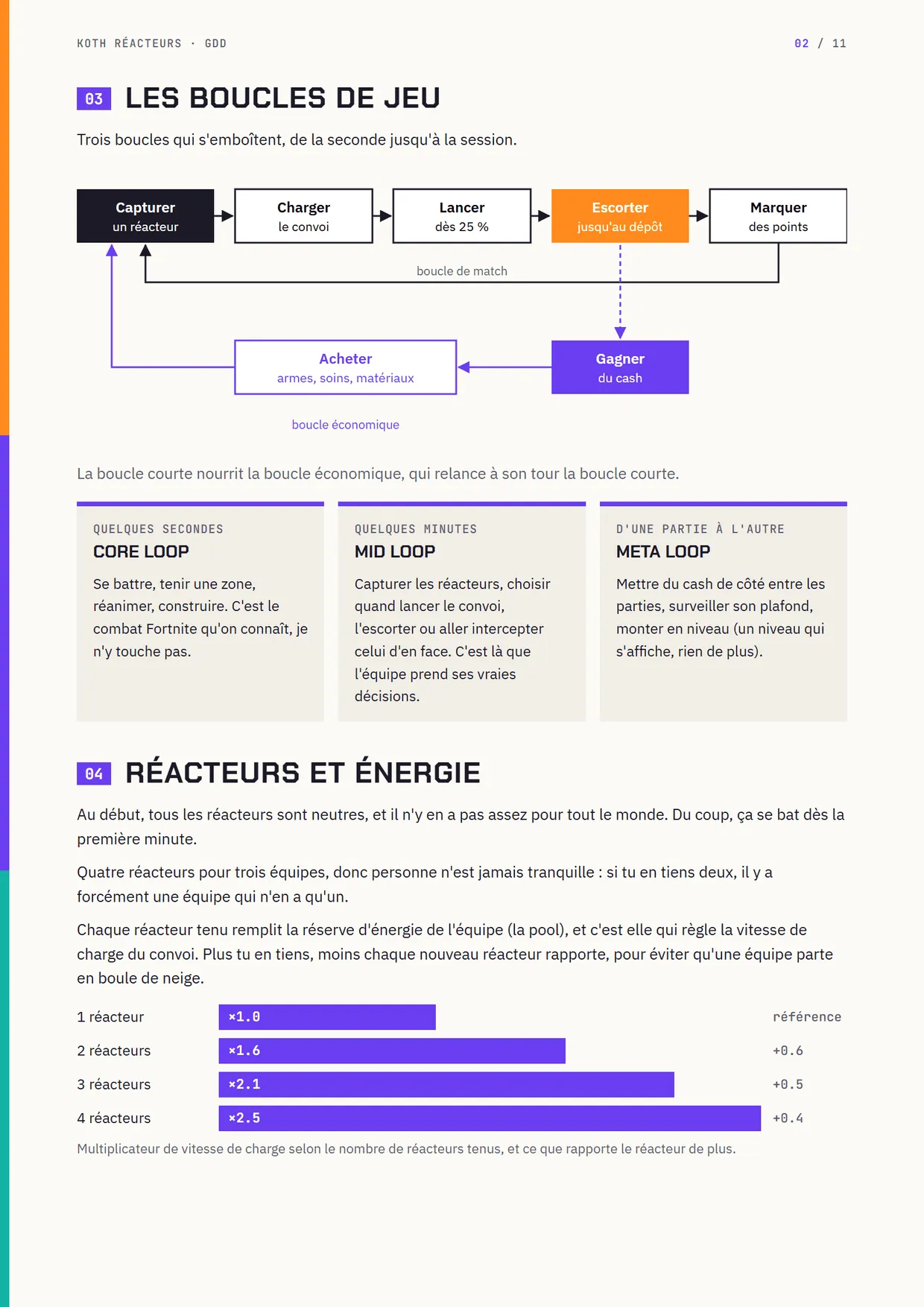
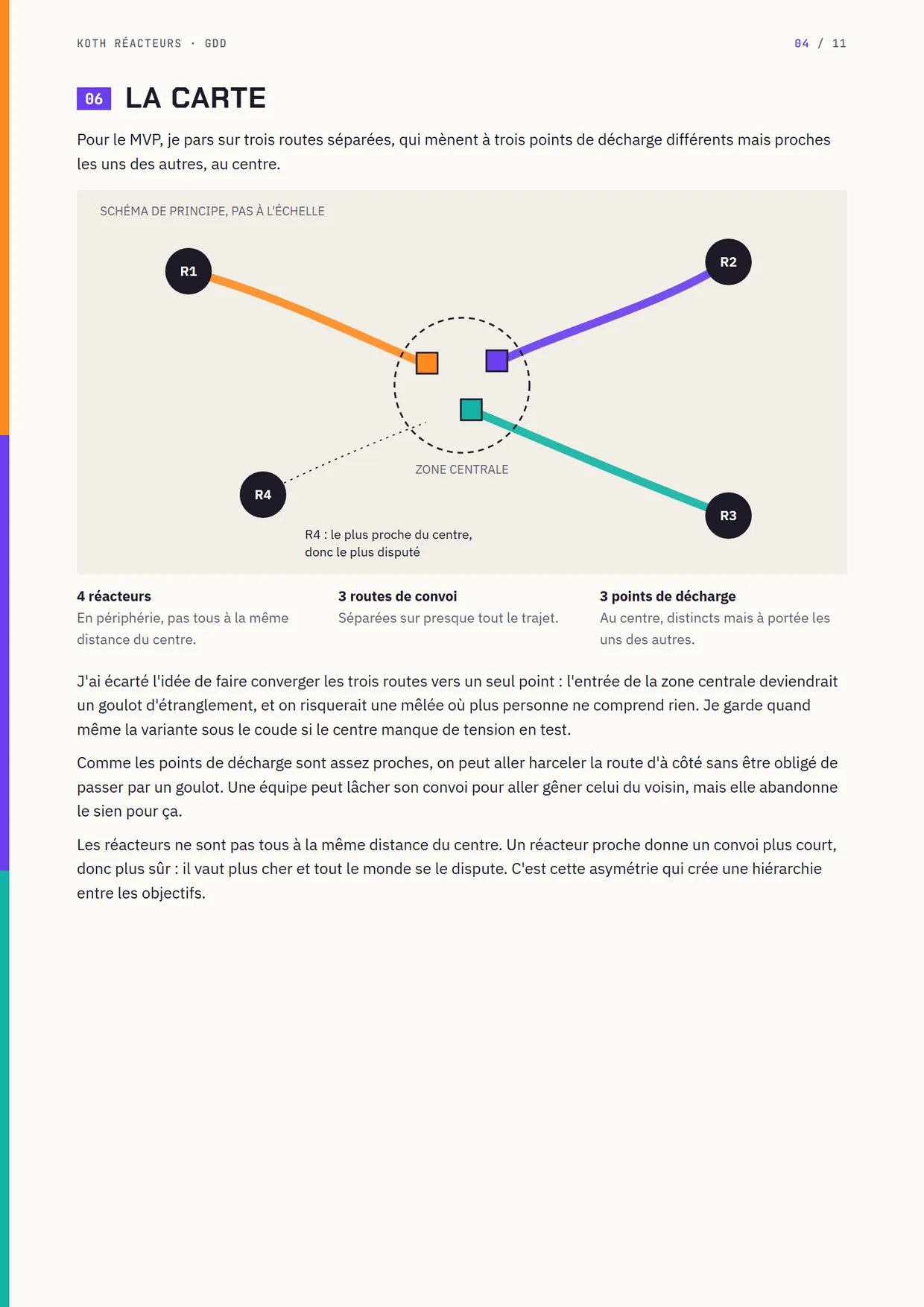
- Three teams, four reactors: the scarcity forces conflict from the first minute, and the constant third-party is assumed as a design spring. The yield of held reactors is decreasing, to avoid the snowball effect.
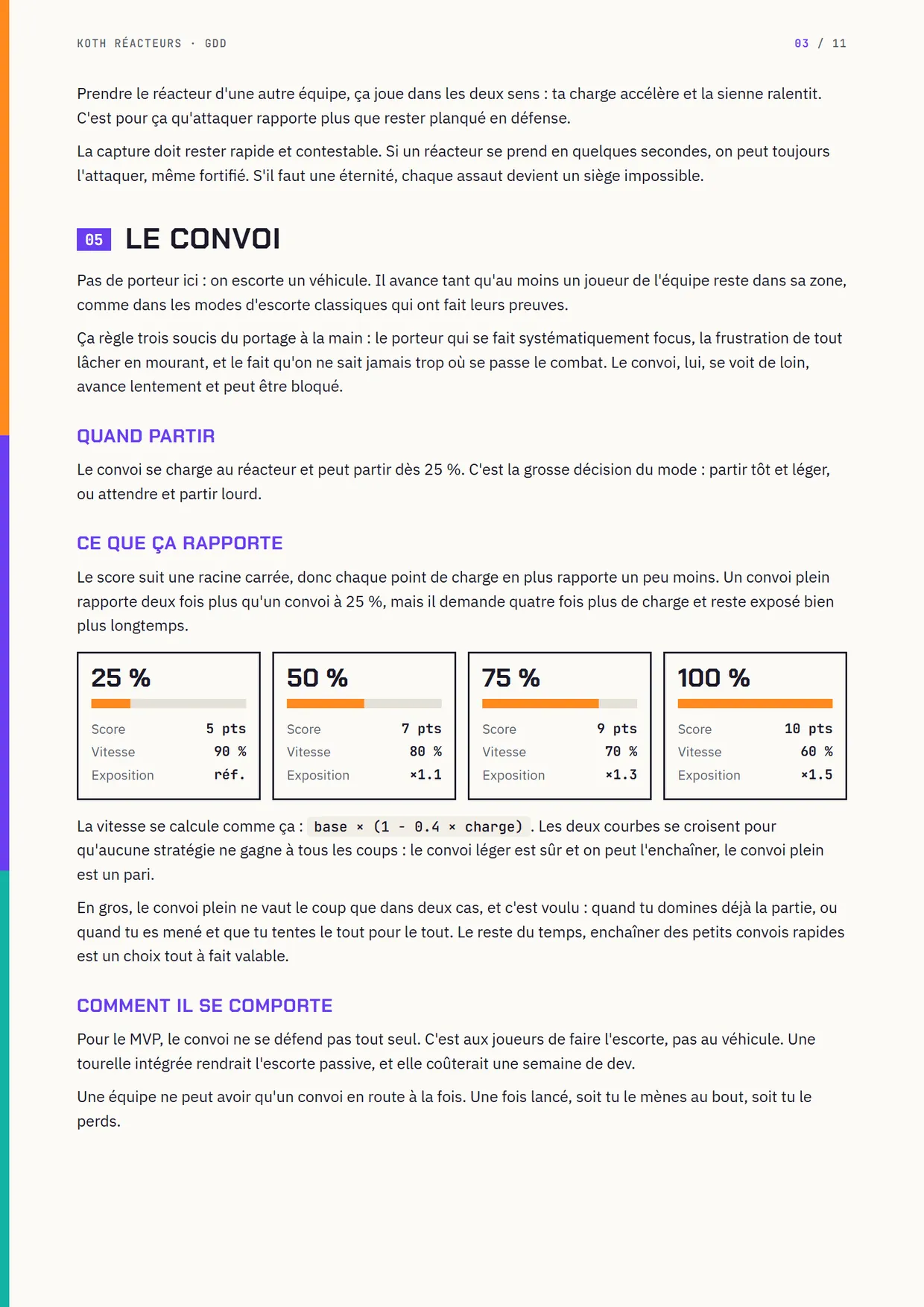
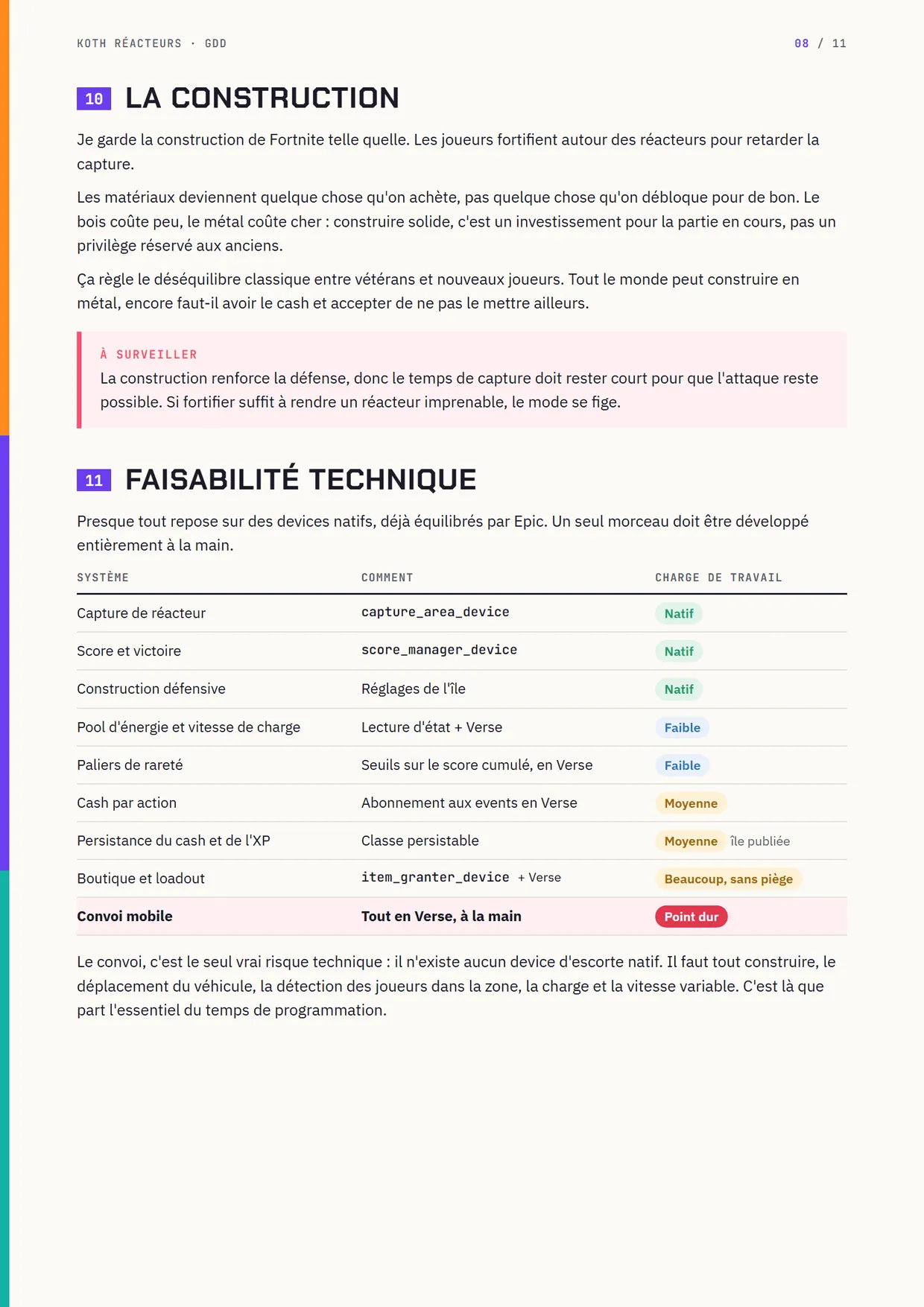
- The convoy: an escorted vehicle replaces the single carrier, less punishing and more readable. With a square root score and a speed that drops with the load, the light convoy is safe and the full convoy is a bet.
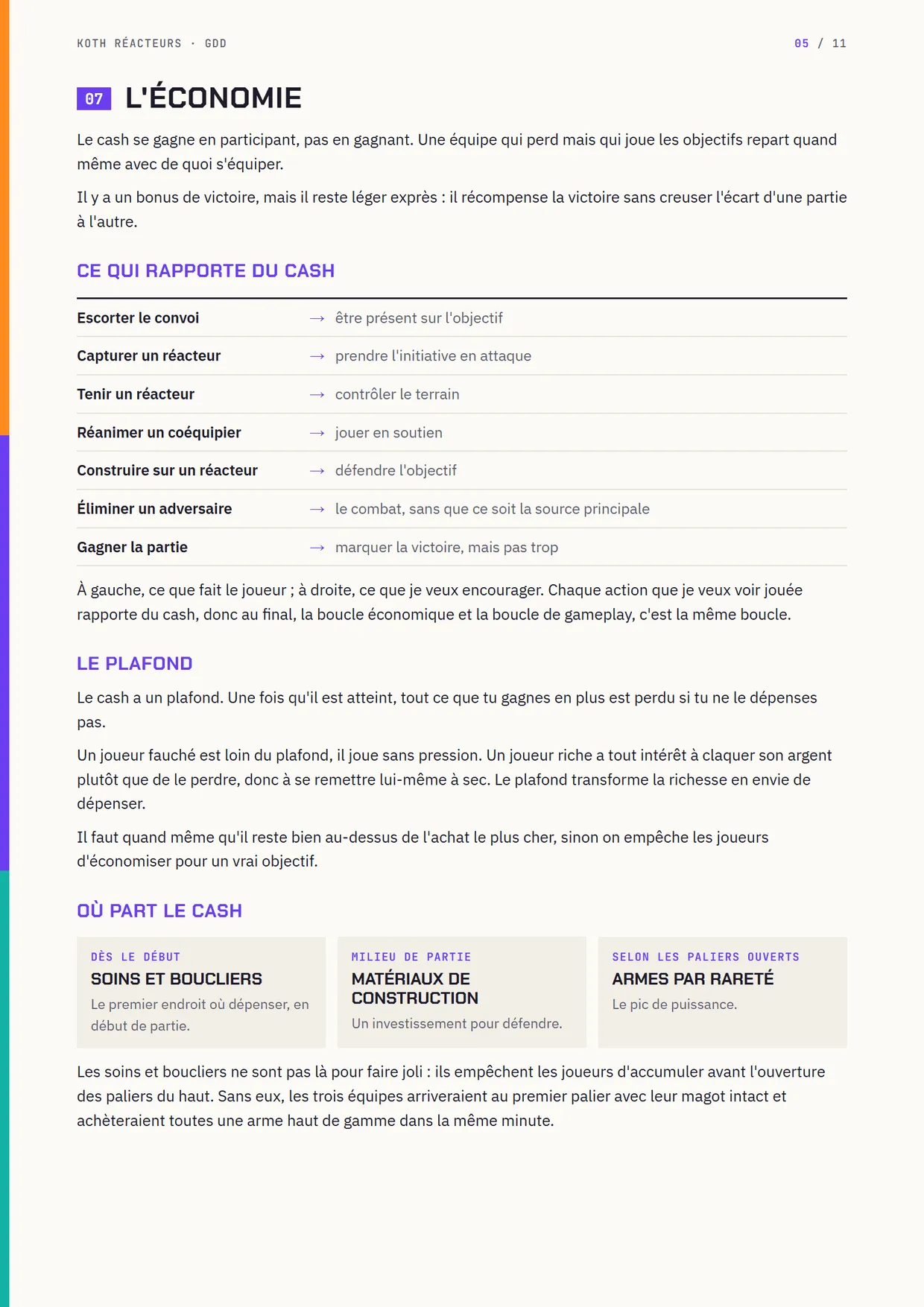
- The economy: every action we want to see played gives cash (escort, capture, revive…). Cash is capped to push spending, and heals and shields are spending sinks early in the match.
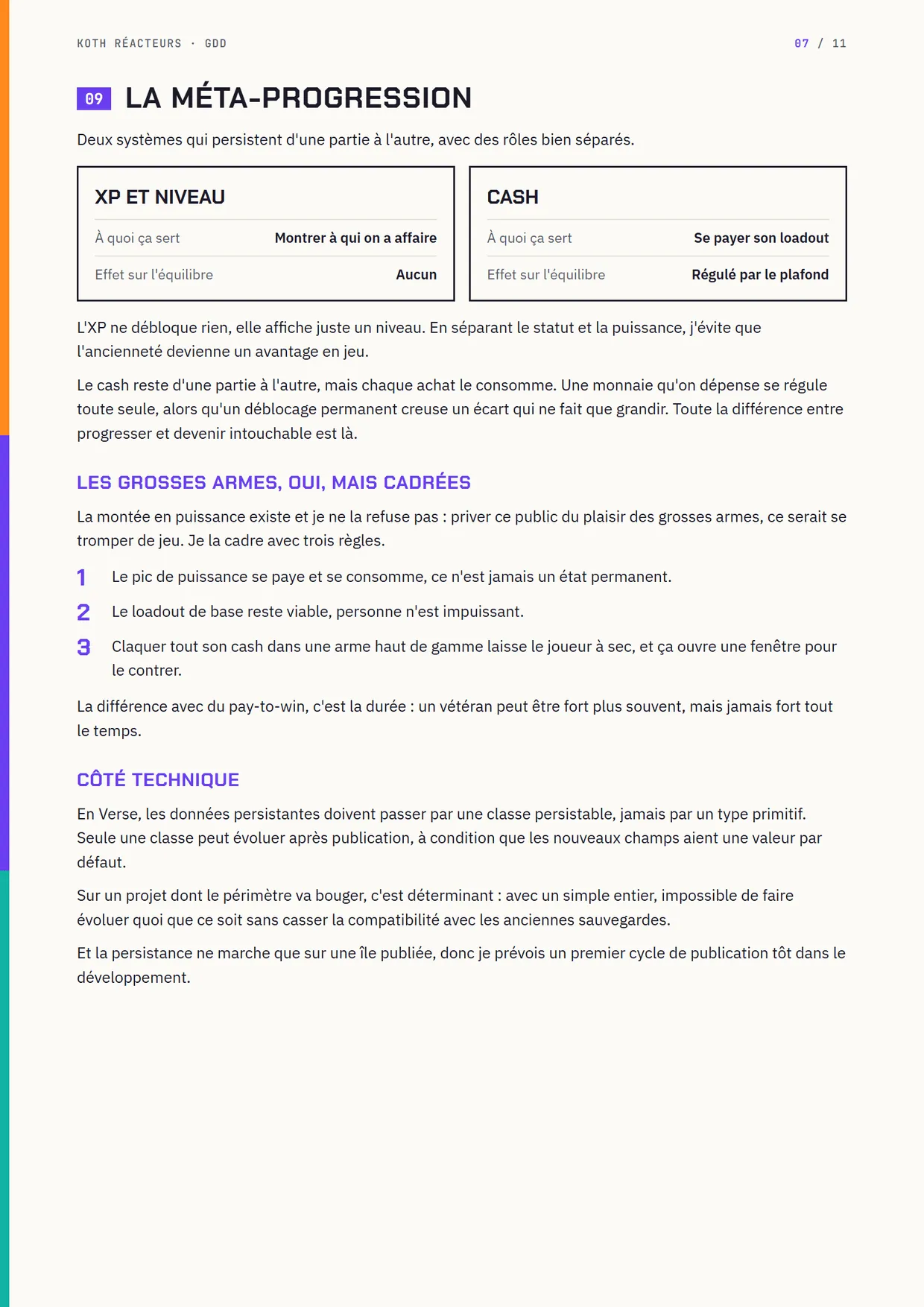
- The rarity tiers open on the combined score of the three teams, and meta-progression stays separate from power: XP shows a level without unlocking anything.
Iterations and feedback
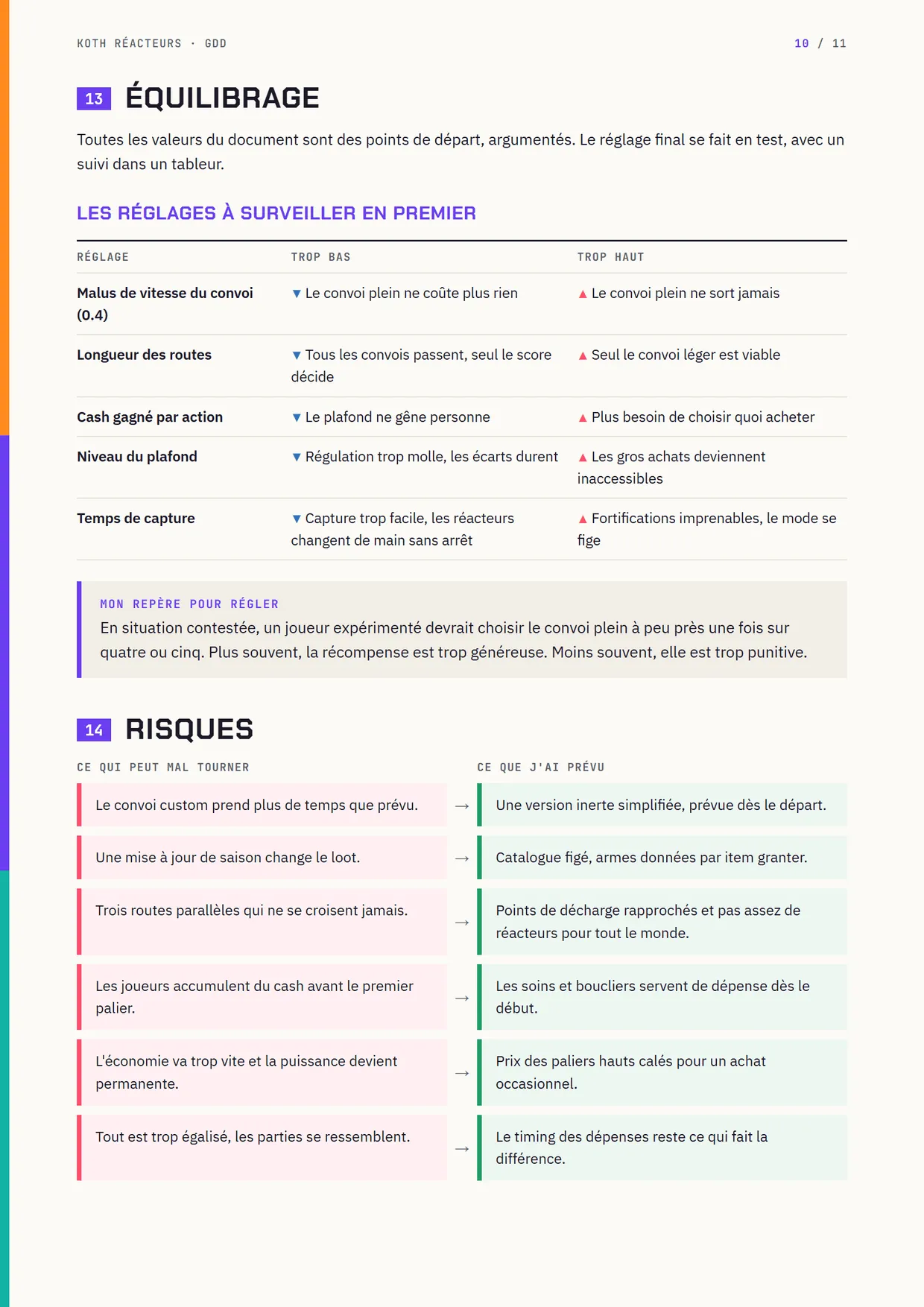
The mode was not tested. The GDD prepares the tuning: it lists the priority variables (convoy speed penalty, route length, cash rate and cap, capture time) with their effects if they are too weak or too strong, and gives a benchmark: in a contested situation, an experienced player should pick the full convoy about one time in four or five.
Takeaways
Above all an exercise in learning and adapting: discover UEFN (the Fortnite version of Unreal Engine) in a week, then write this mini GDD in a day.
A good game design exercise under constraints: get up to speed fast on an unknown tool, and adapt my intentions to a very restrictive frame, the one of Fortnite’s devices and rules.