Off Gridders
Competitive 3v3 team sport mixing parkour and ball game: slide, run, catch and score in abandoned urban arenas.
ISART Digital end-of-year project (prototype name: Diamond Seams), released for free on Steam
[ TL;DR ]
- Role
- Game Designer, Level Design focus
- Design problem
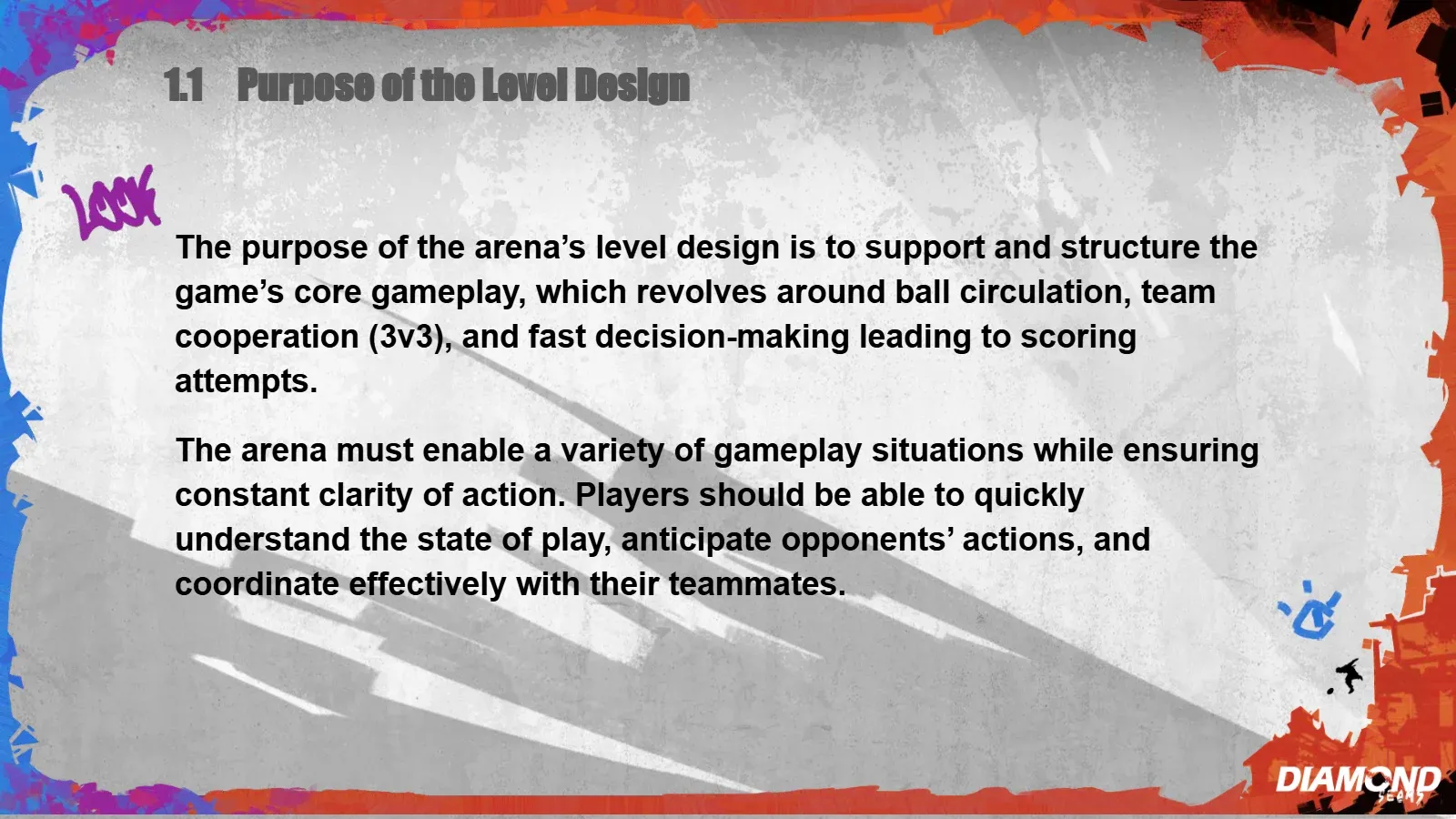
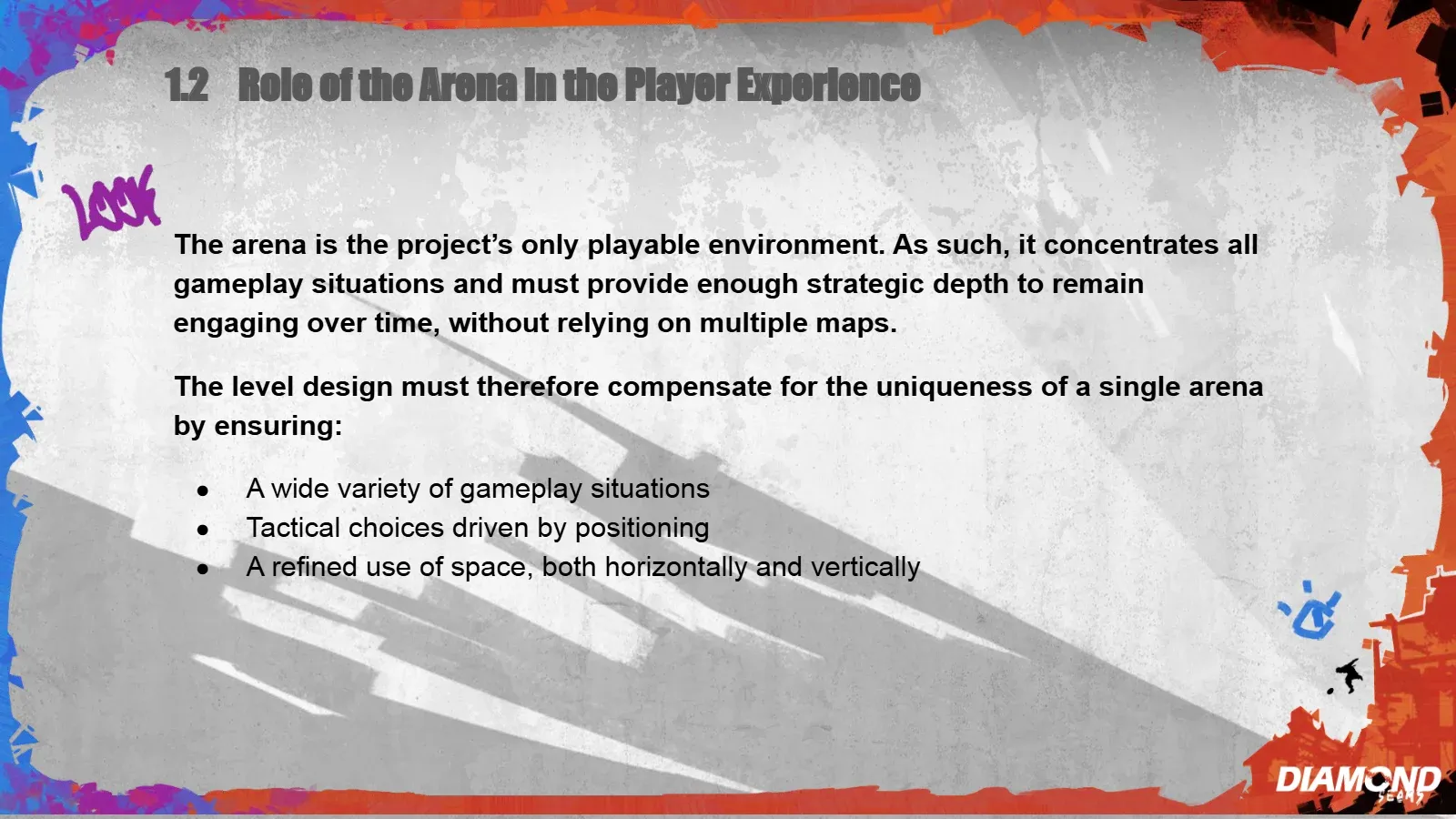
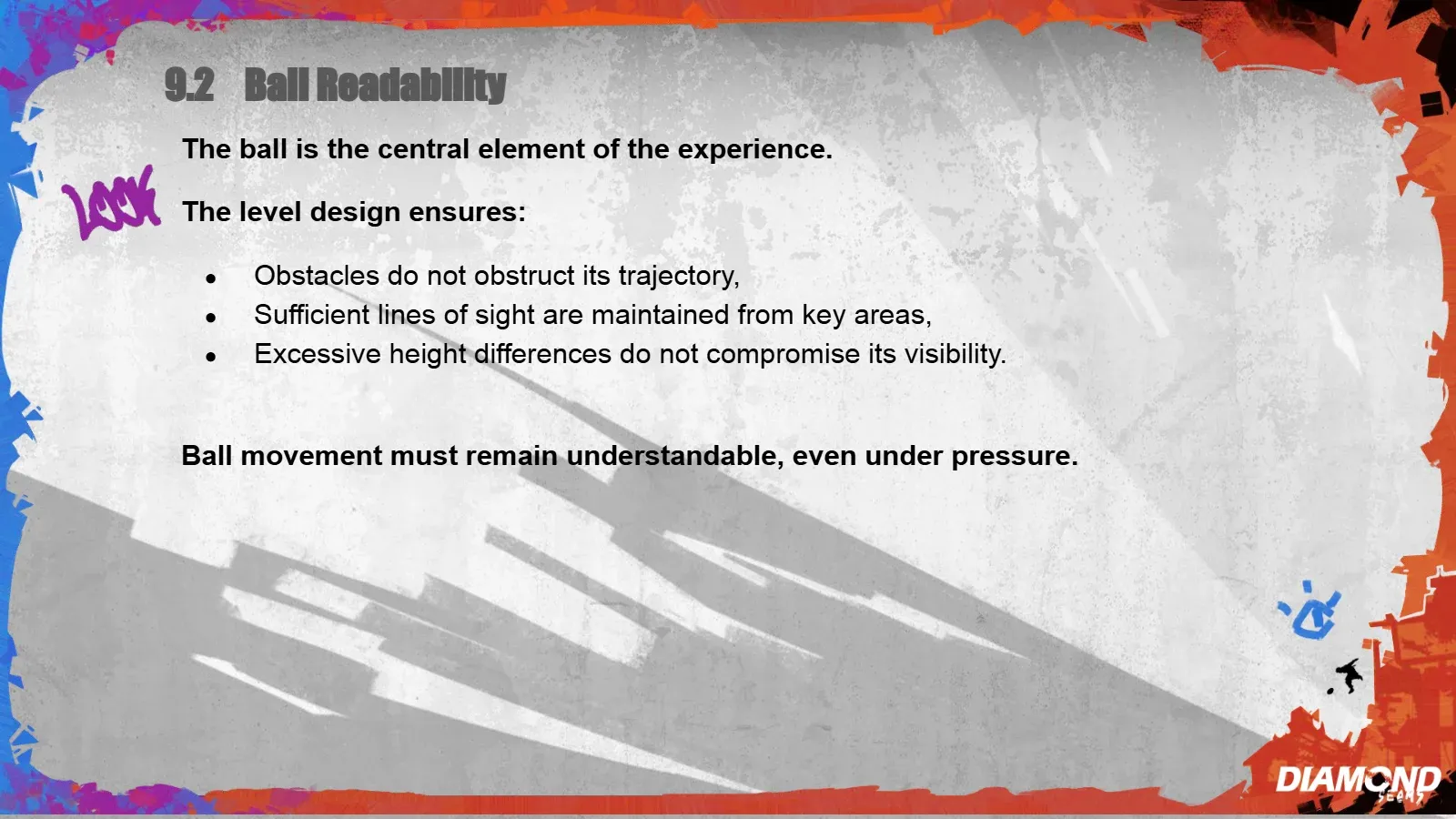
- The game has only one arena: it has to carry all the strategic depth of a fast 3v3, stay interesting over time and keep the ball readable at all times.
- 3 key decisions
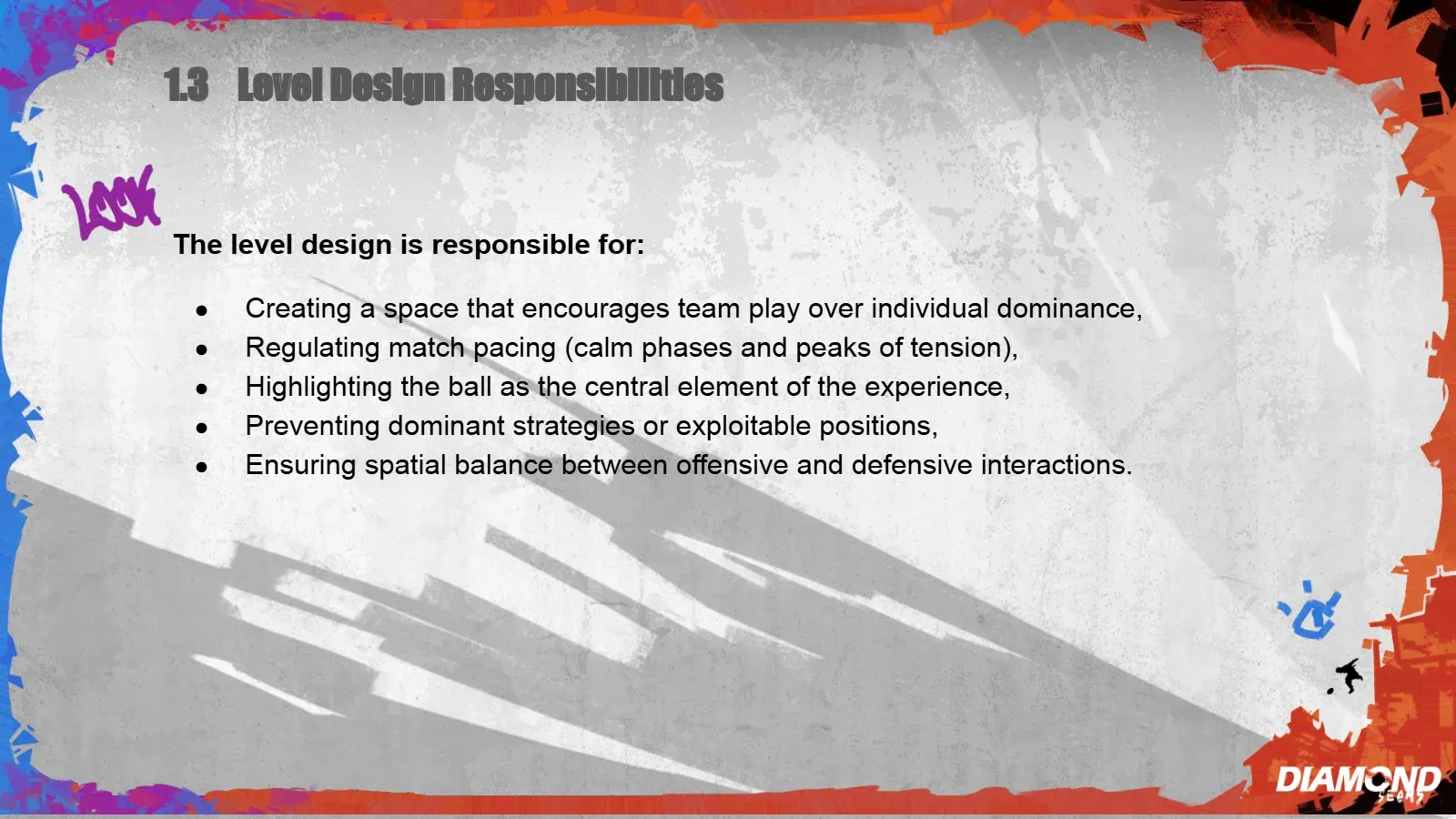
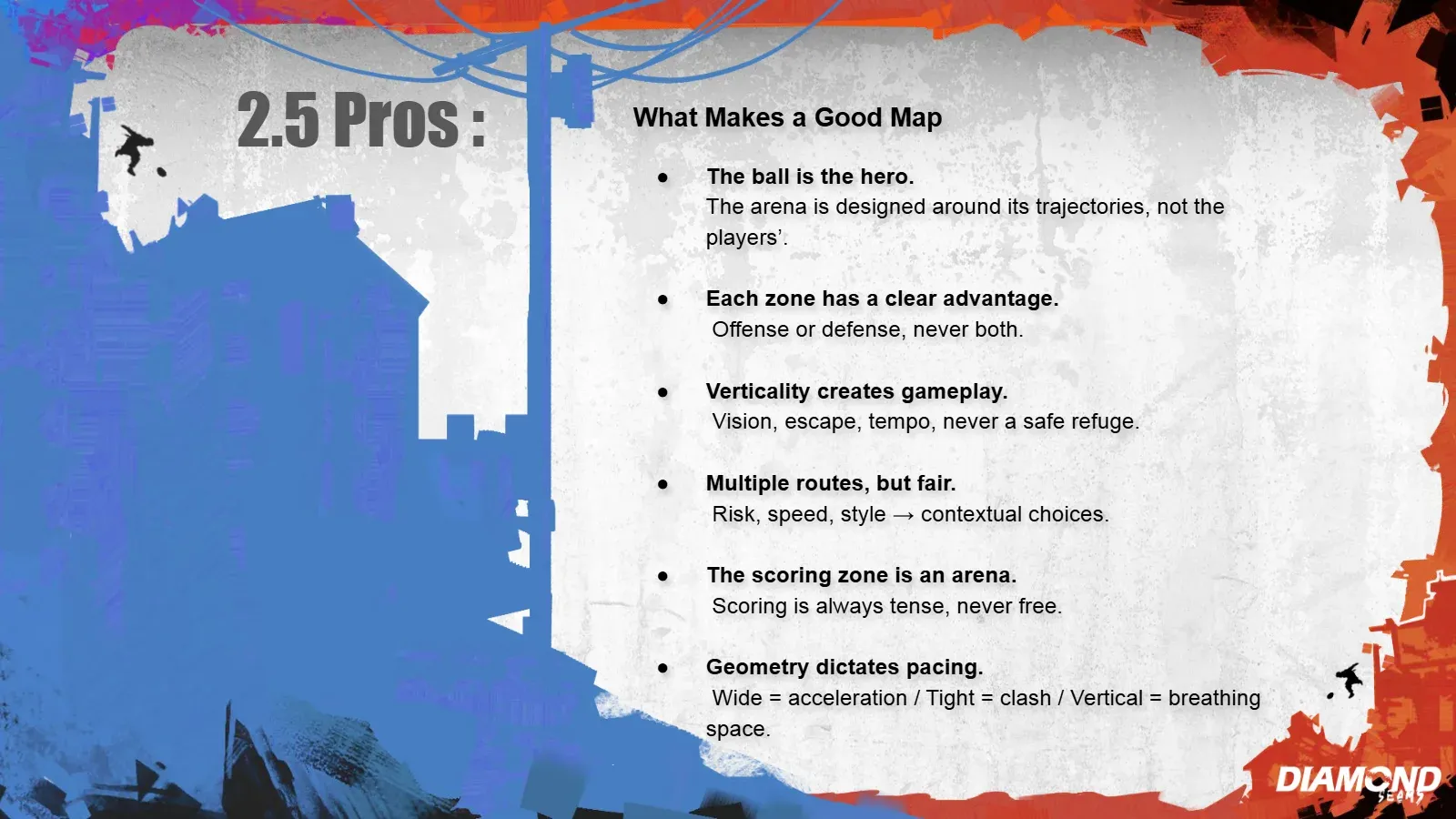
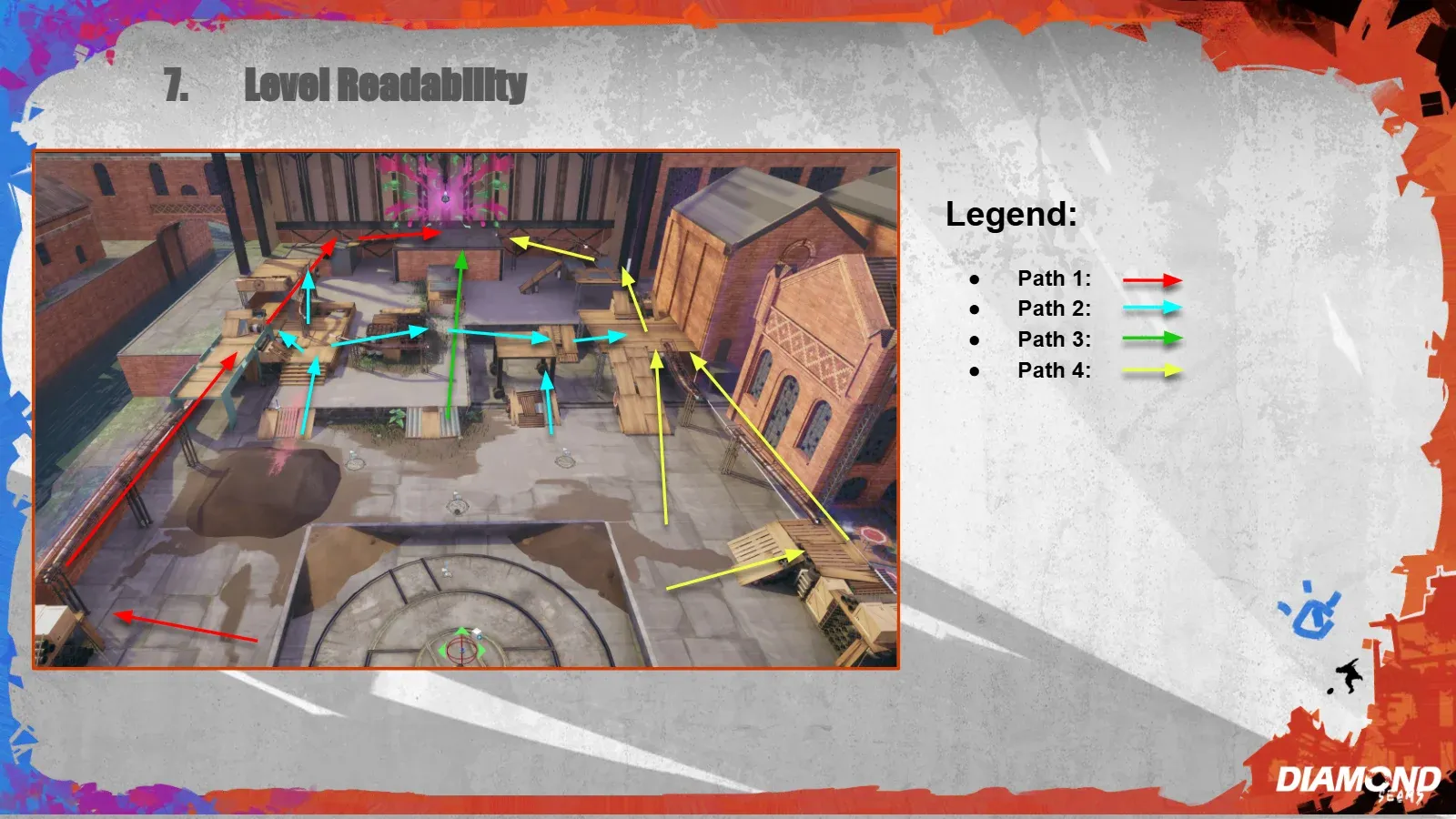
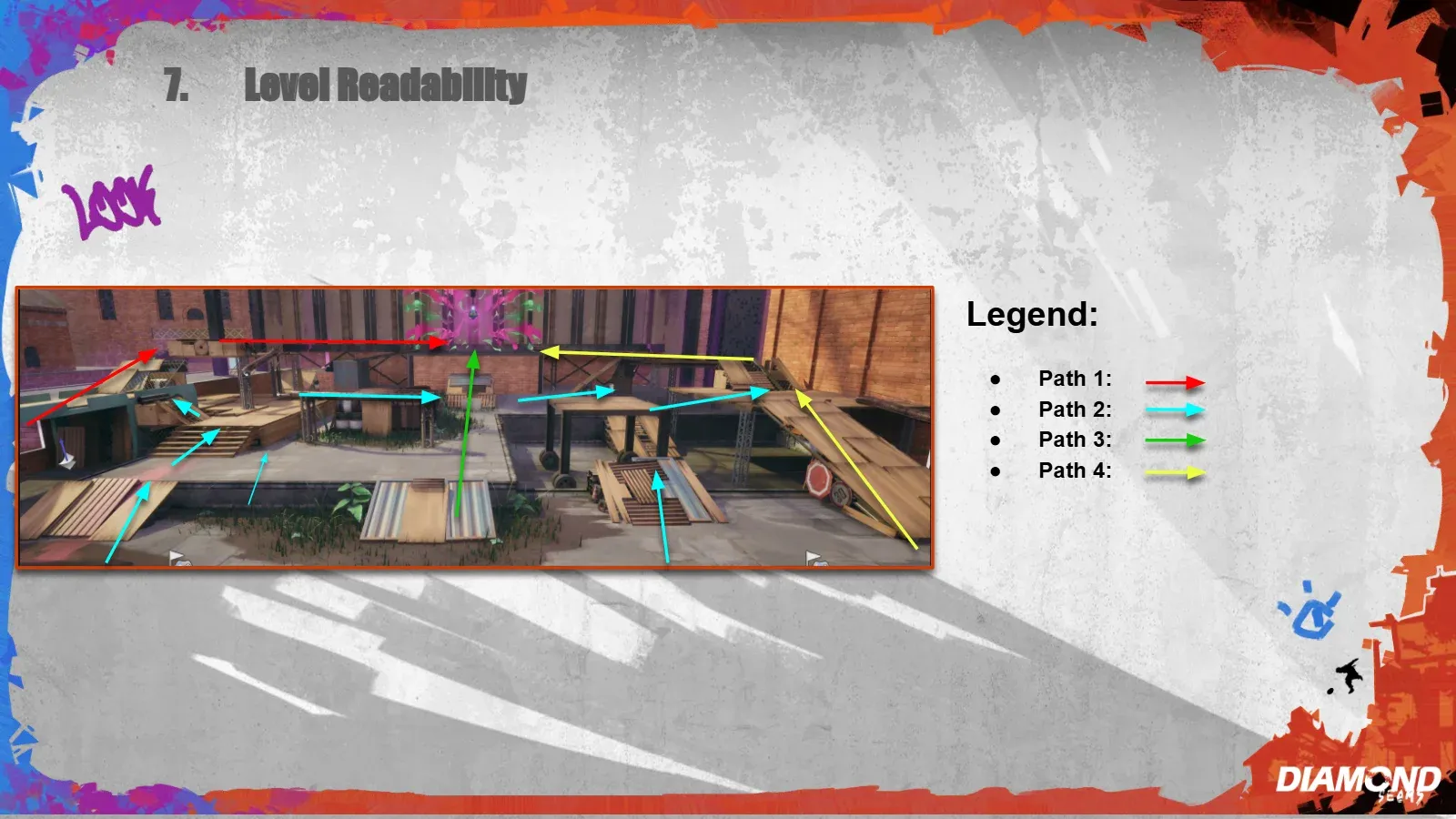
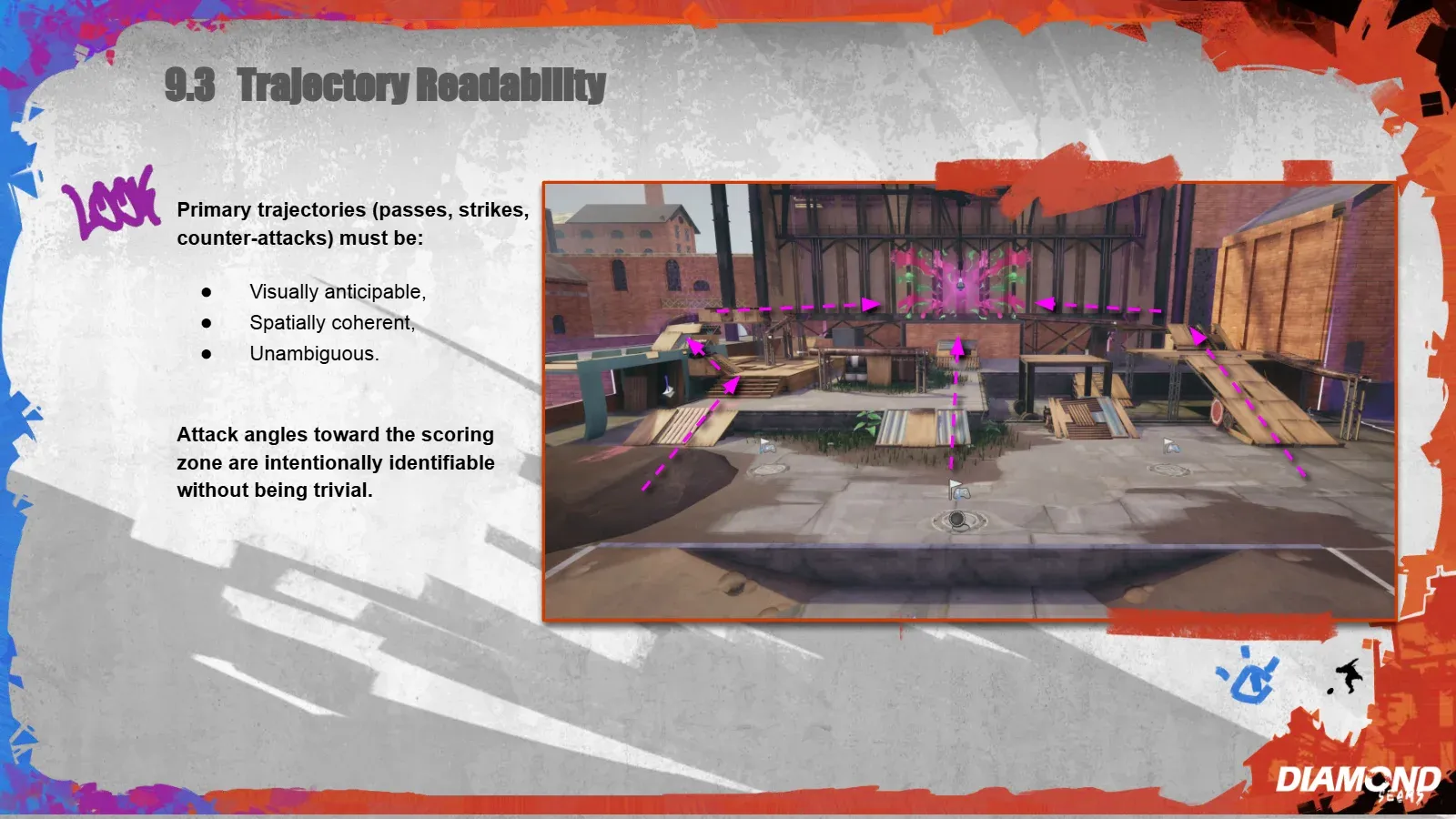
- Design the arena around the ball's trajectories, not the players: volumes and sight lines are thought so everyone can read where the ball is.
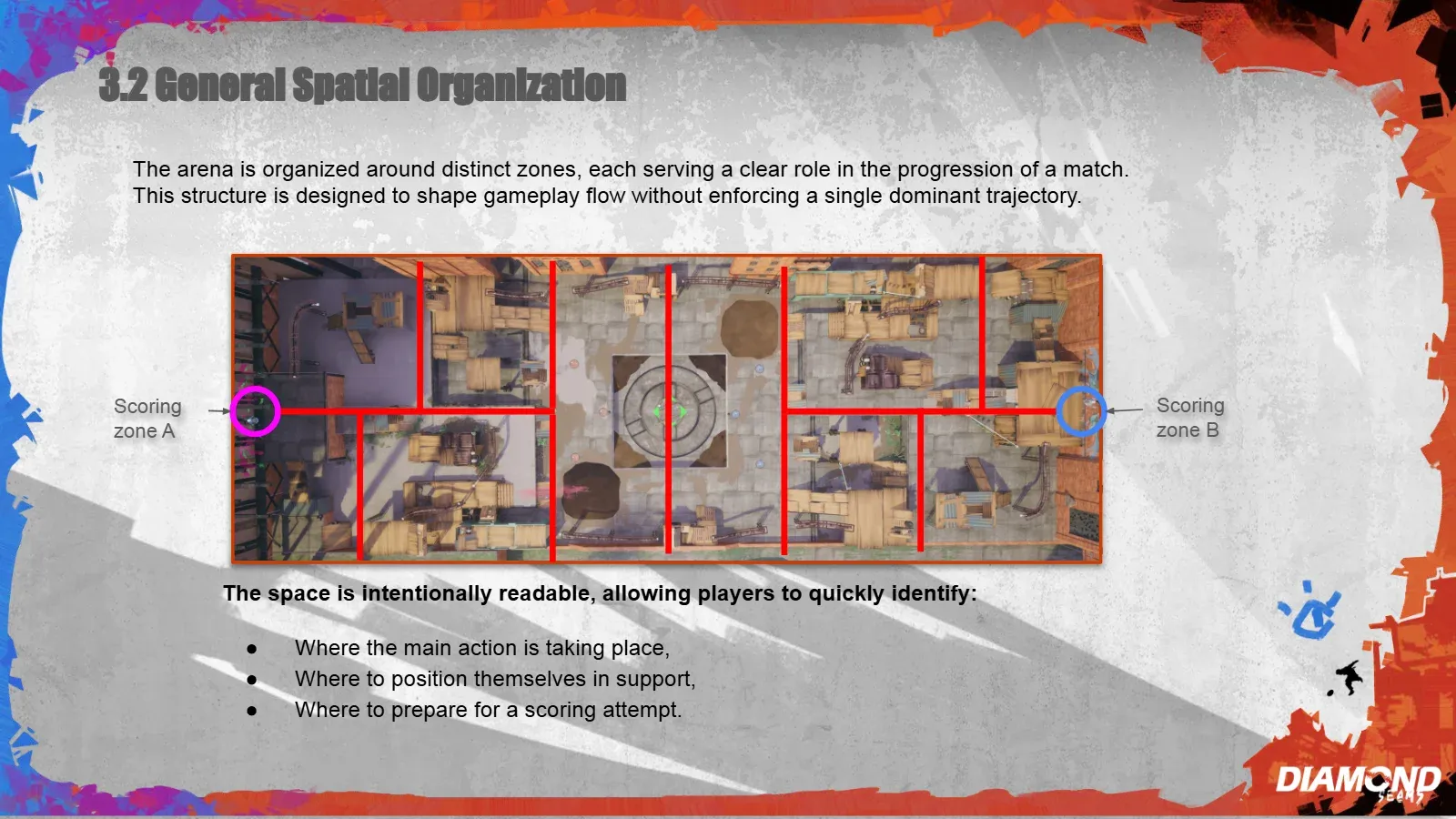
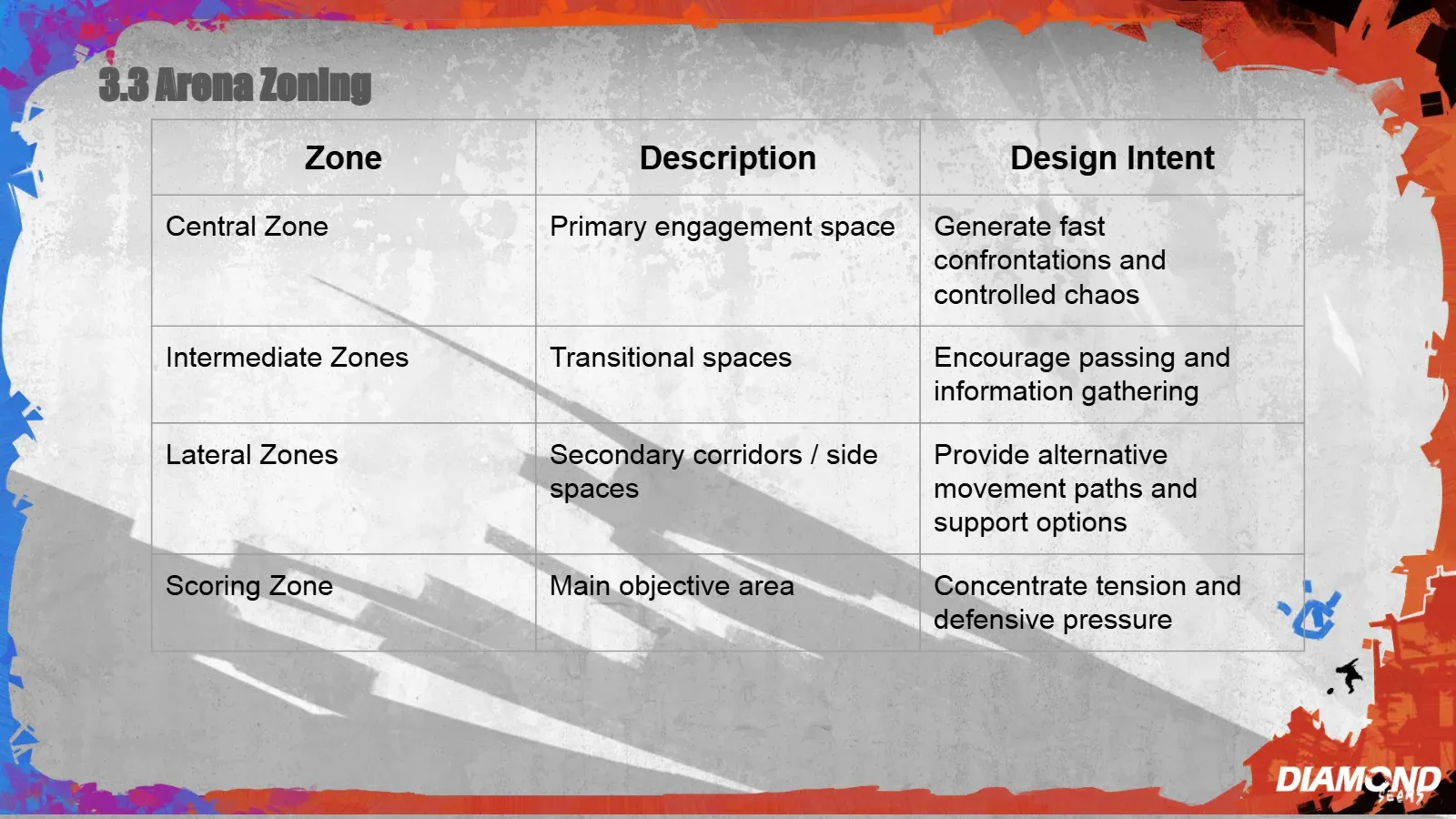
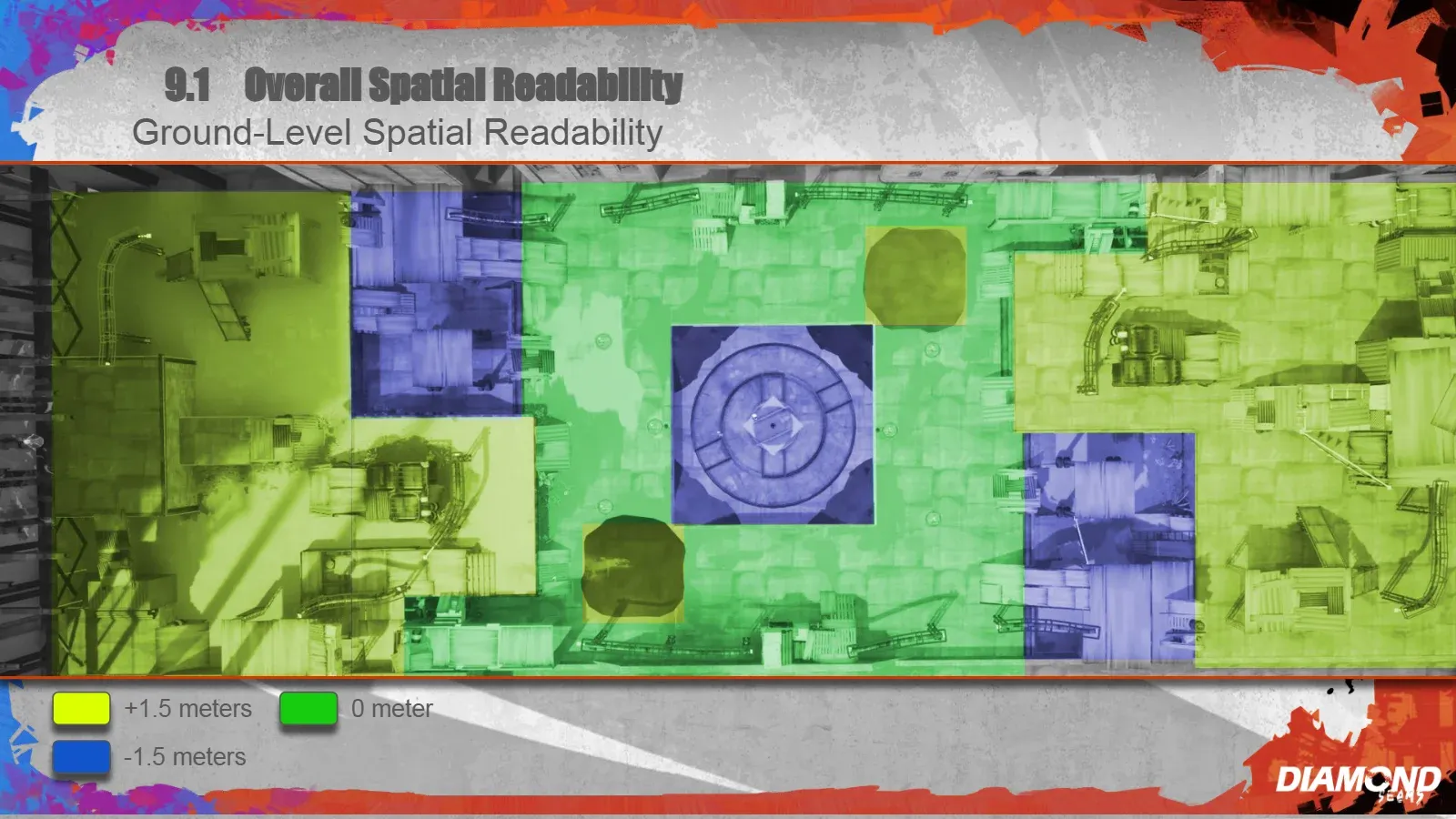
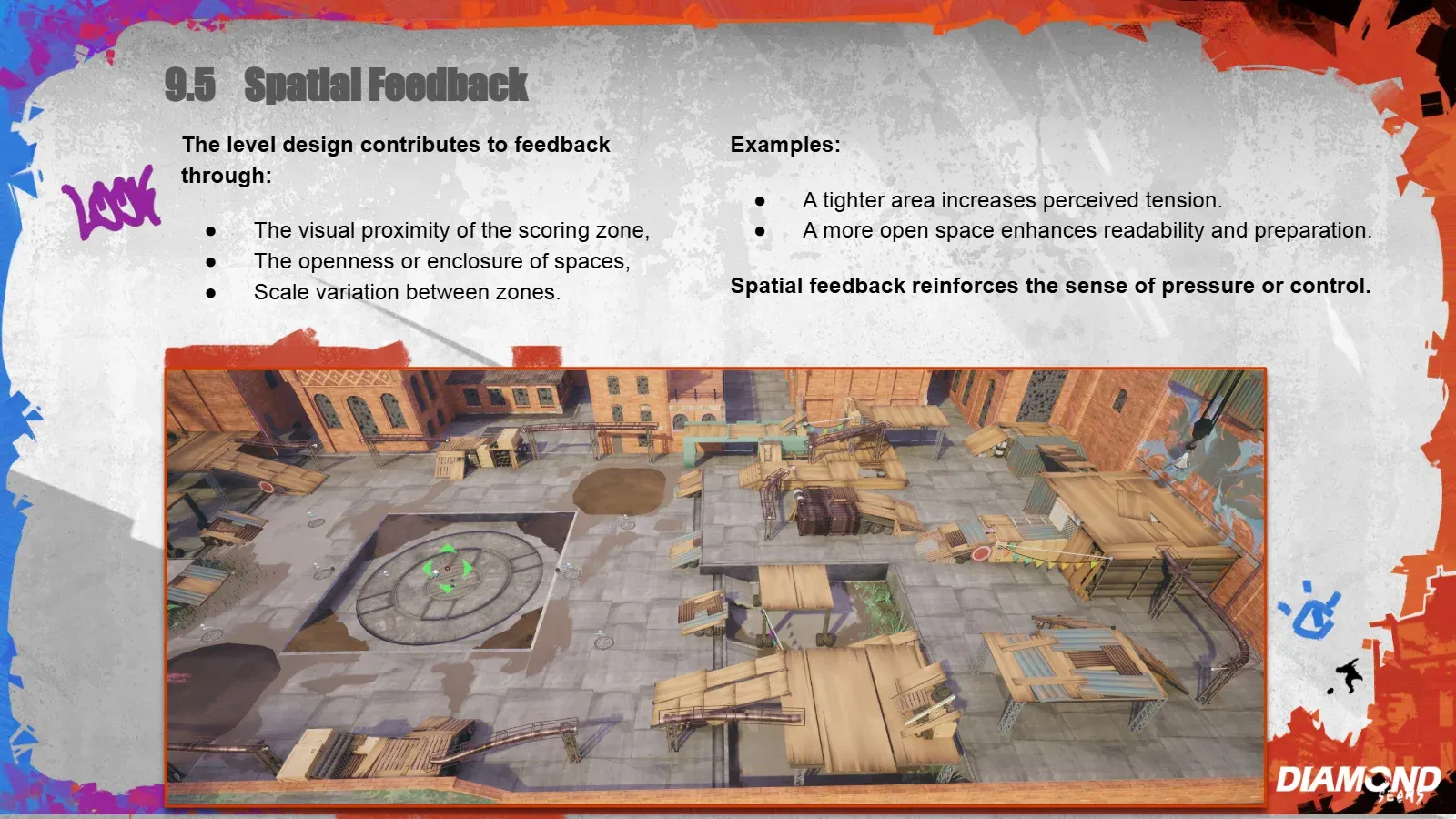
- A zoning with graduated tension (center, intermediate and side zones, scoring zone) that alternates pressure peaks and breathing phases.
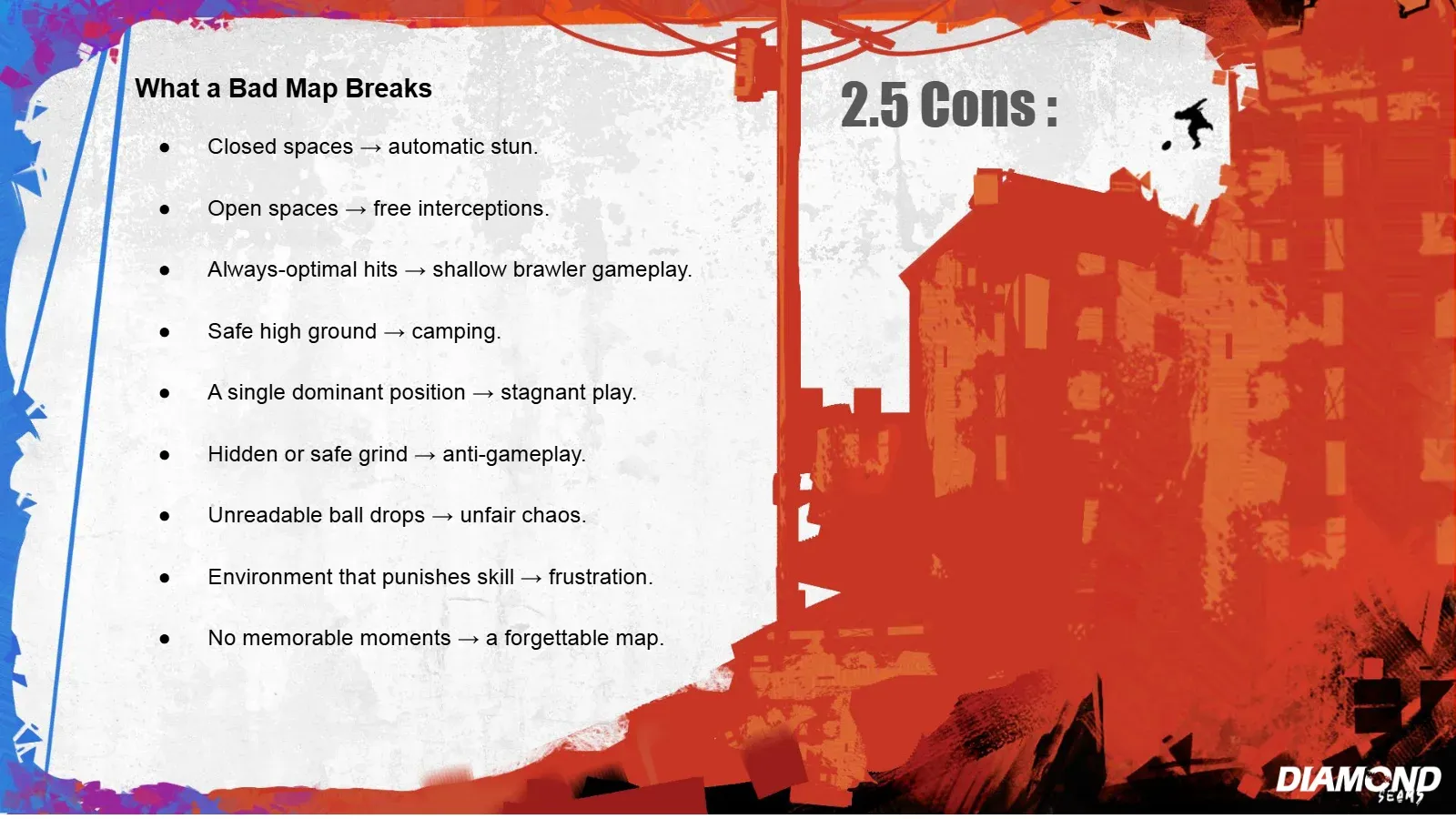
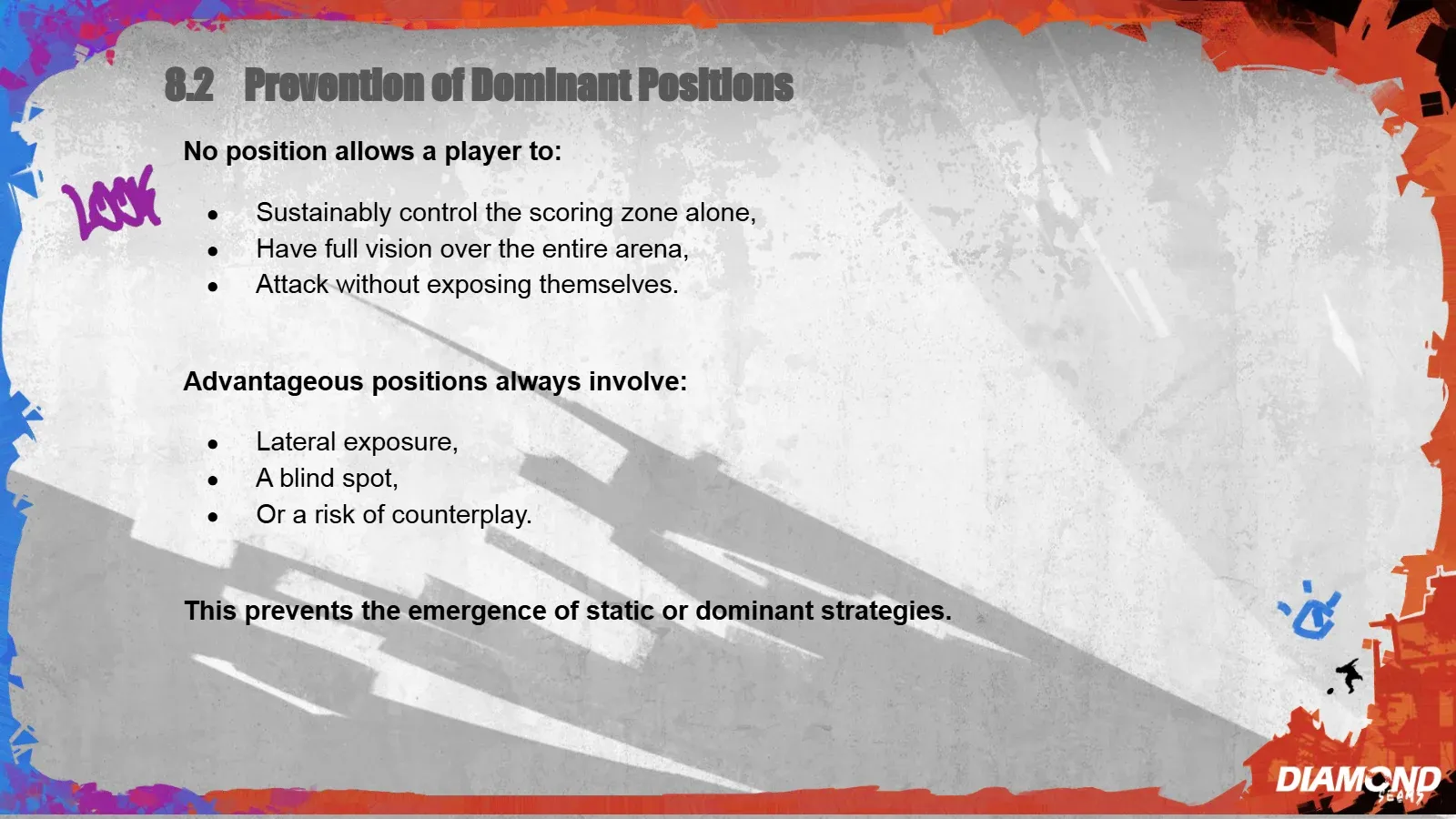
- A risk proportional to the advantage: no free dominant position, height and grind rails give vision and speed in exchange for exposure.
- Result
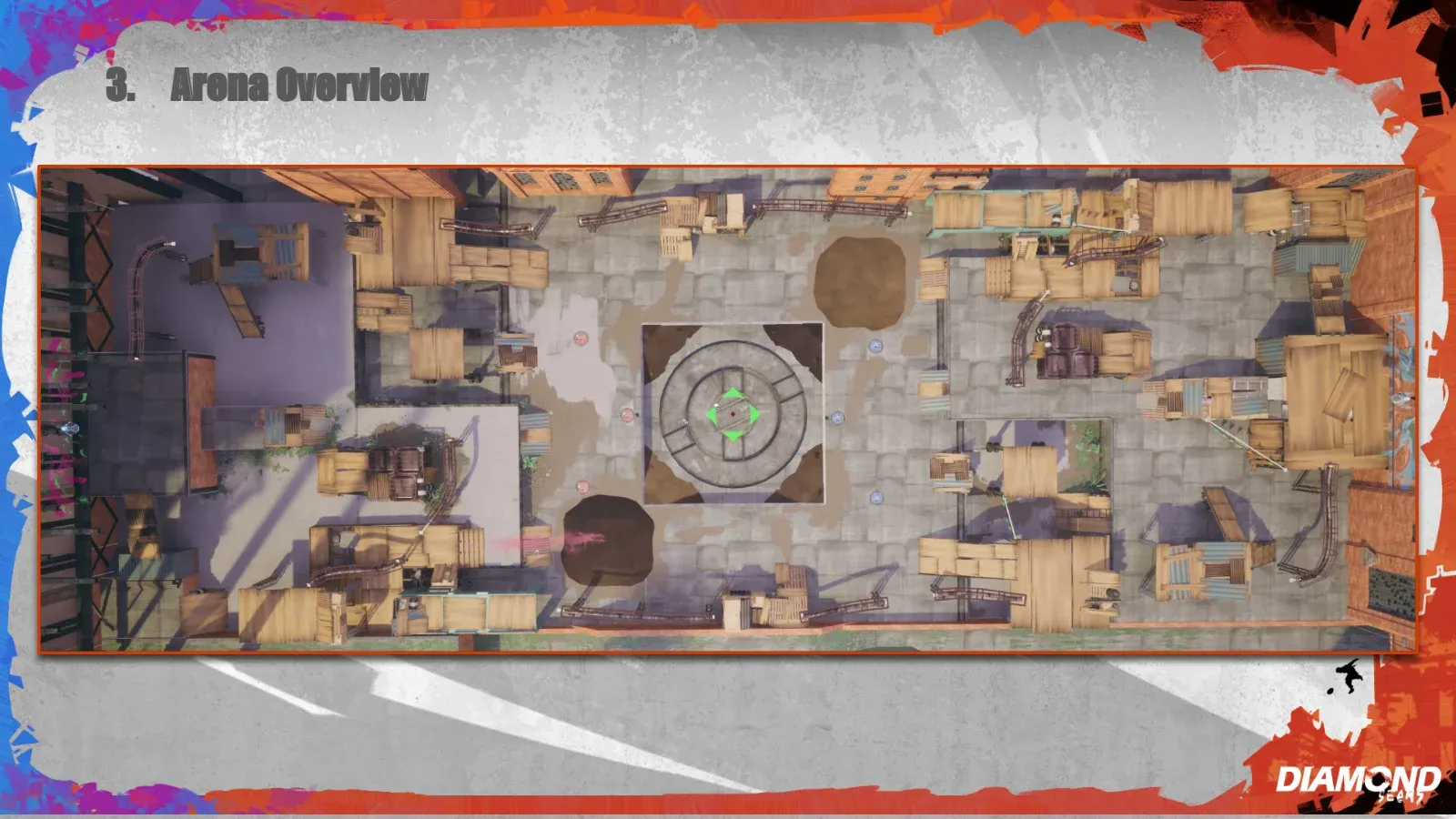
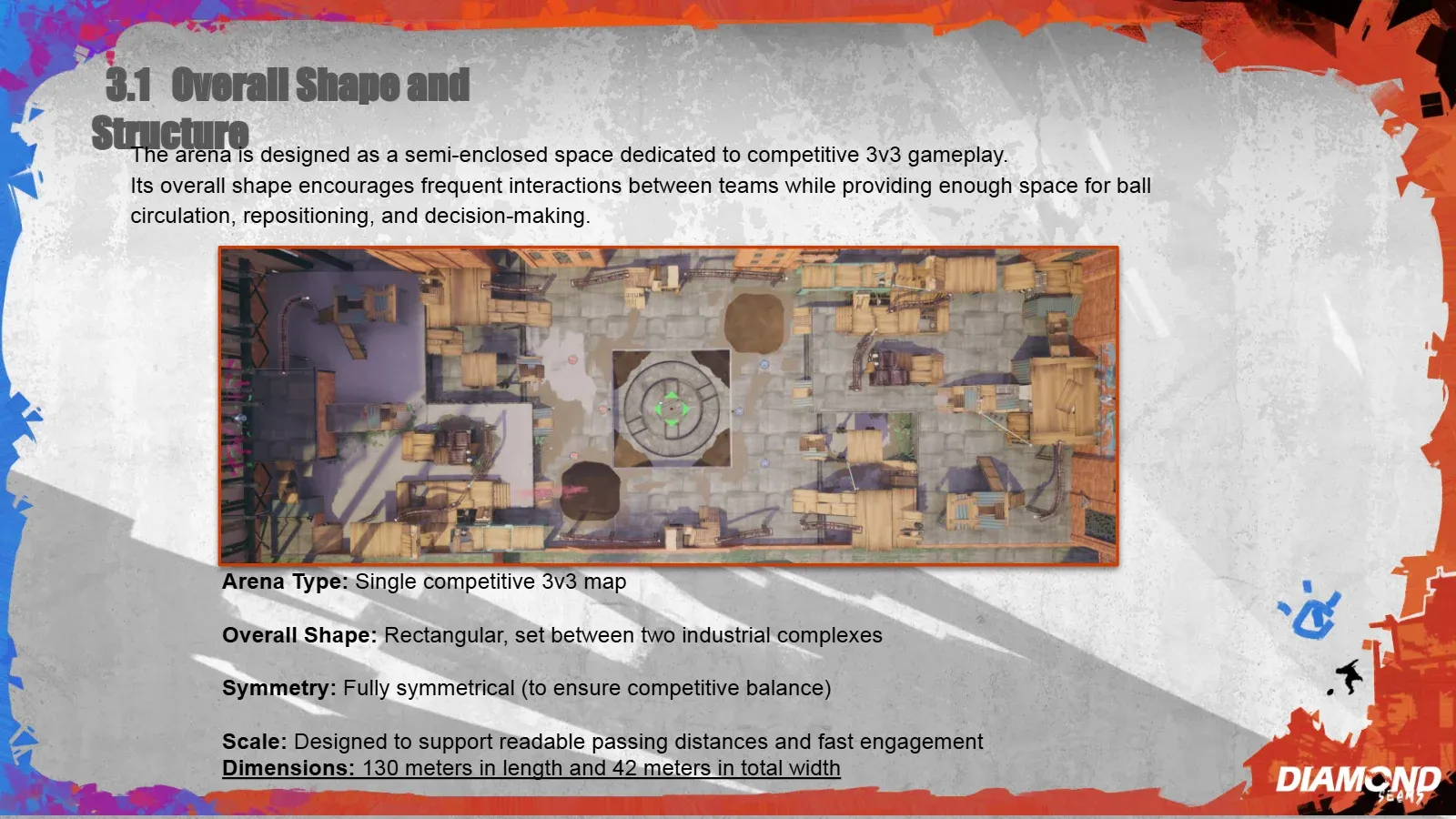
- Symmetrical 3v3 arena of 130 × 42 m, integrated in the game released on Steam. A 77-slide LDD co-written by four people, where I carried the creation and most of the versions, with blockings and iterations.






Context
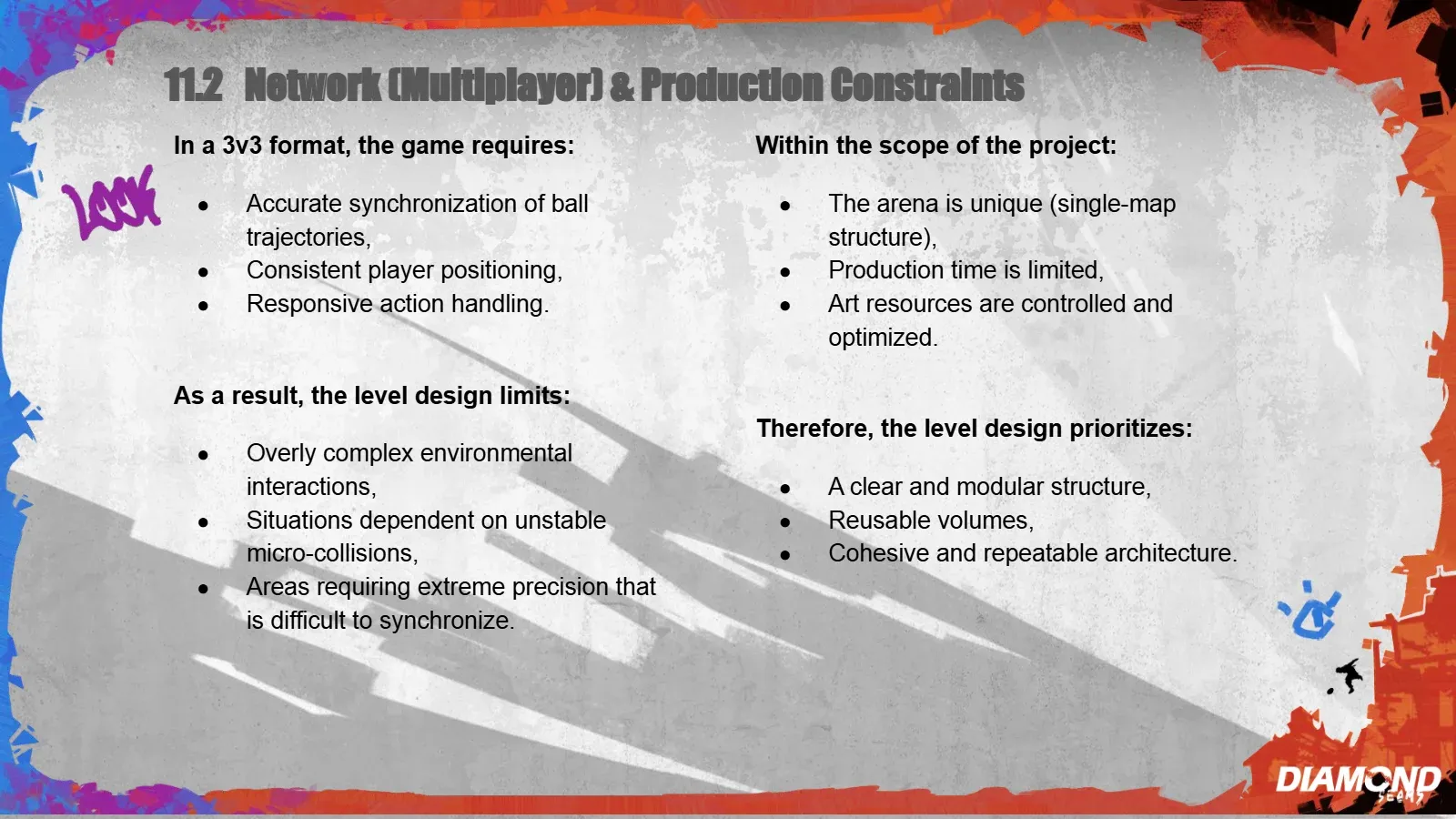
Off Gridders is the end-of-year project of an ISART Digital class: 23 people (game design, 2D and 3D game art, programming, production, music and sound) and 40 days of production. The game came out for free on Steam in June 2026, made with Unreal Engine.
In the level design team (four people), I created and carried the LDD of the arena, made several blockings and iterated on the level design and the LD building blocks, with QA sessions.
Design intentions
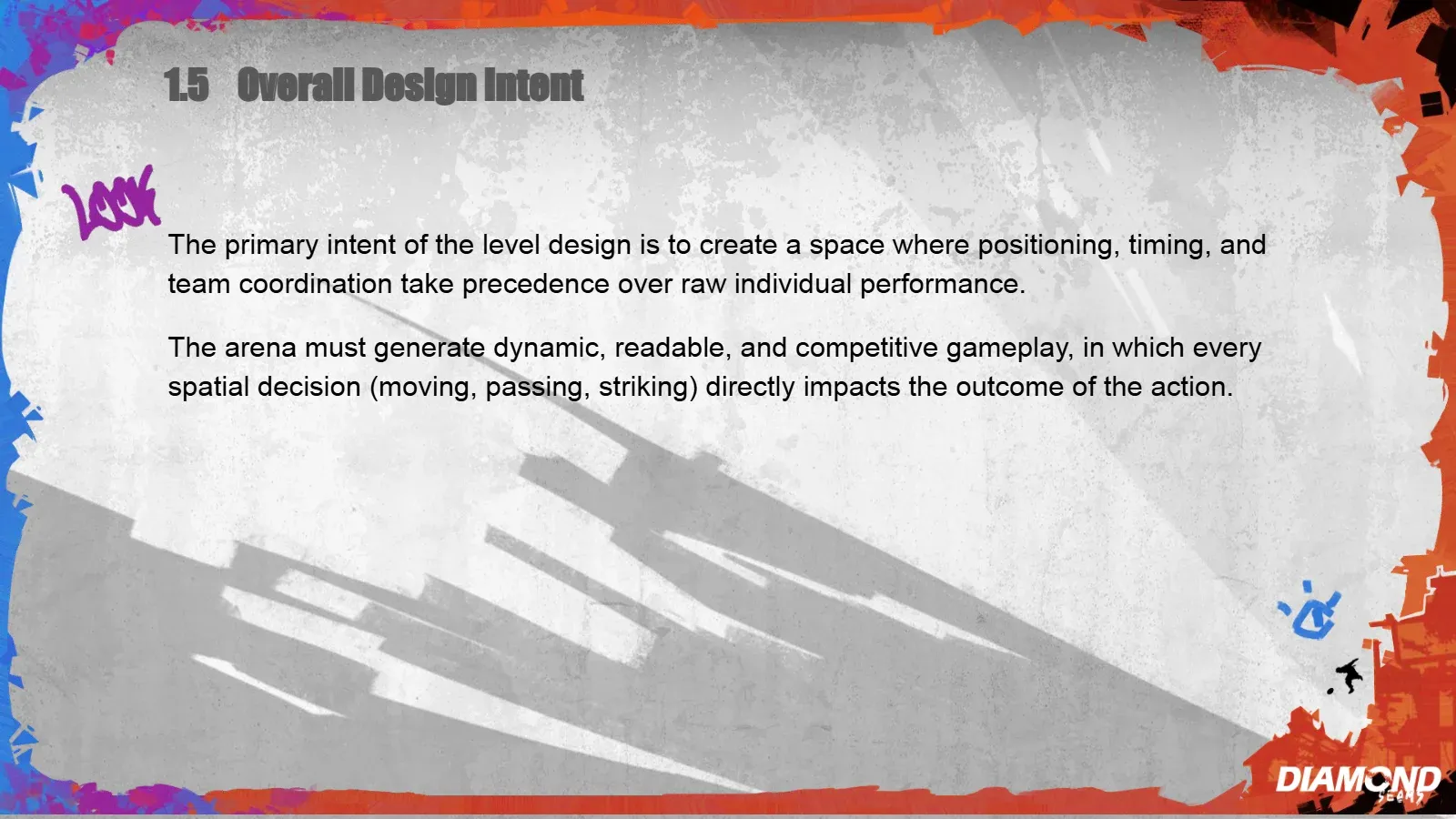
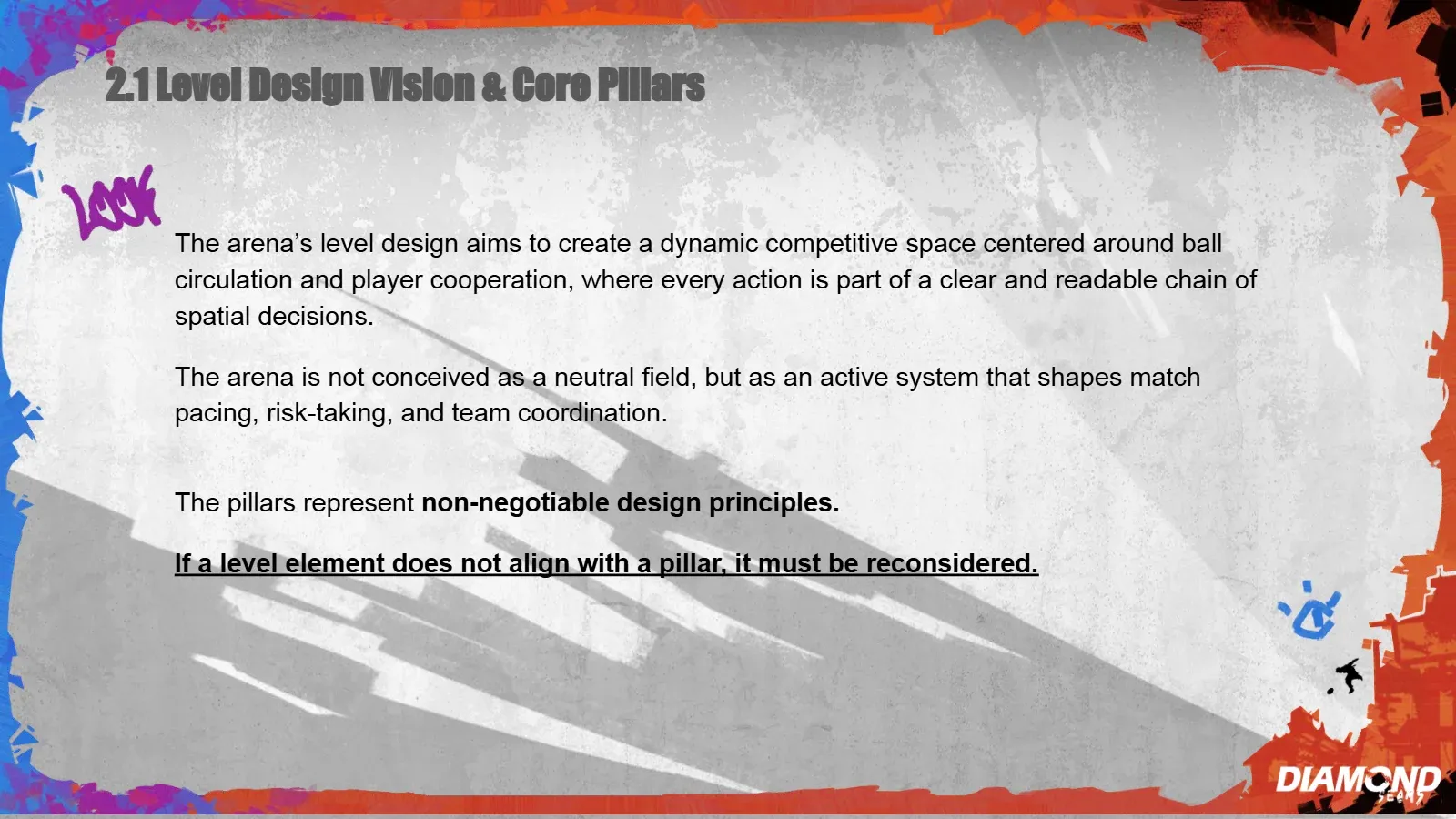
The game has only one arena: it has to carry everything. Five non-negotiable pillars guide every choice.
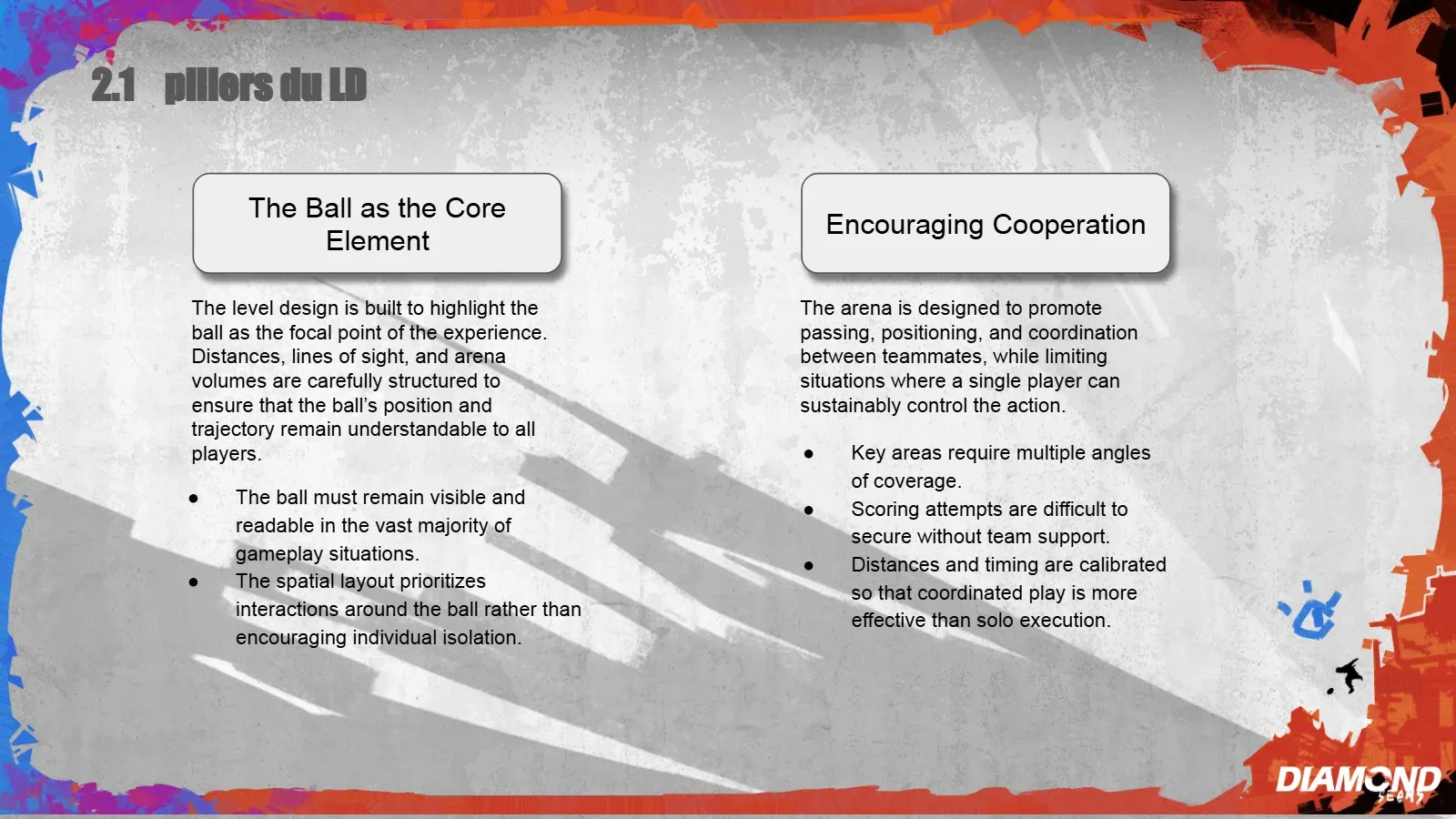
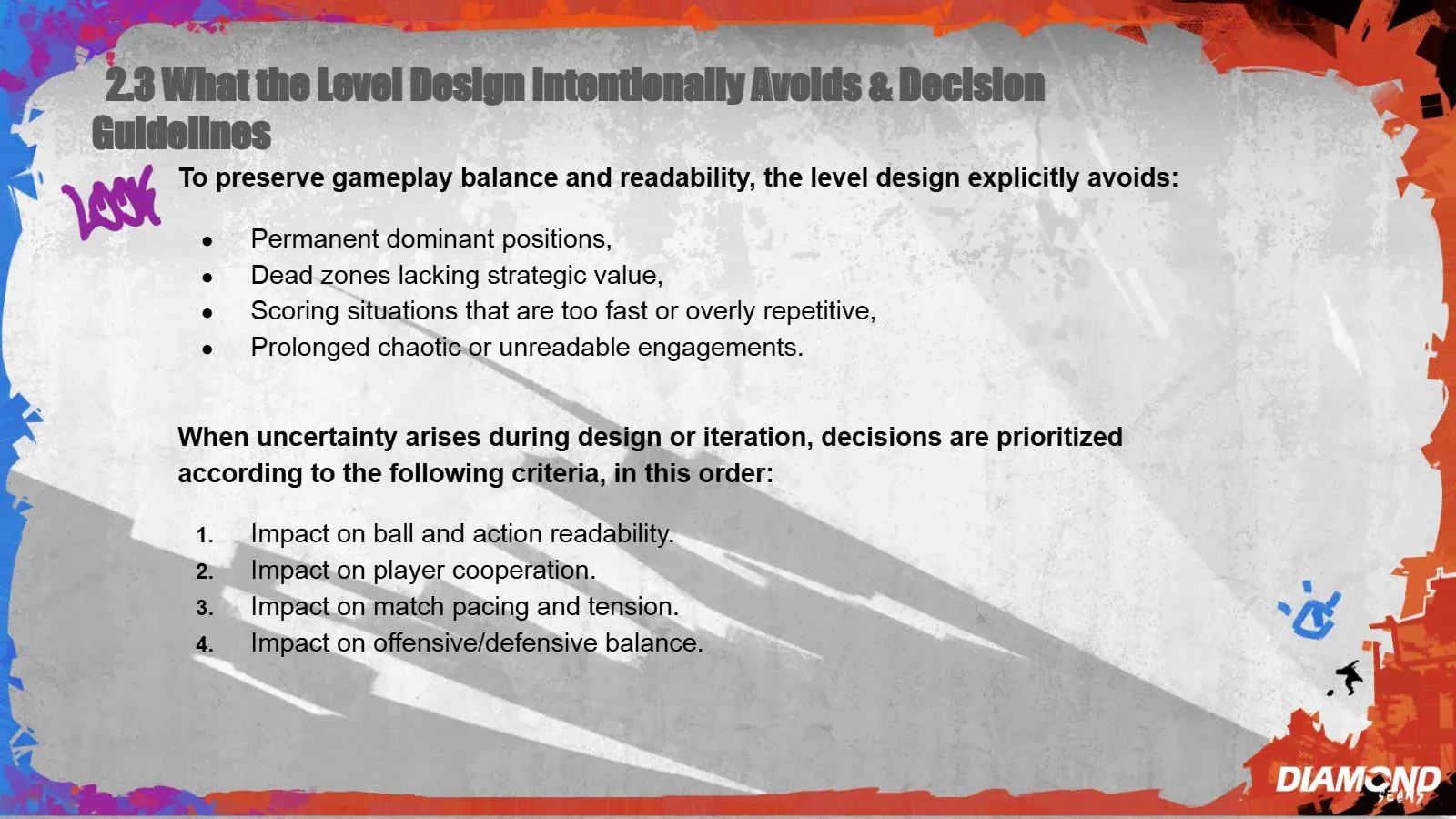
- The ball first: it stays visible and readable in the large majority of situations.
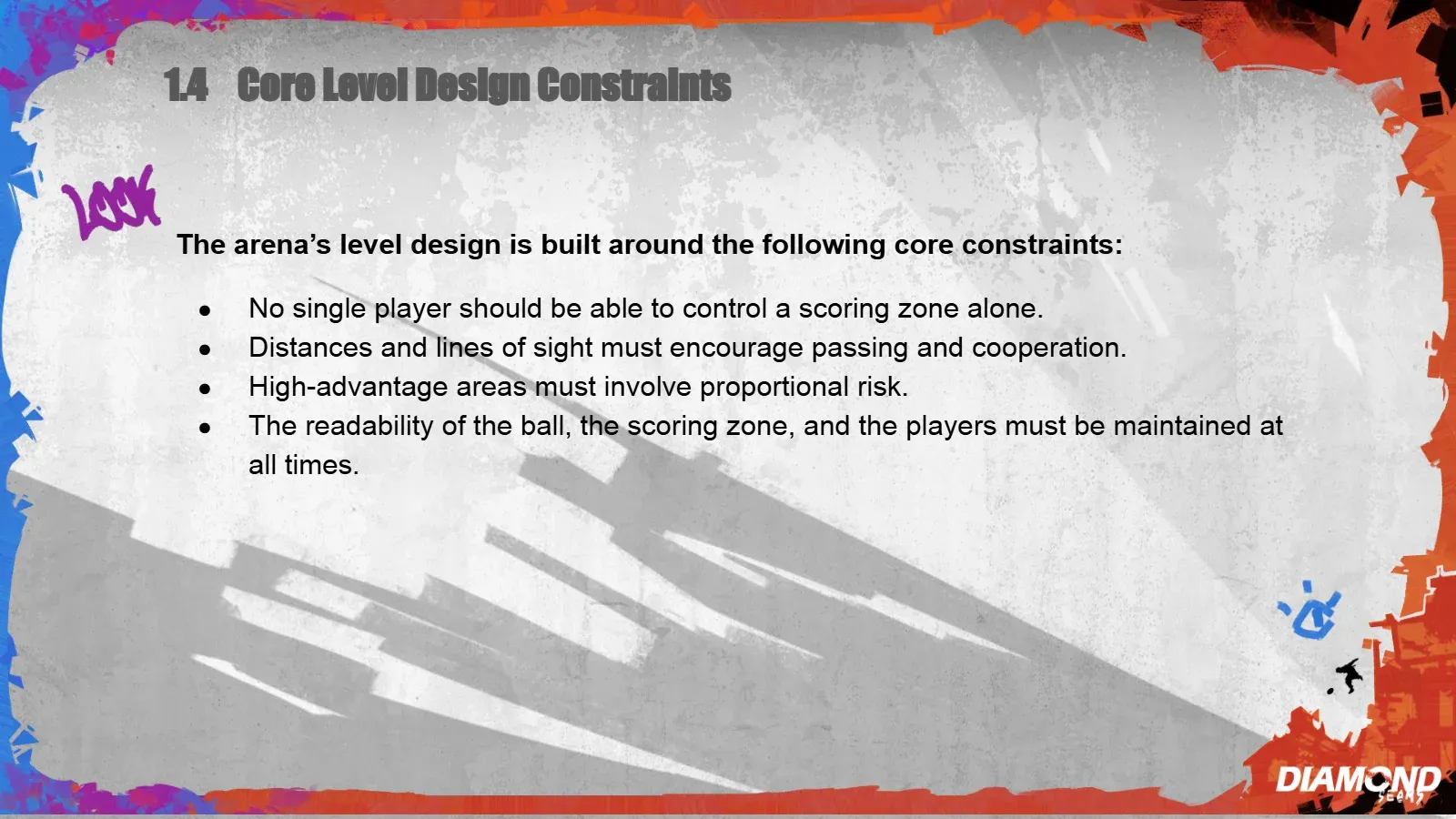
- Encourage cooperation: key zones need several angles of cover, and scoring alone is hard.
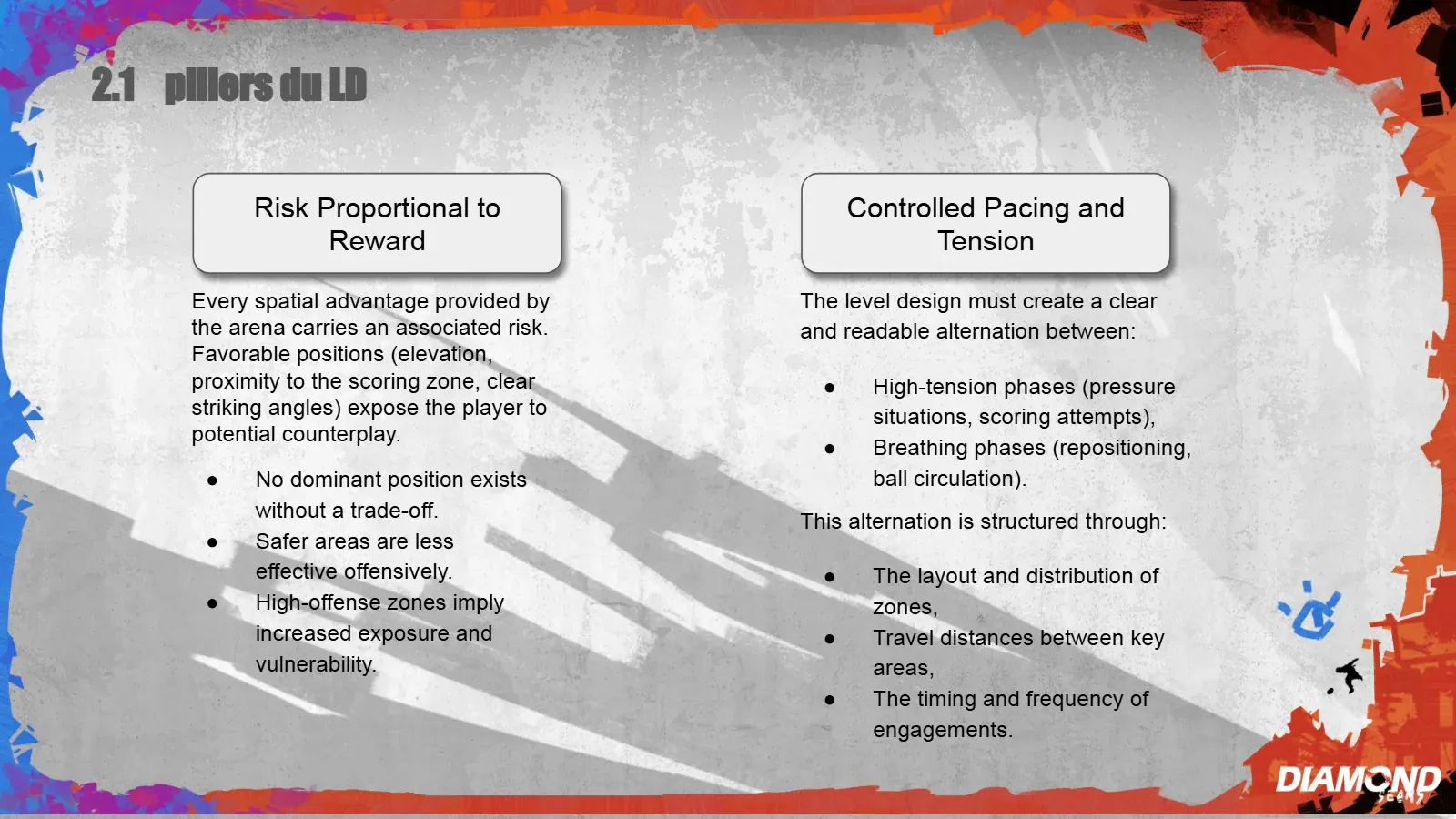
- A risk proportional to the reward: no advantageous position comes for free.
- A controlled rhythm: a clear alternation between tension peaks and breathing phases.
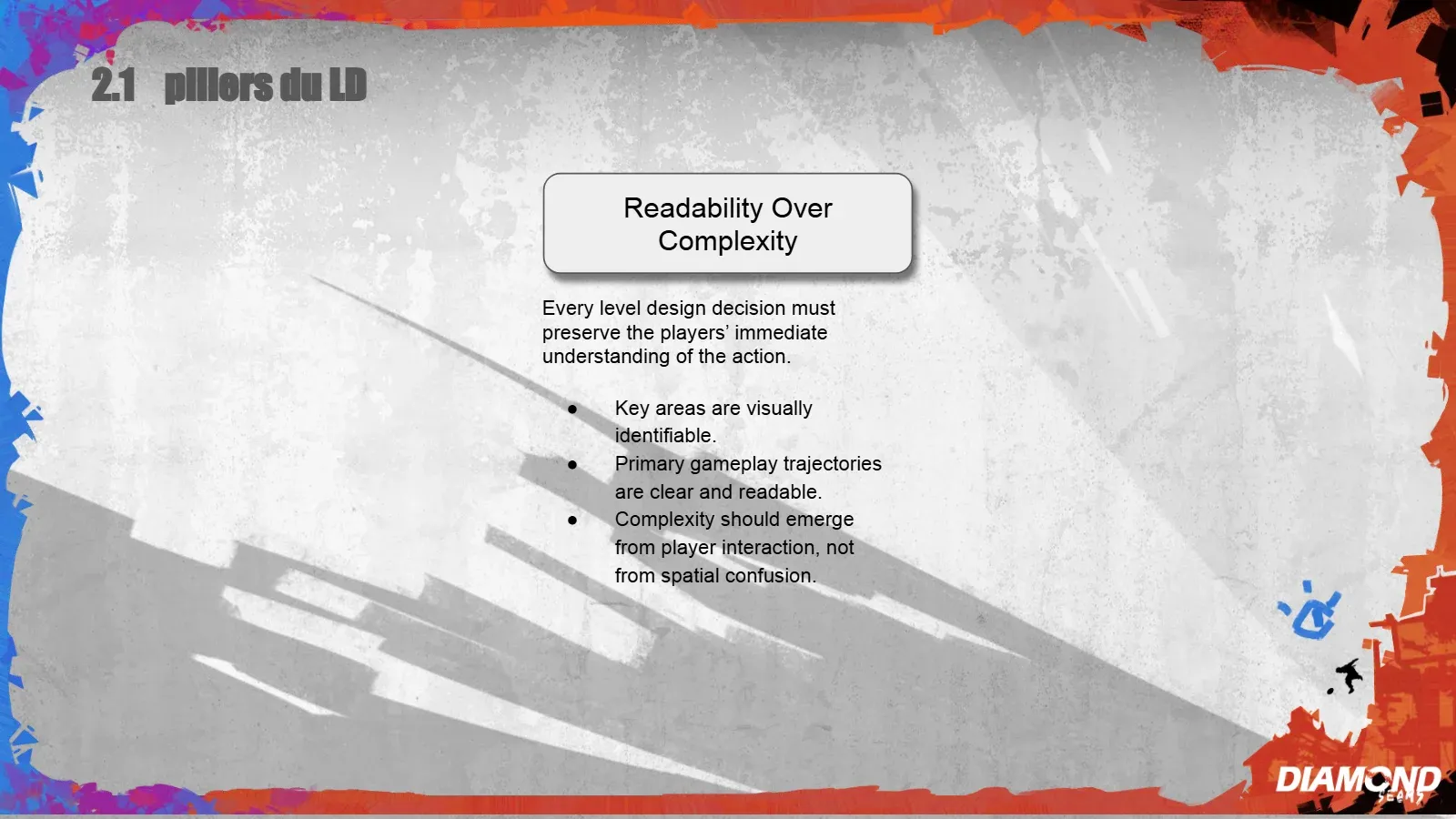
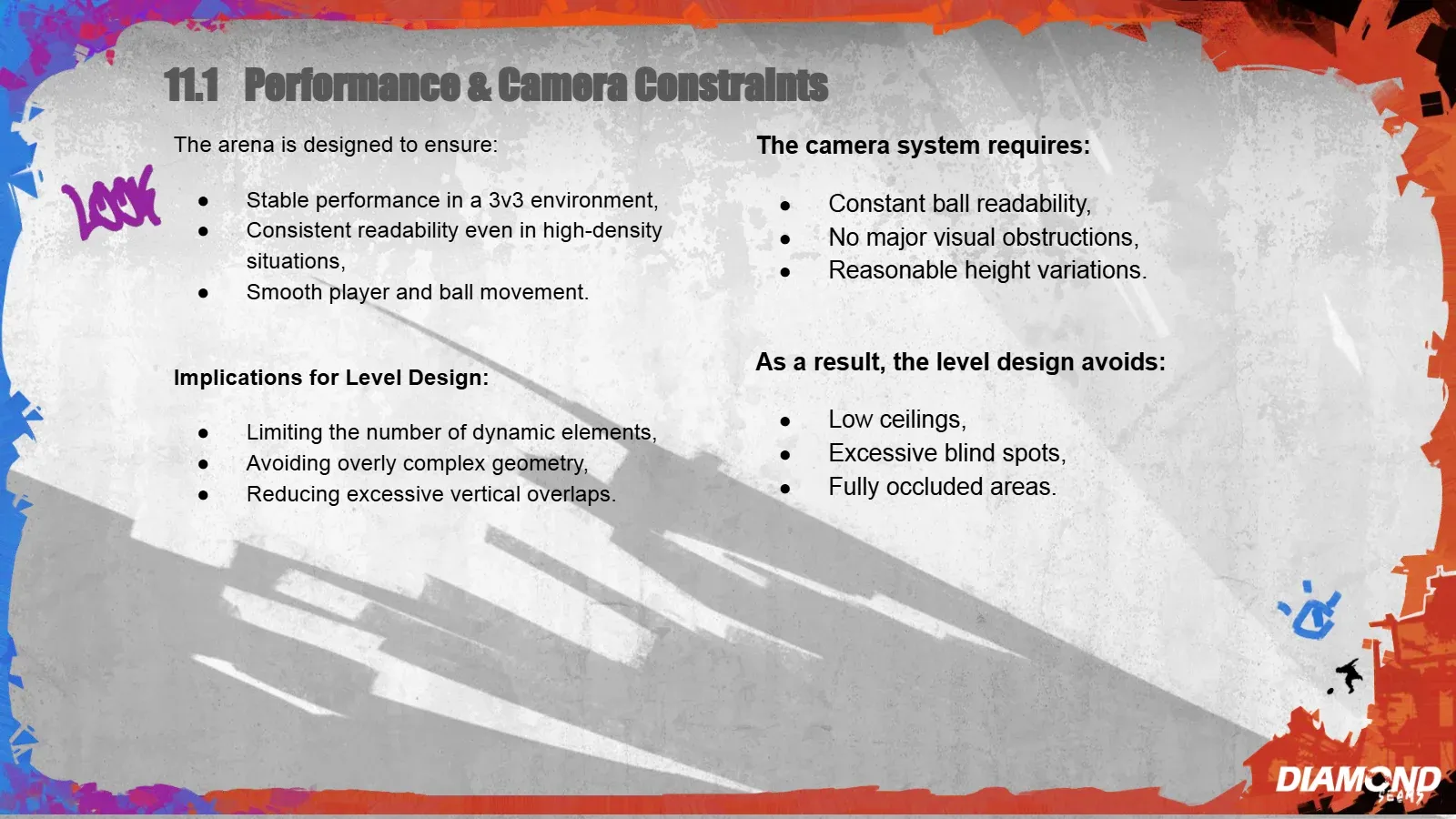
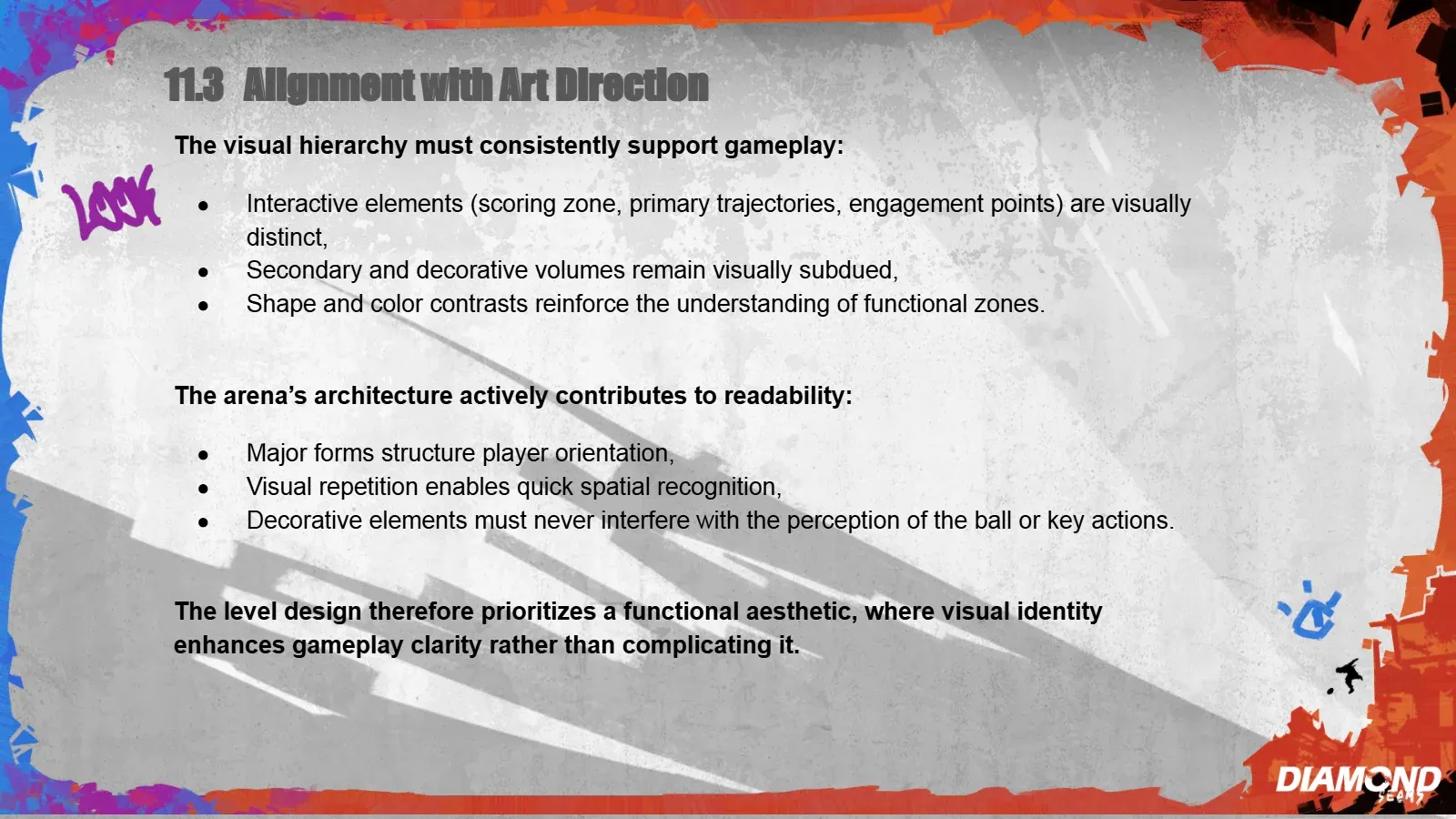
- Readability before complexity: complexity comes from the interactions between players, not from a confusing space.
When in doubt, decisions are made in this order: ball readability, cooperation, rhythm, then attack and defense balance.
Key systems
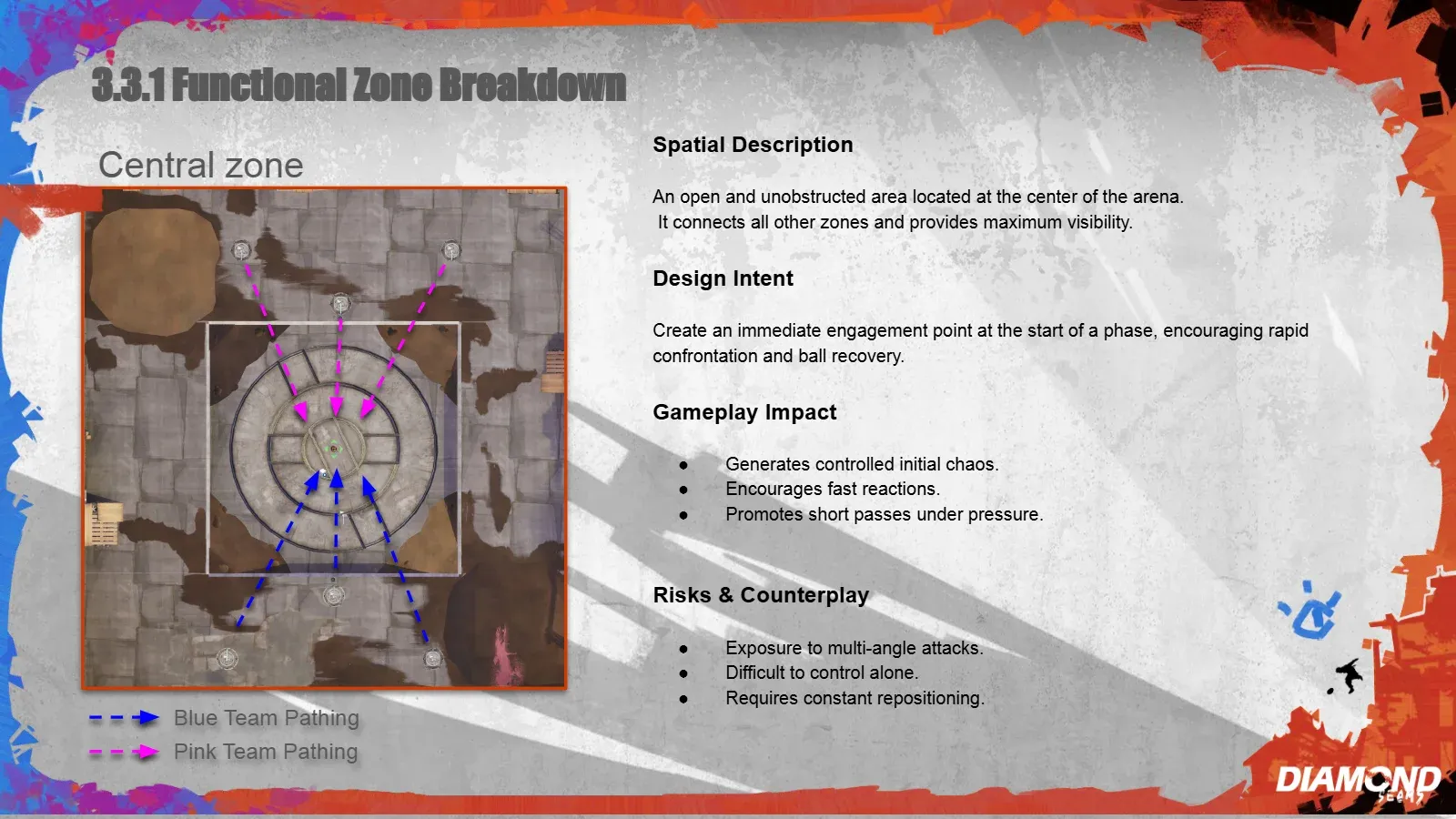
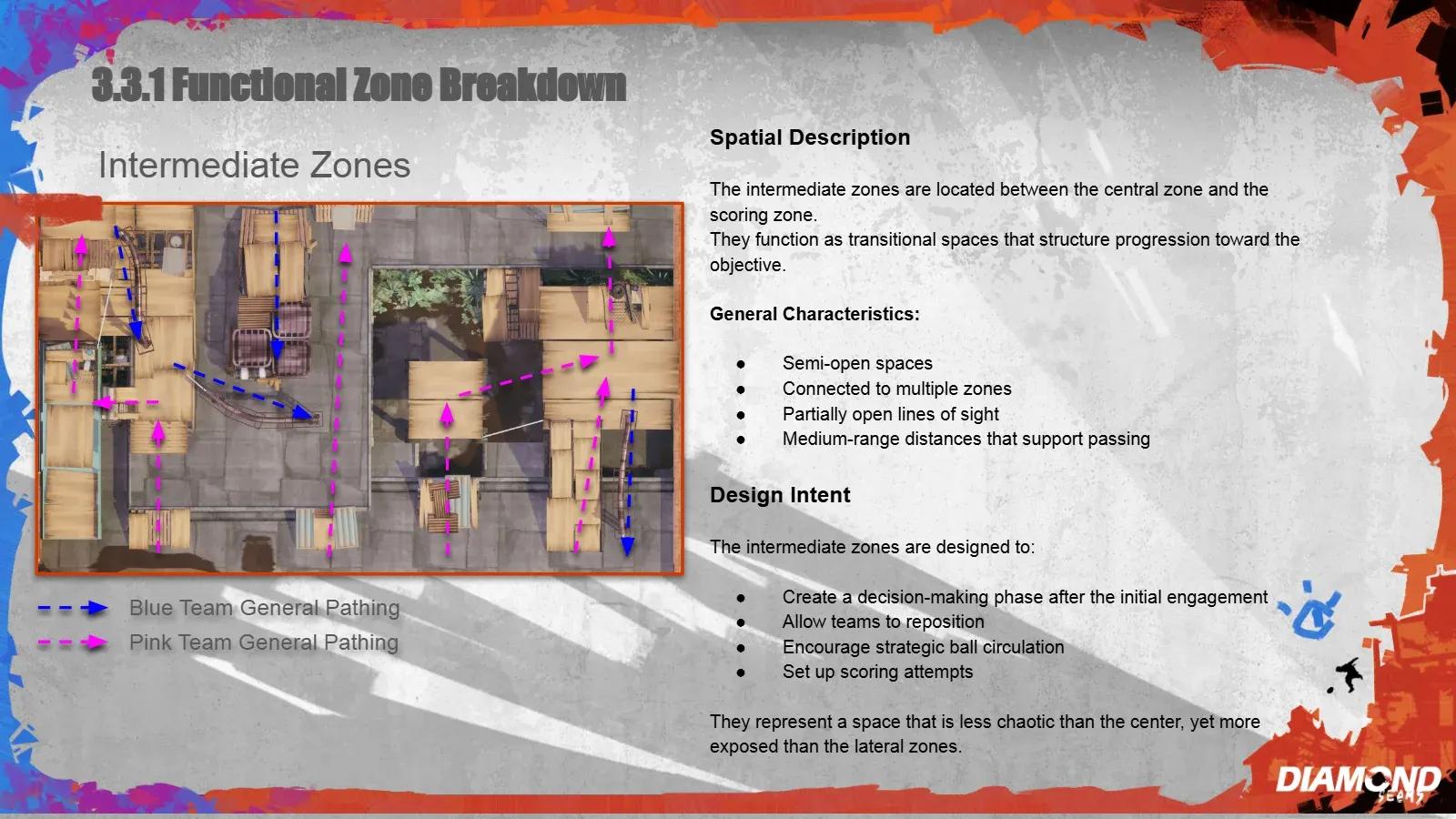
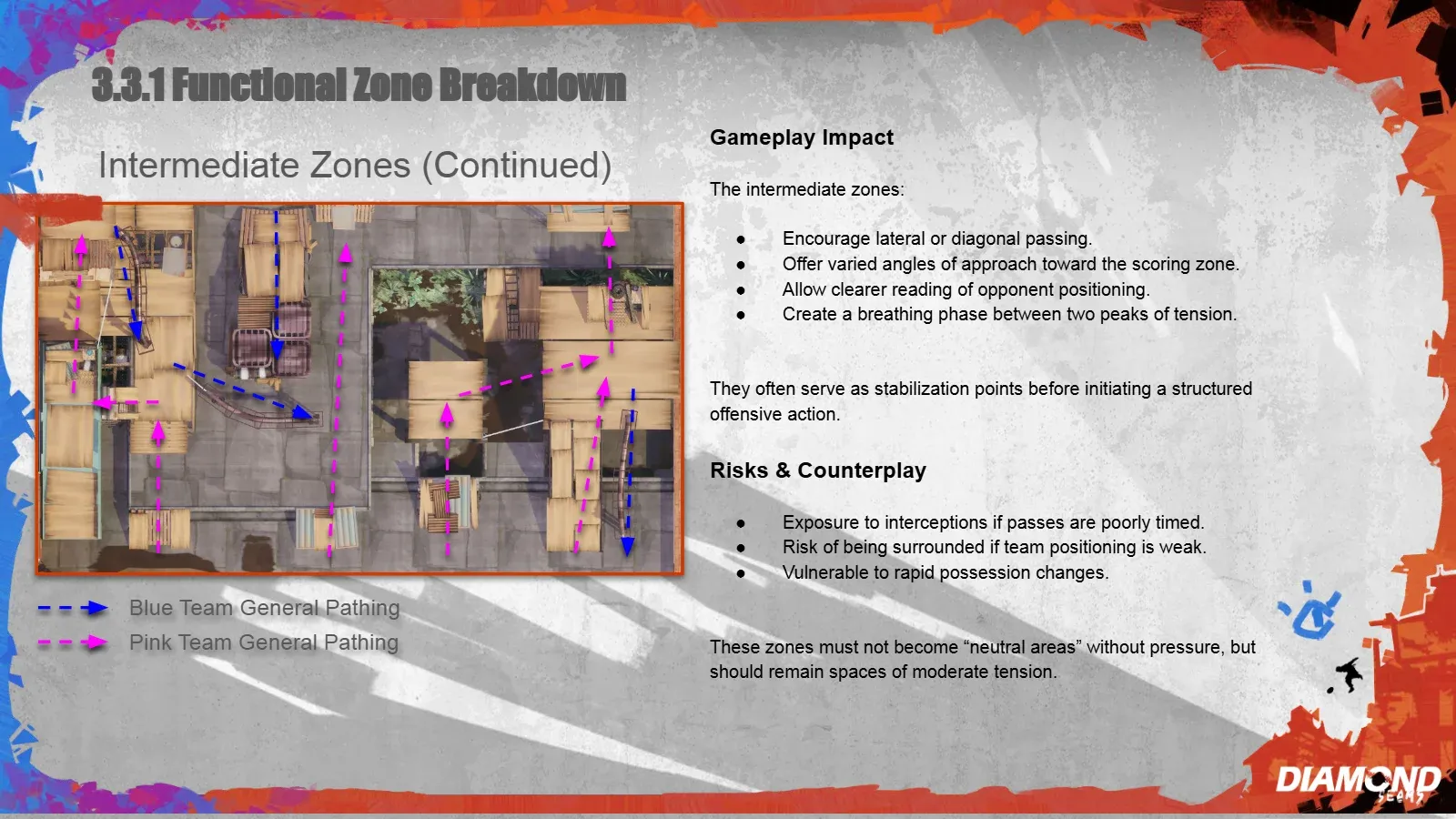
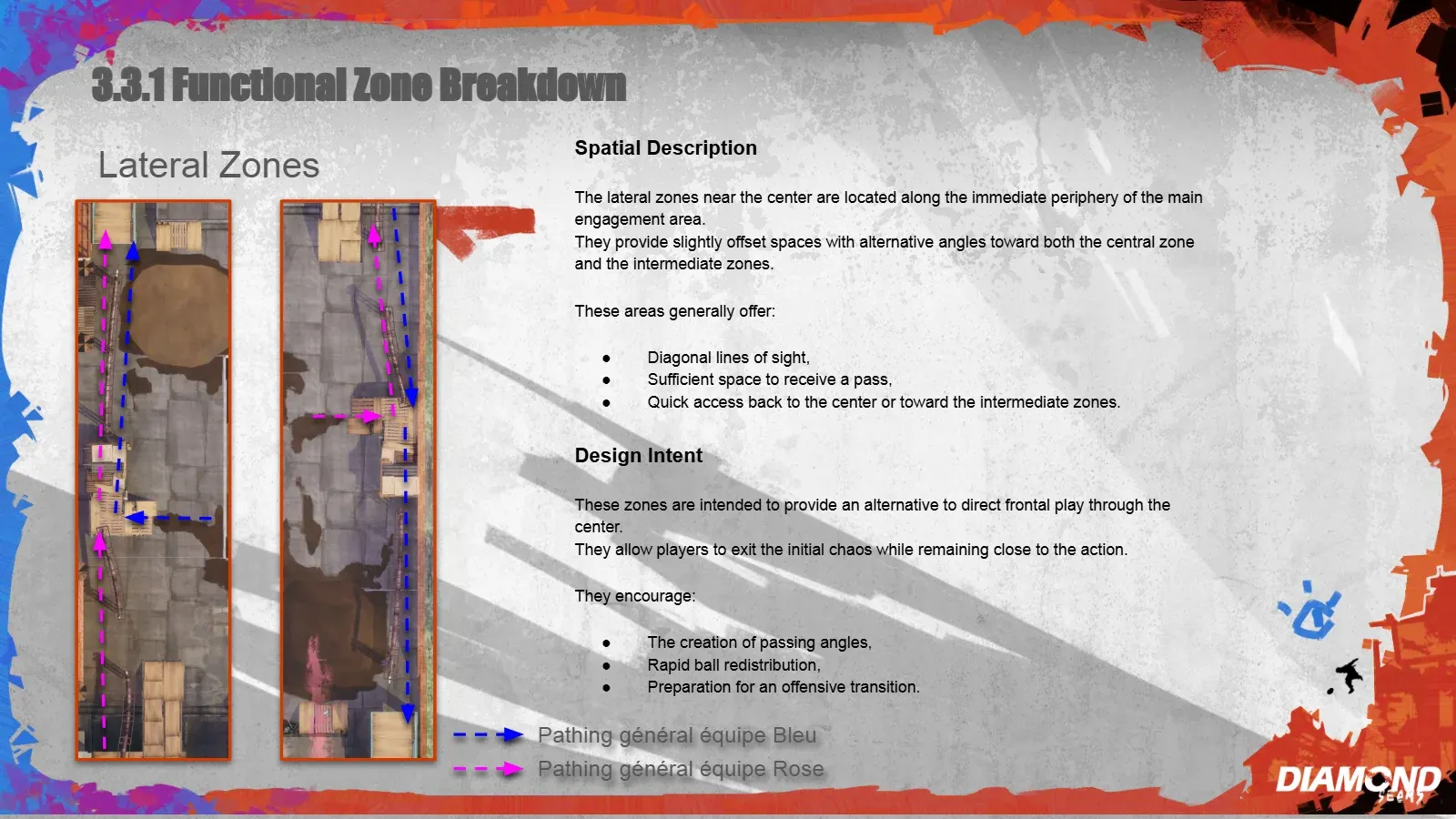
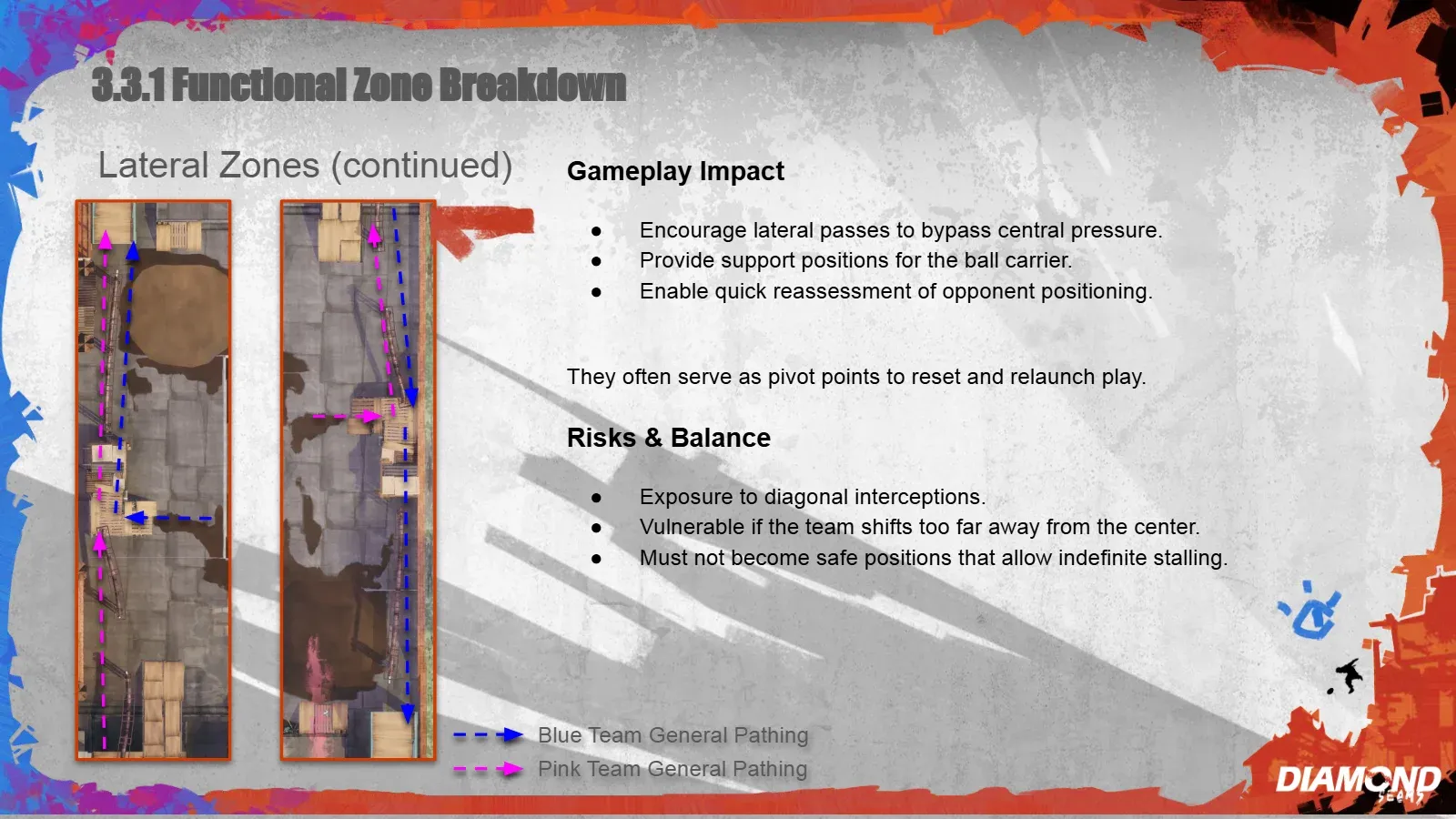
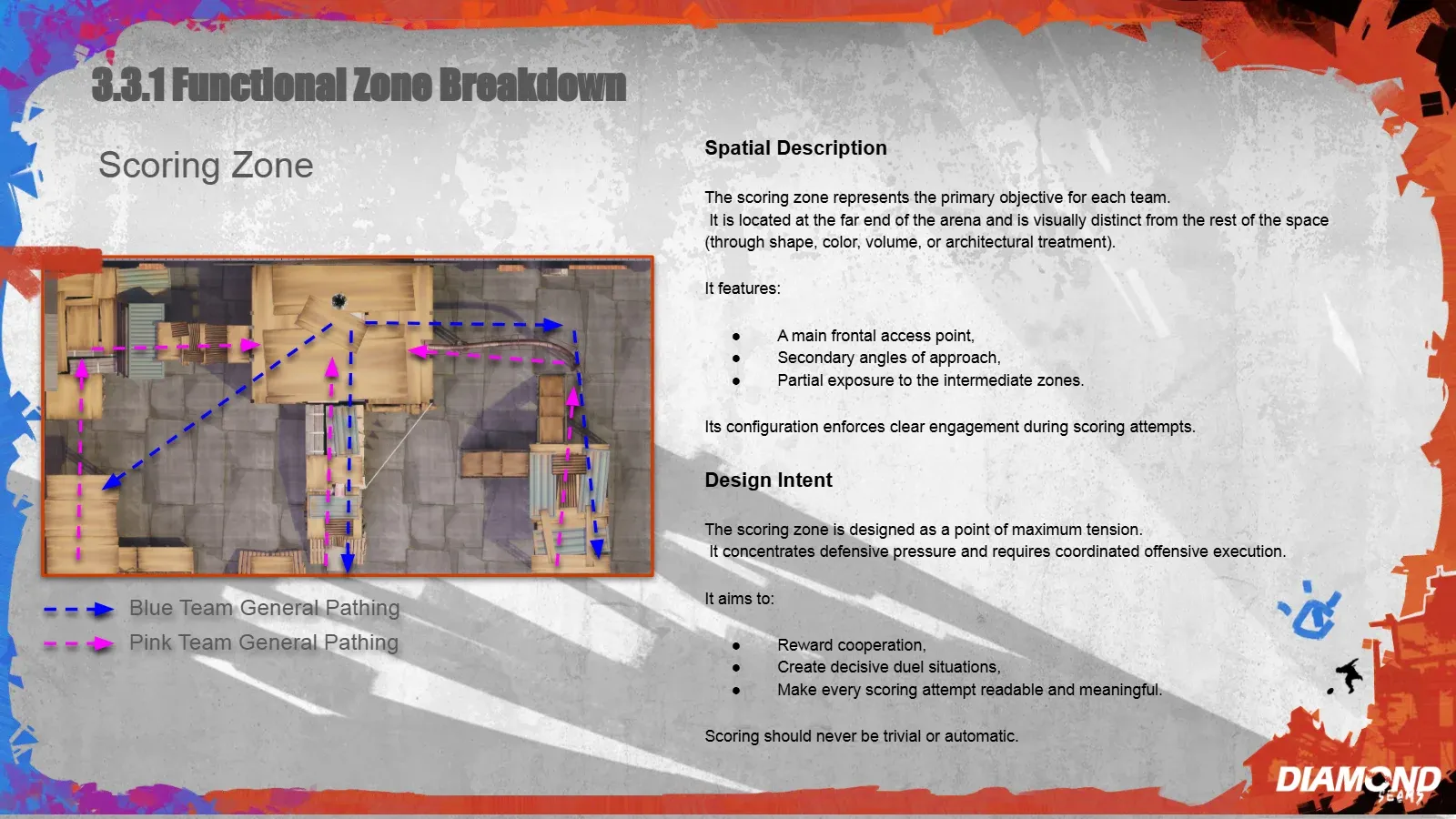
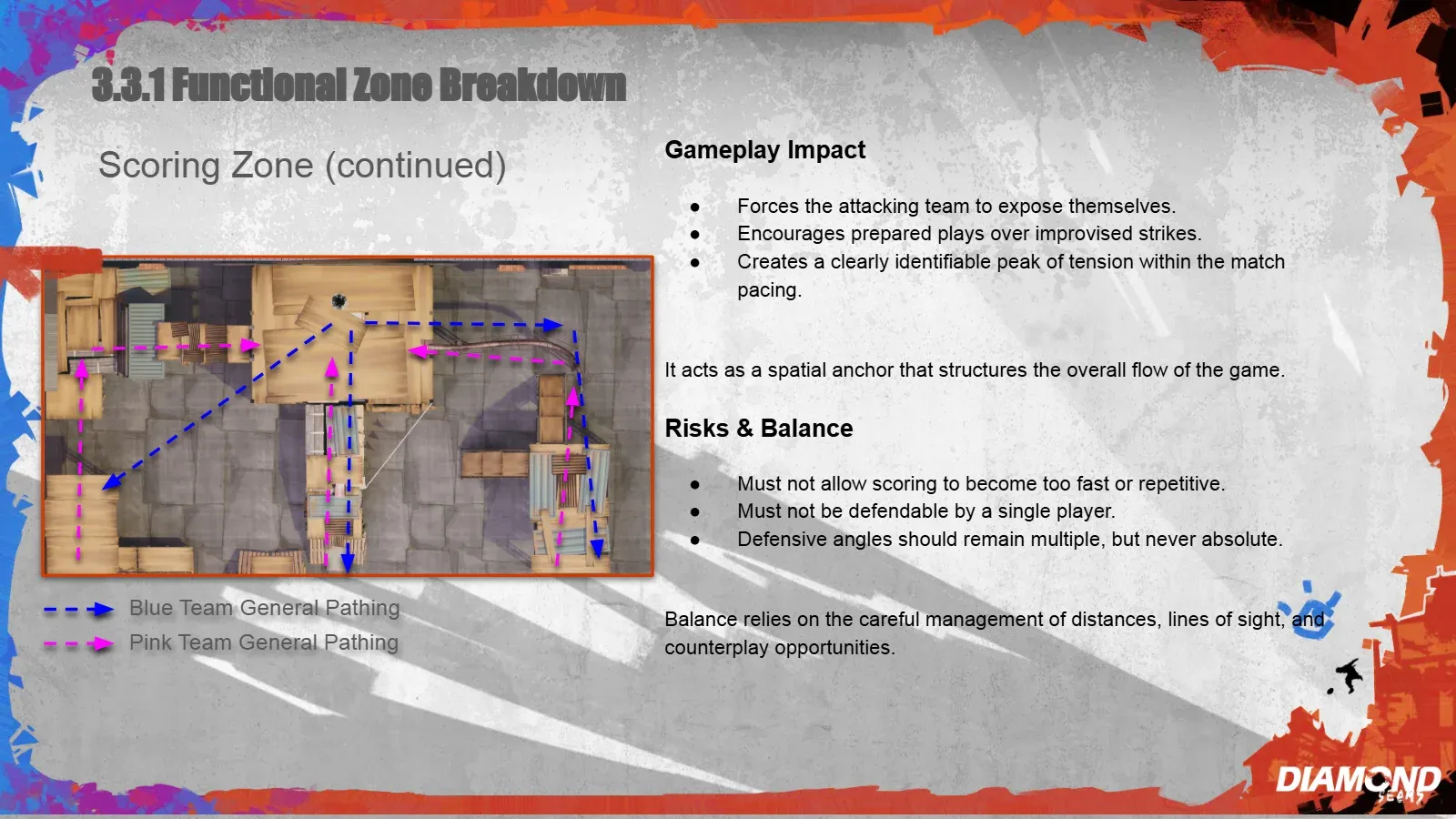
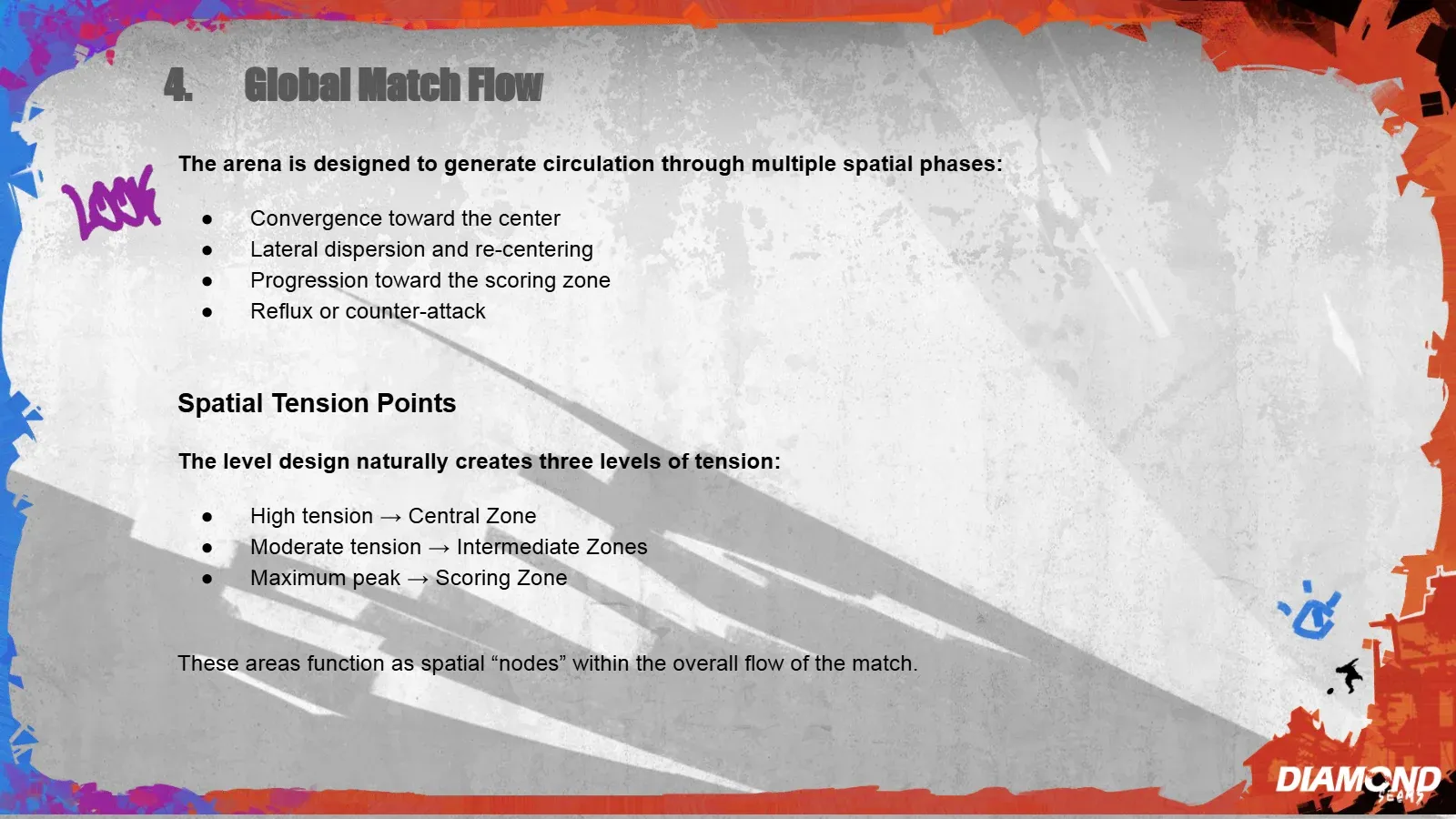
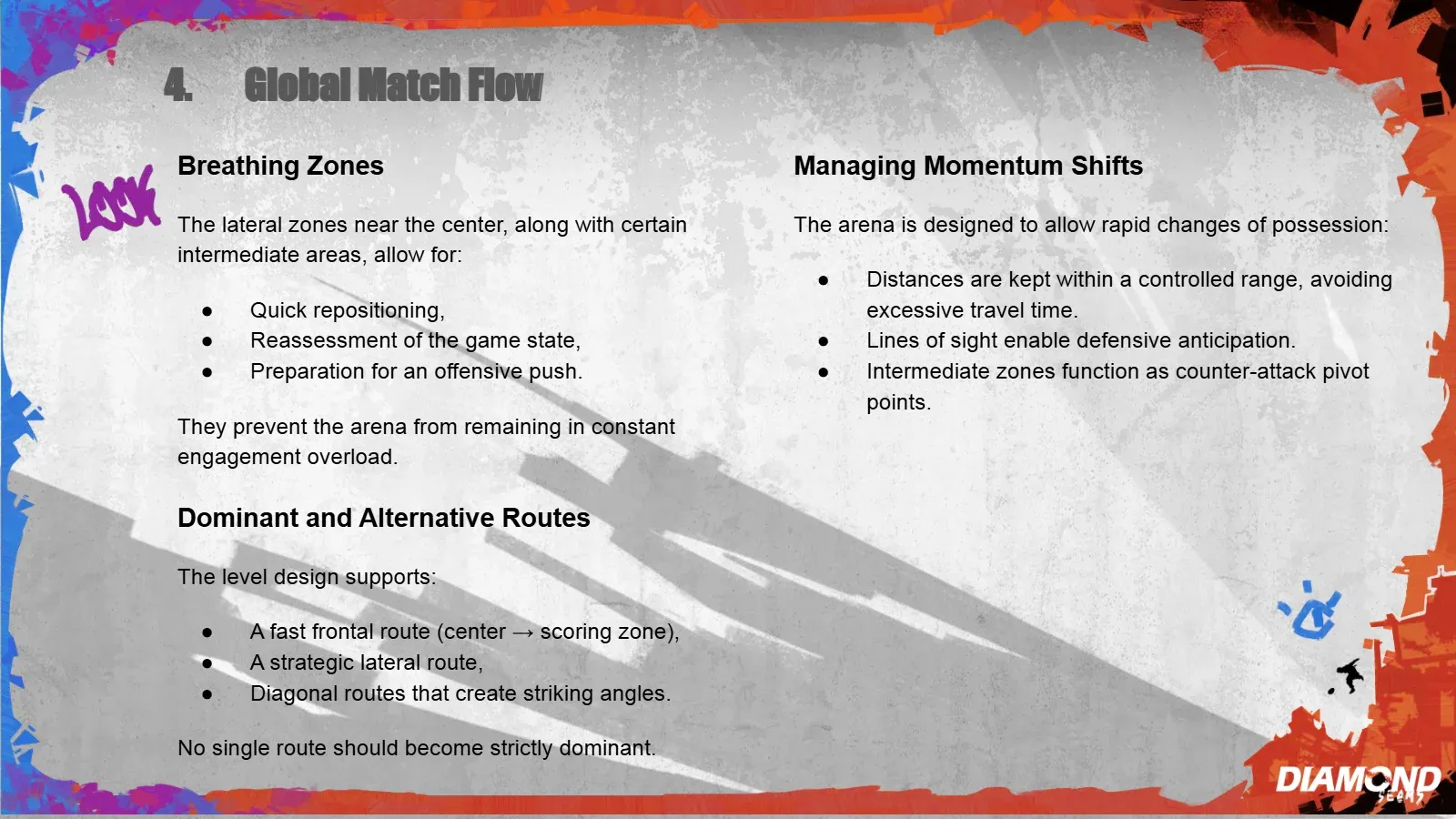
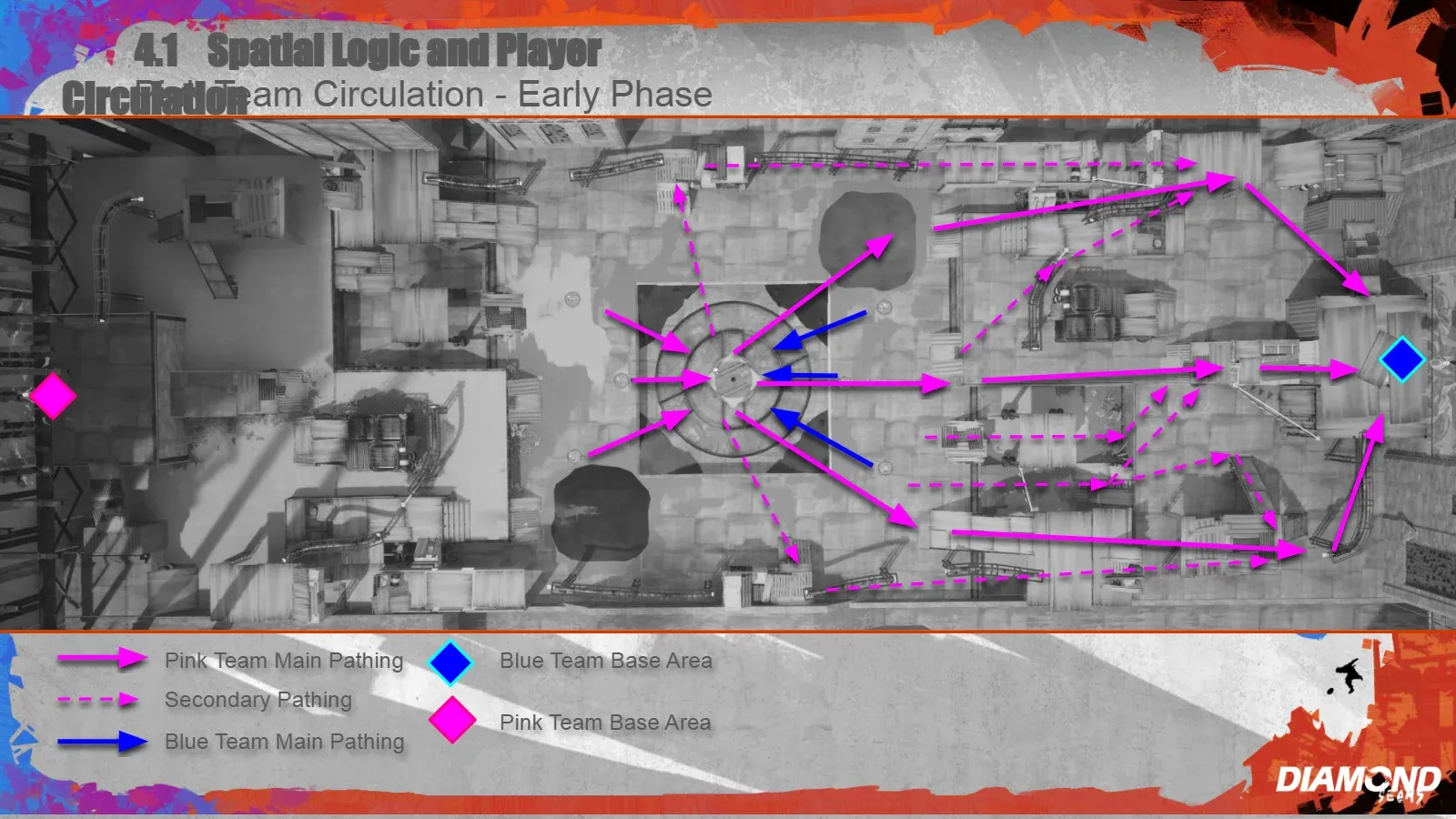
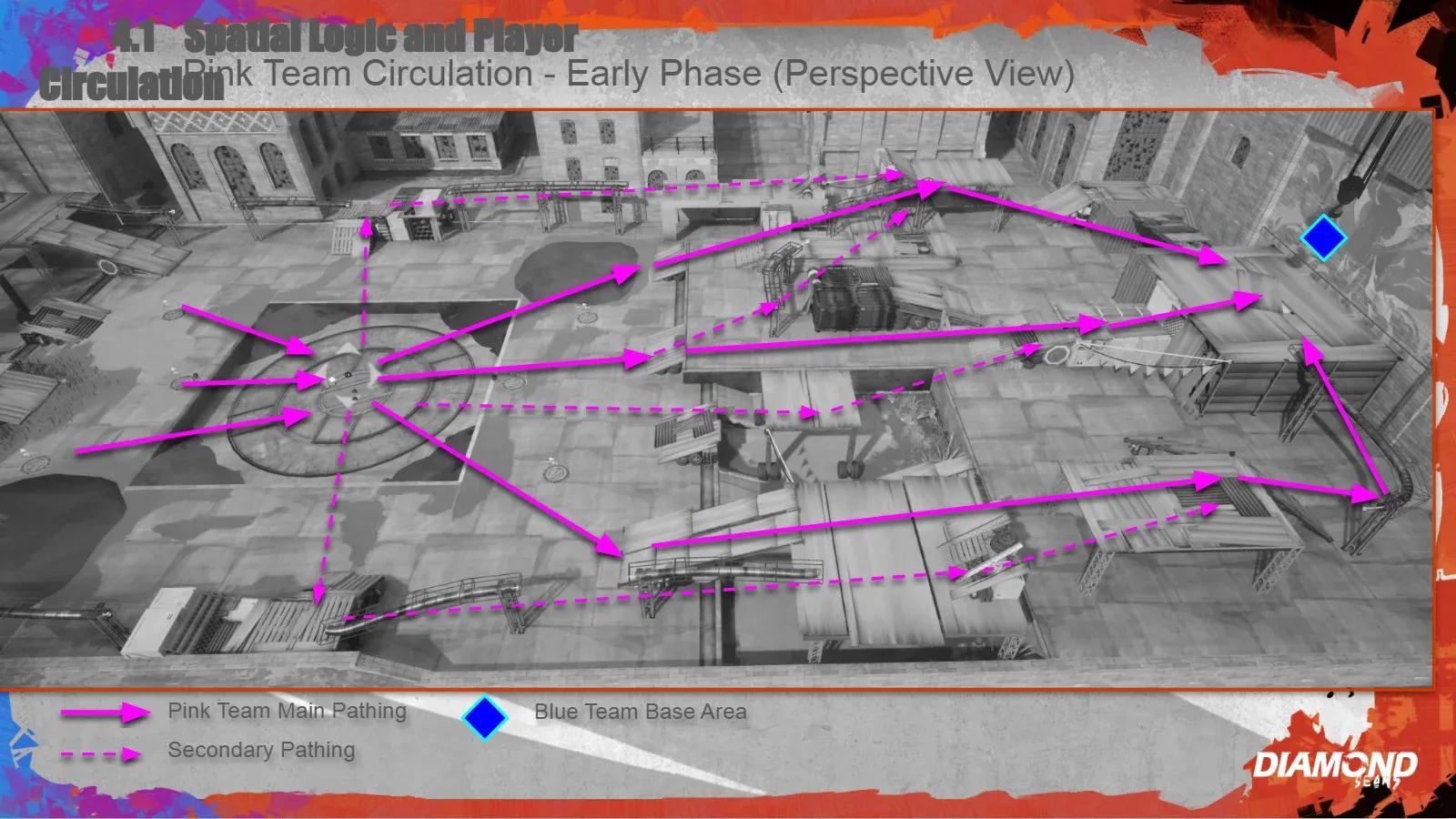
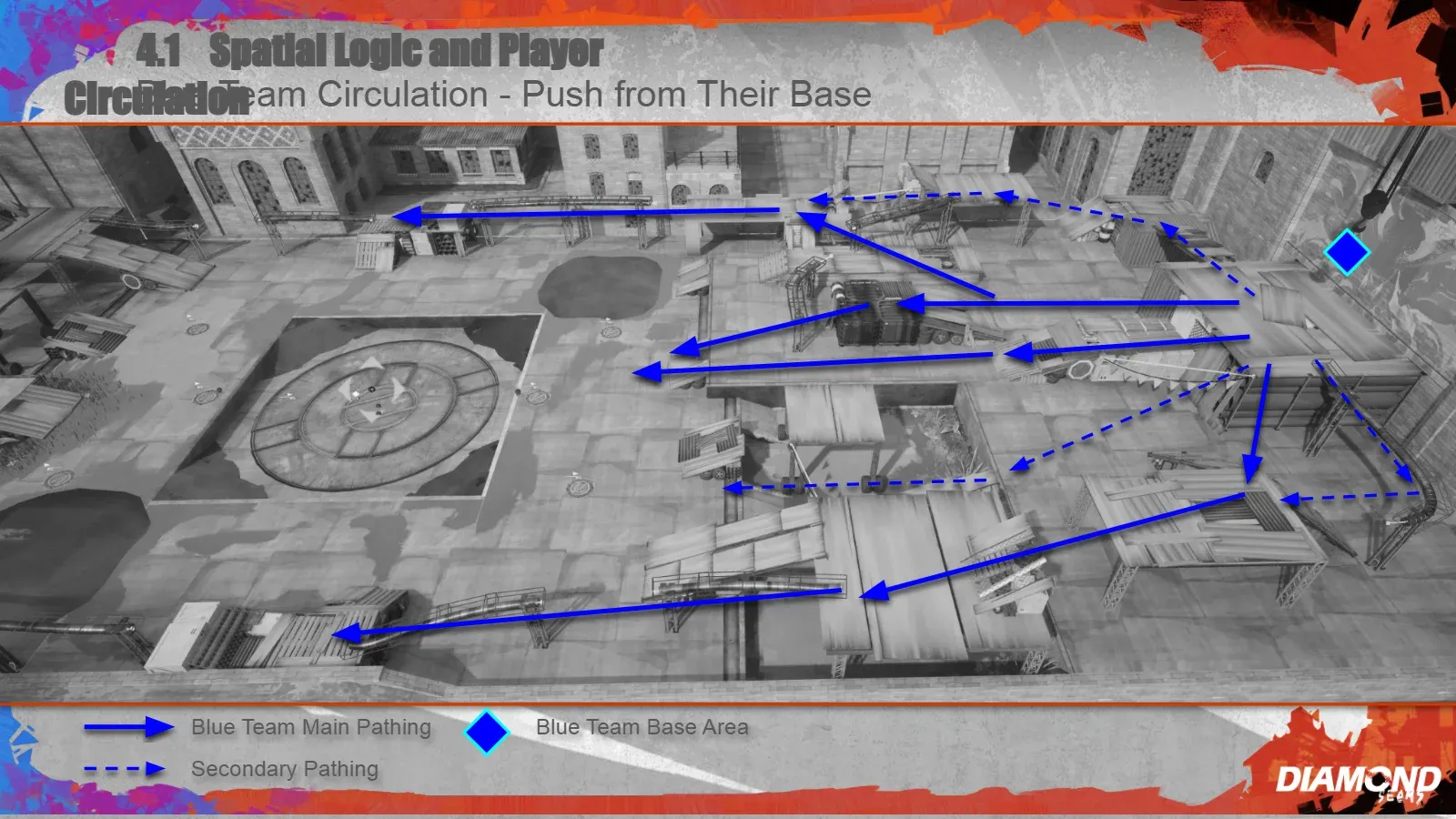
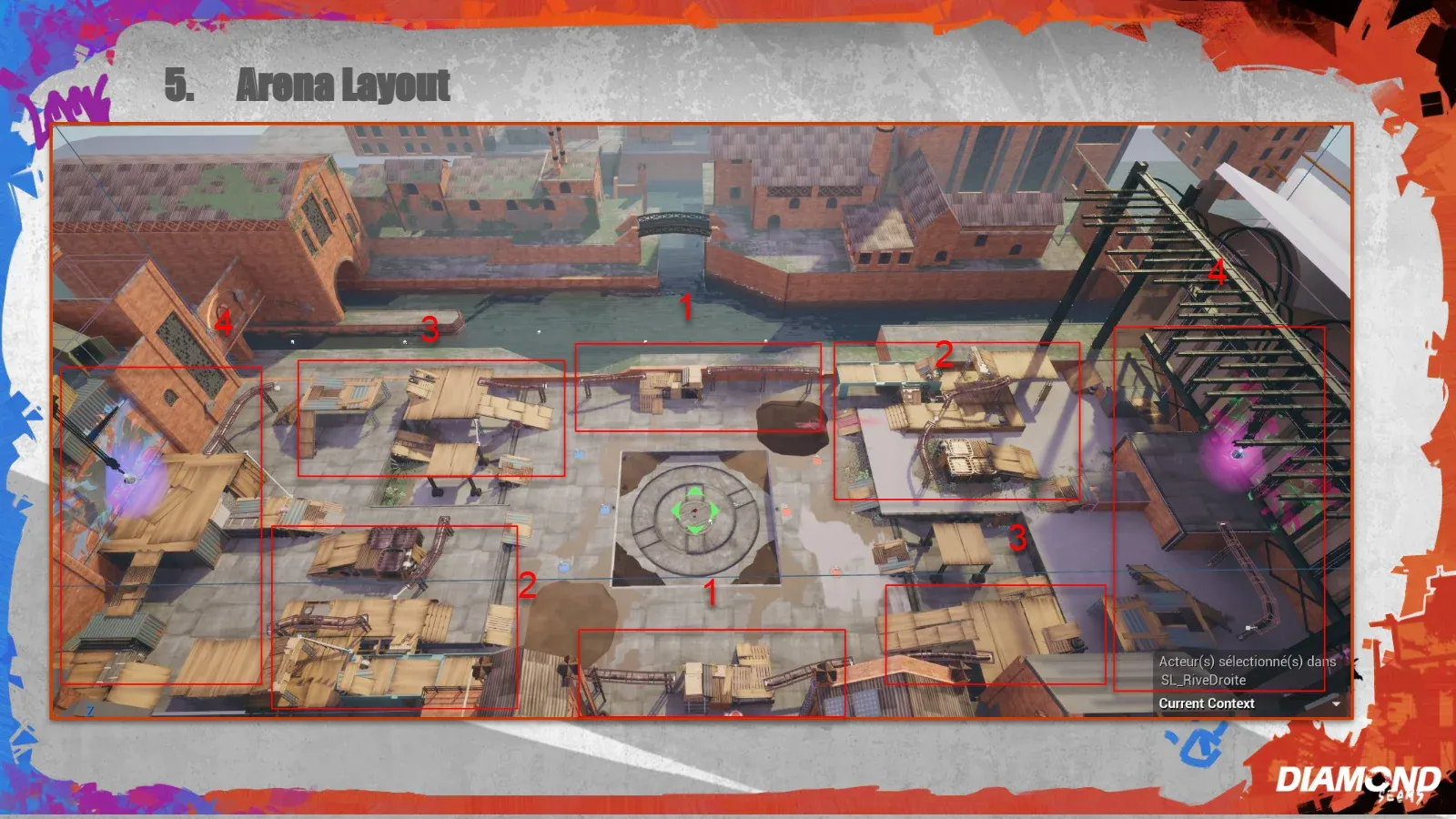
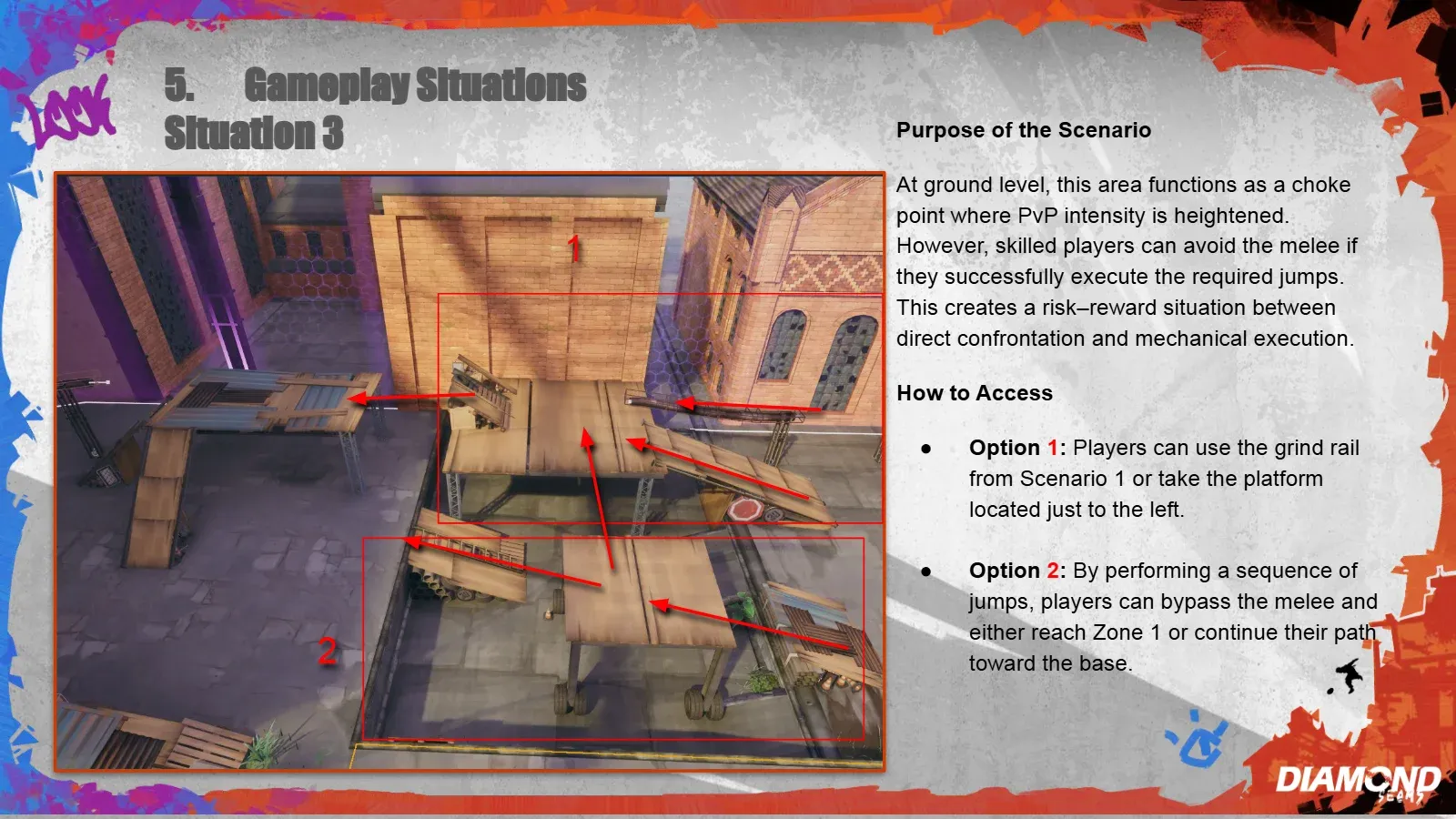
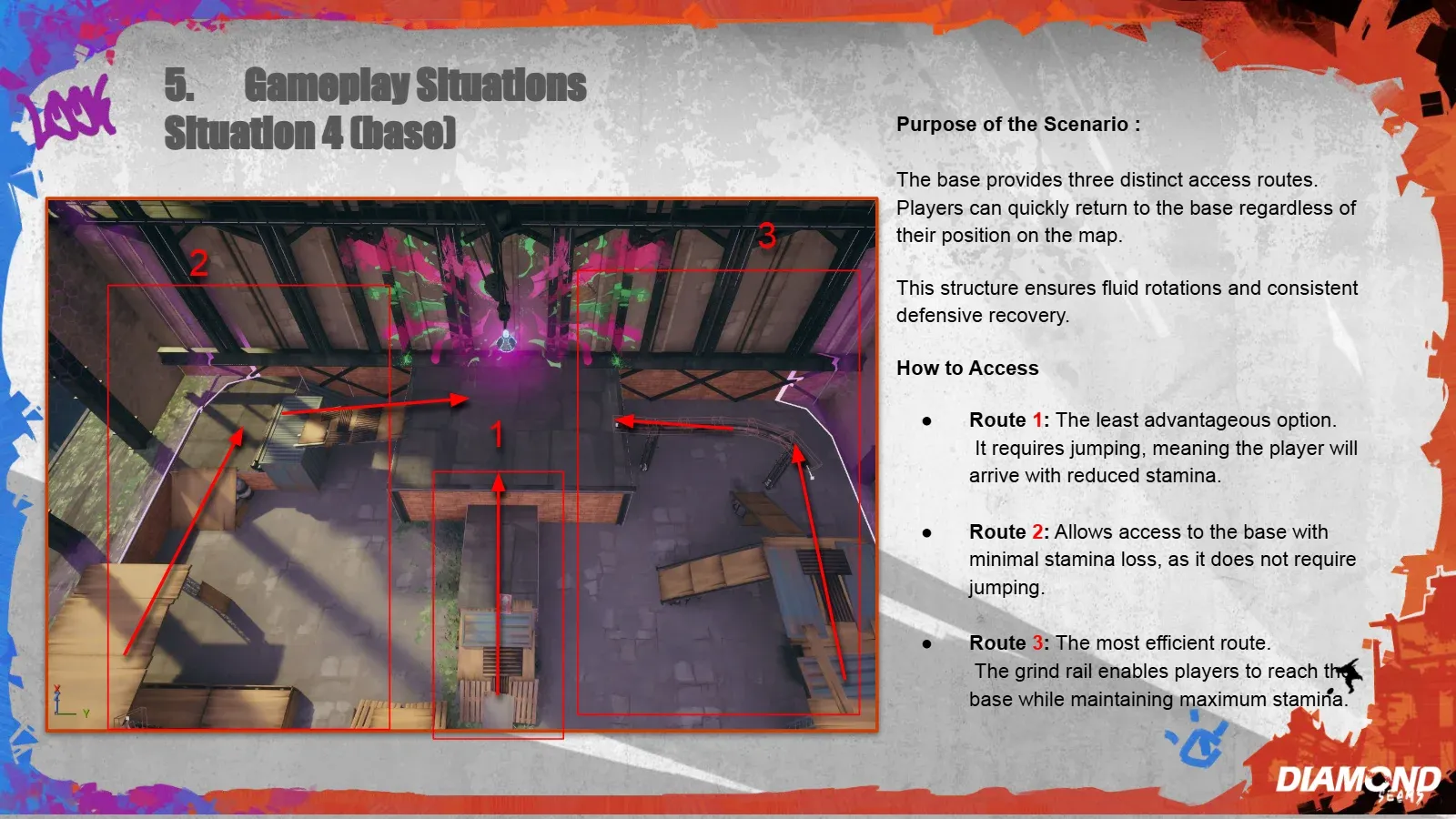
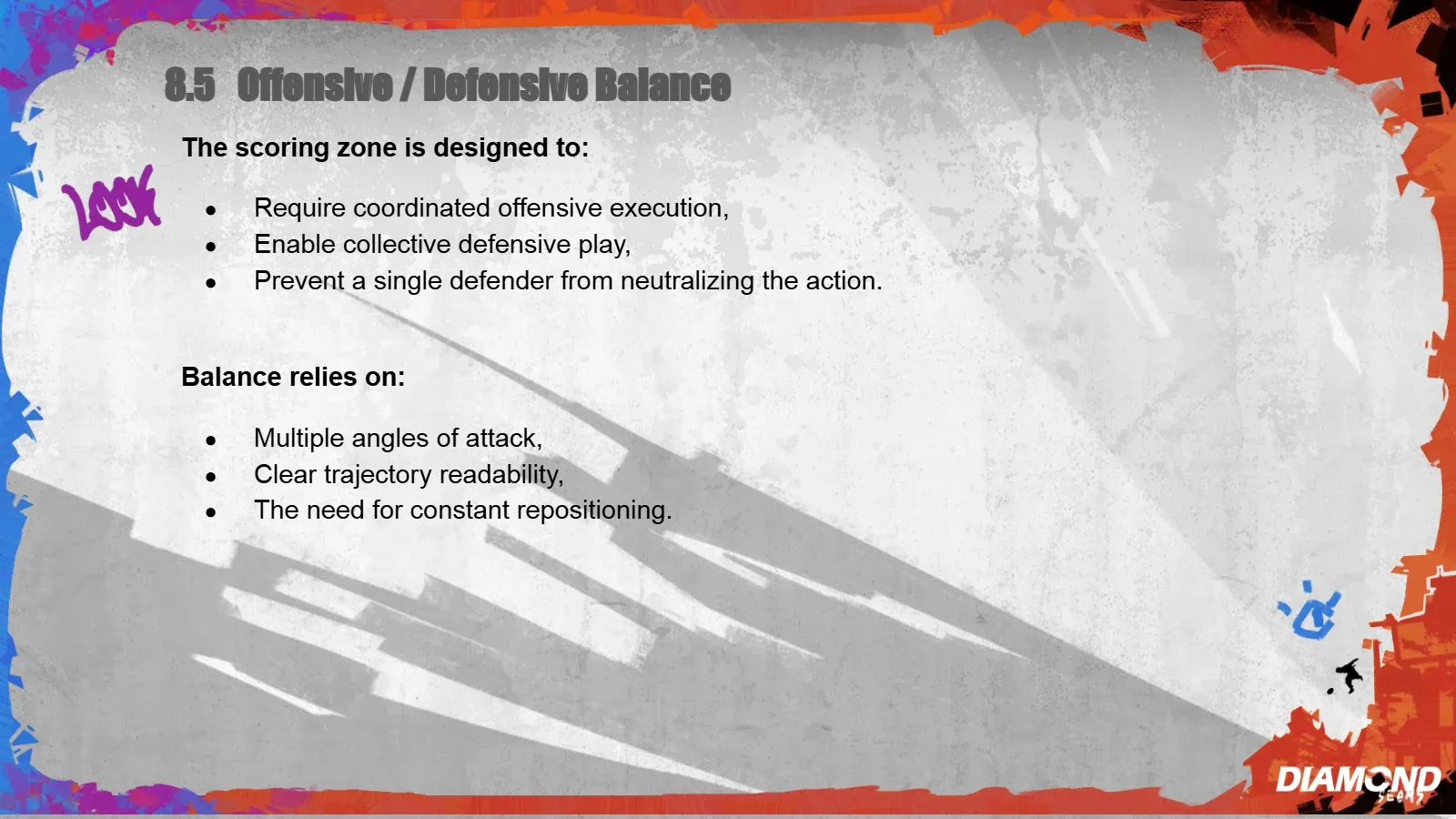
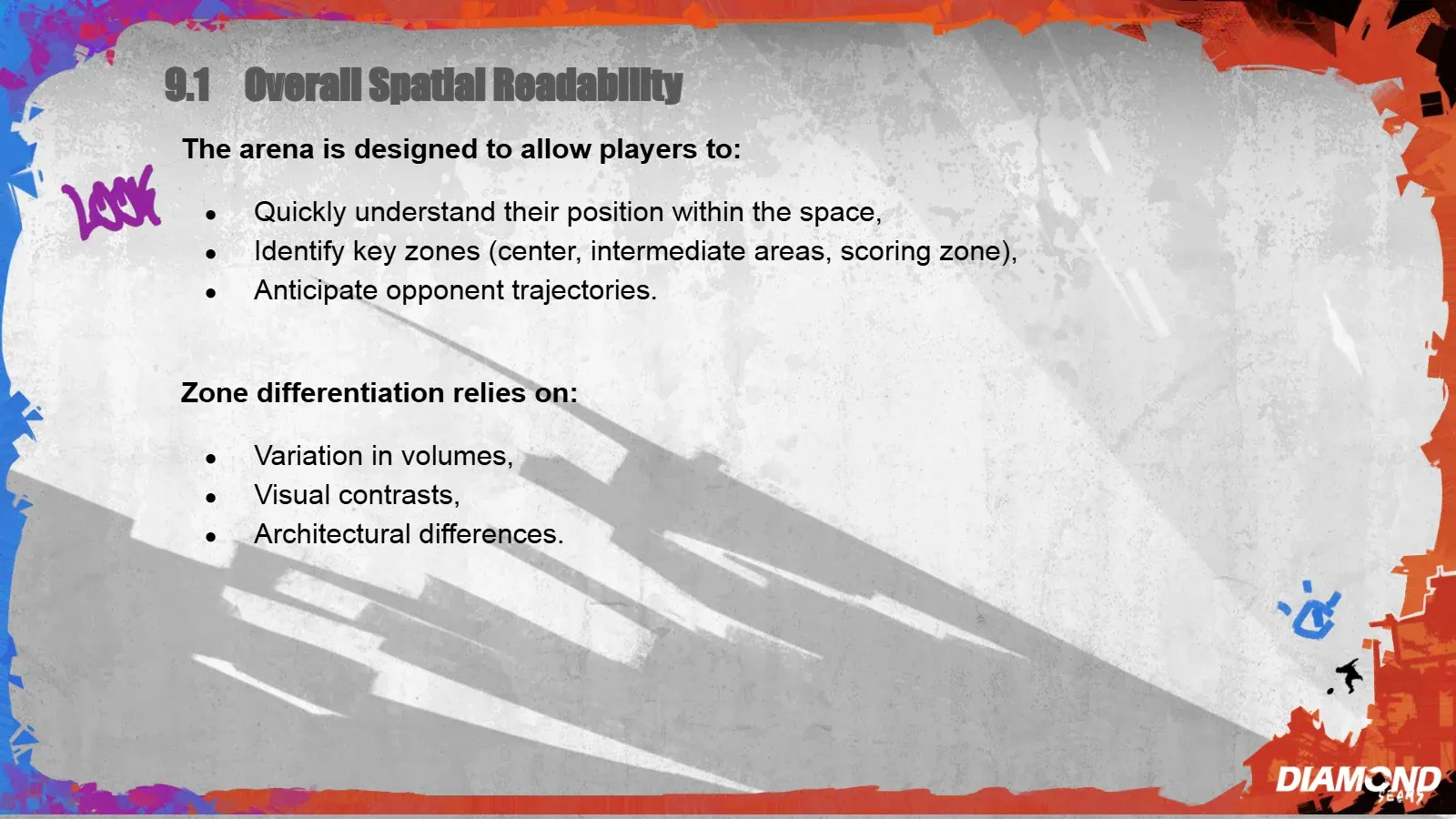
- A zoning with graduated tension: the central zone for fast engagement, the intermediate and side zones for passes and repositioning, the scoring zone as the tension peak, never defendable alone.
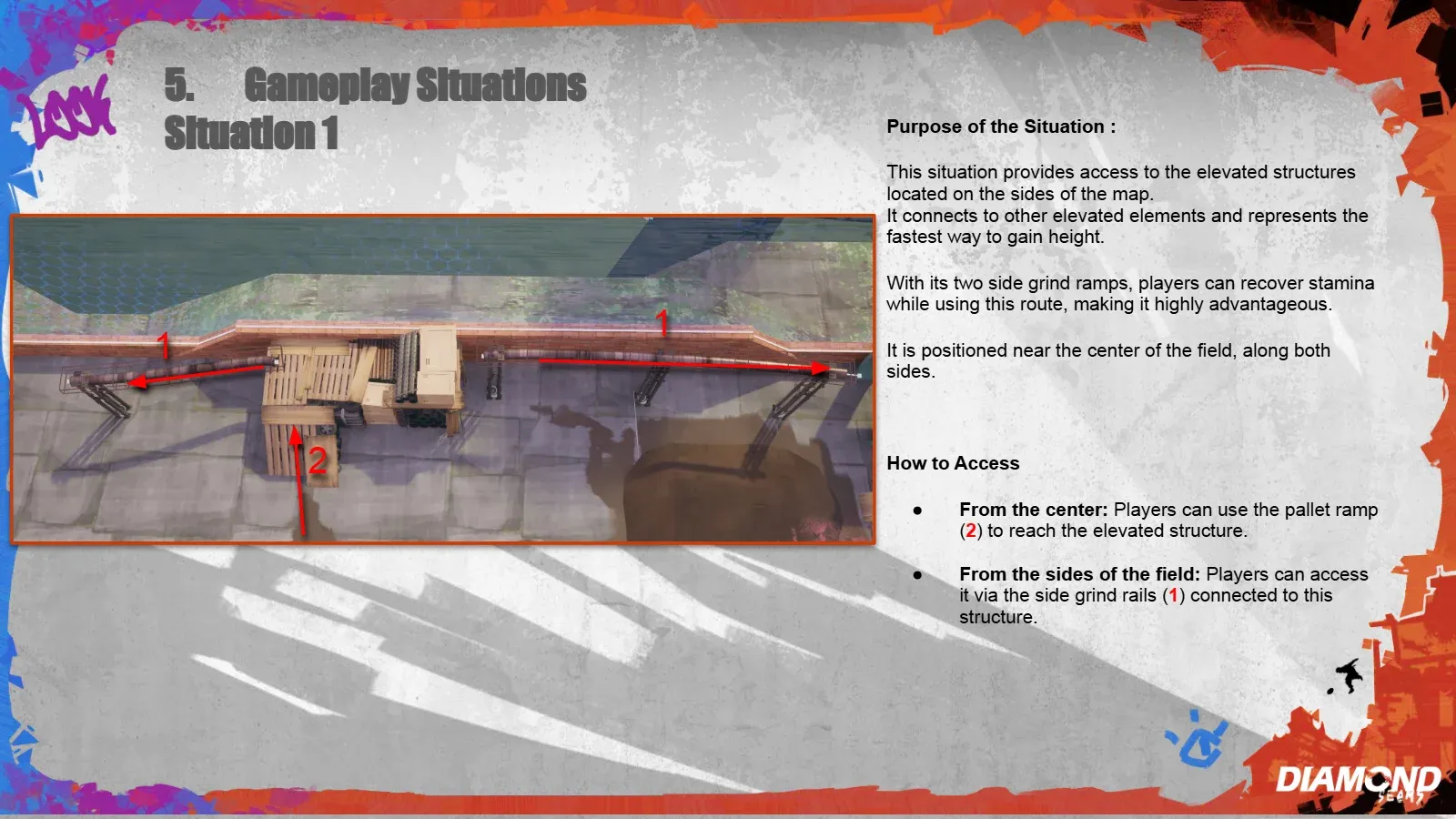
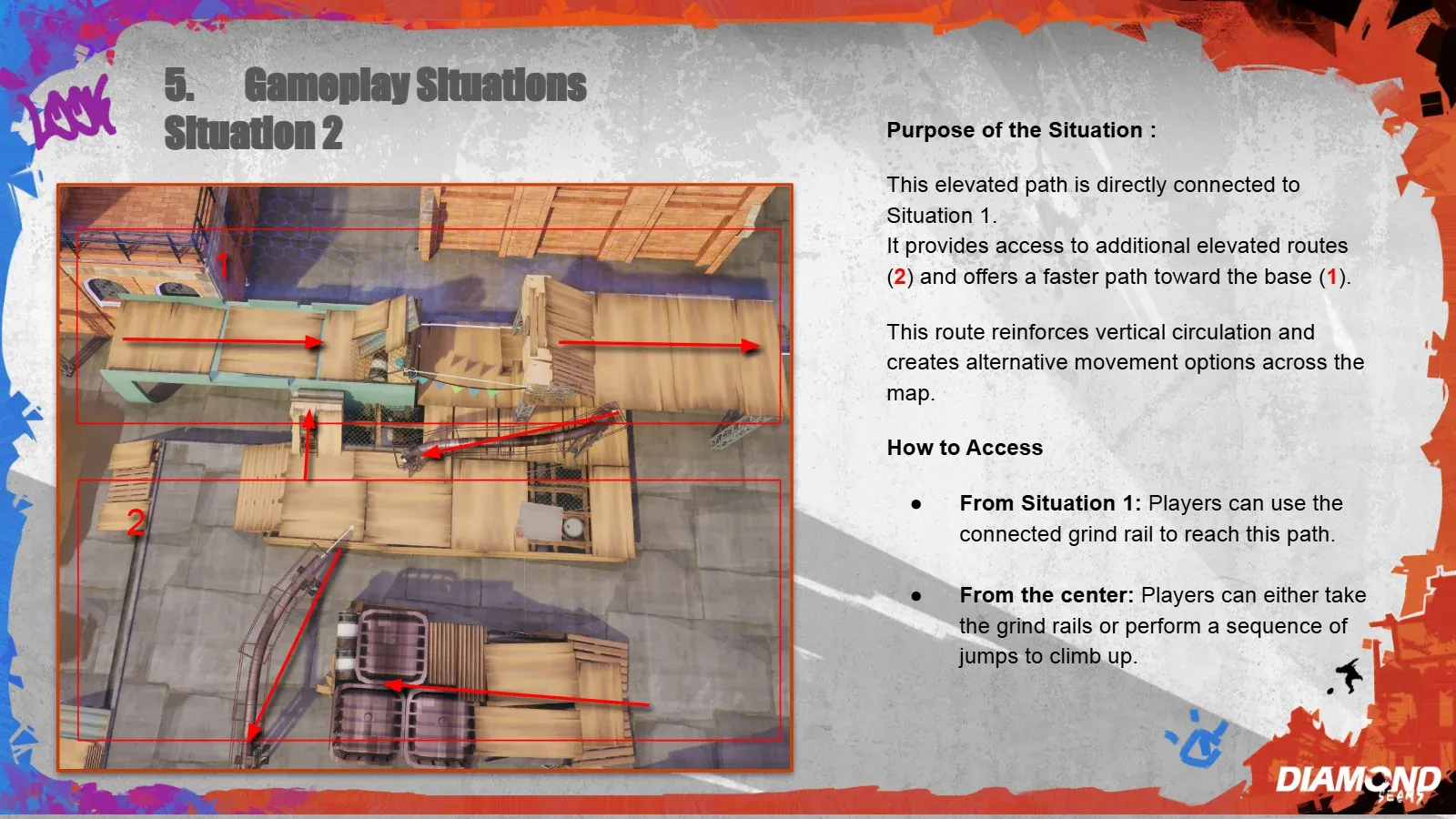
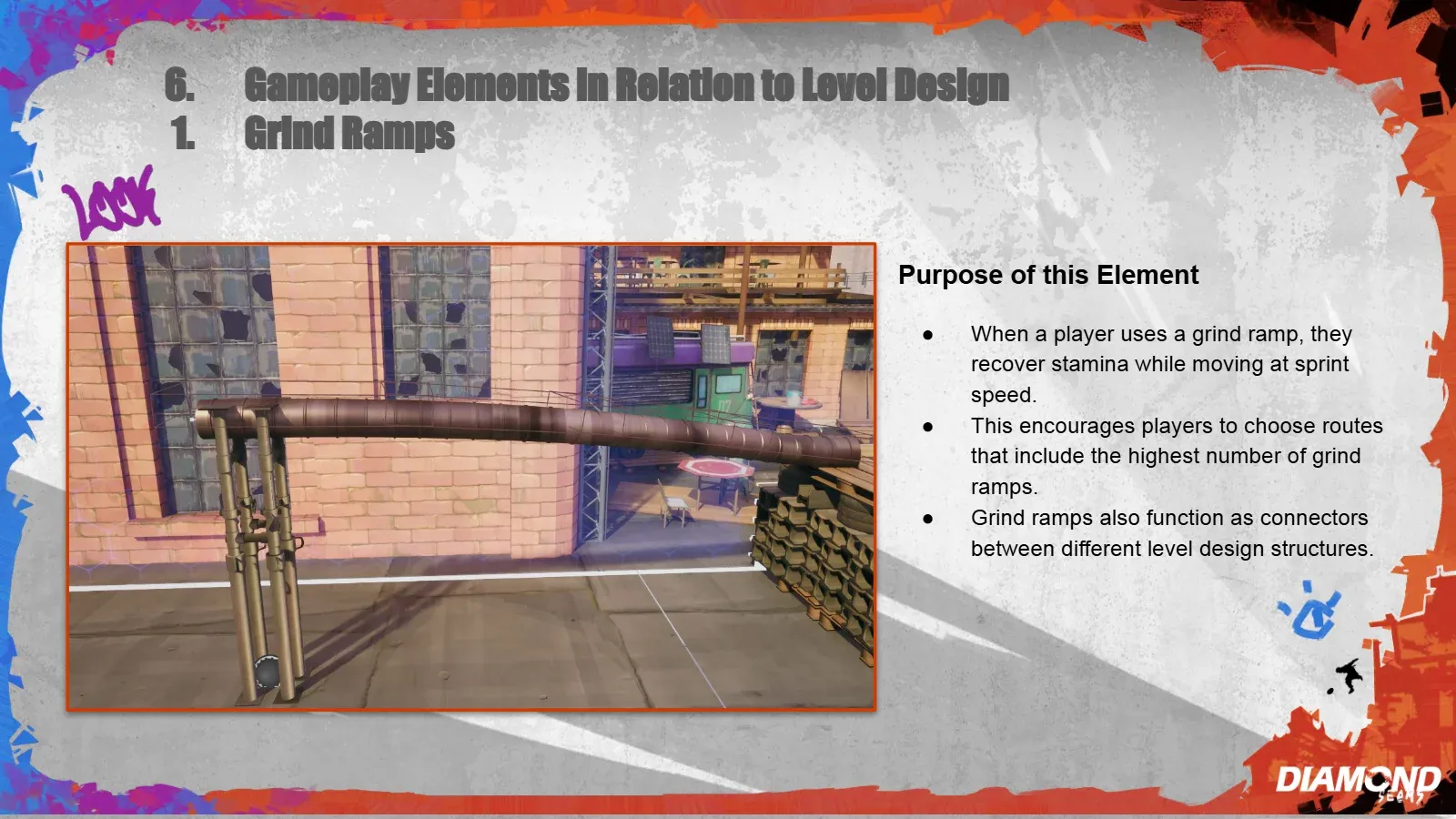
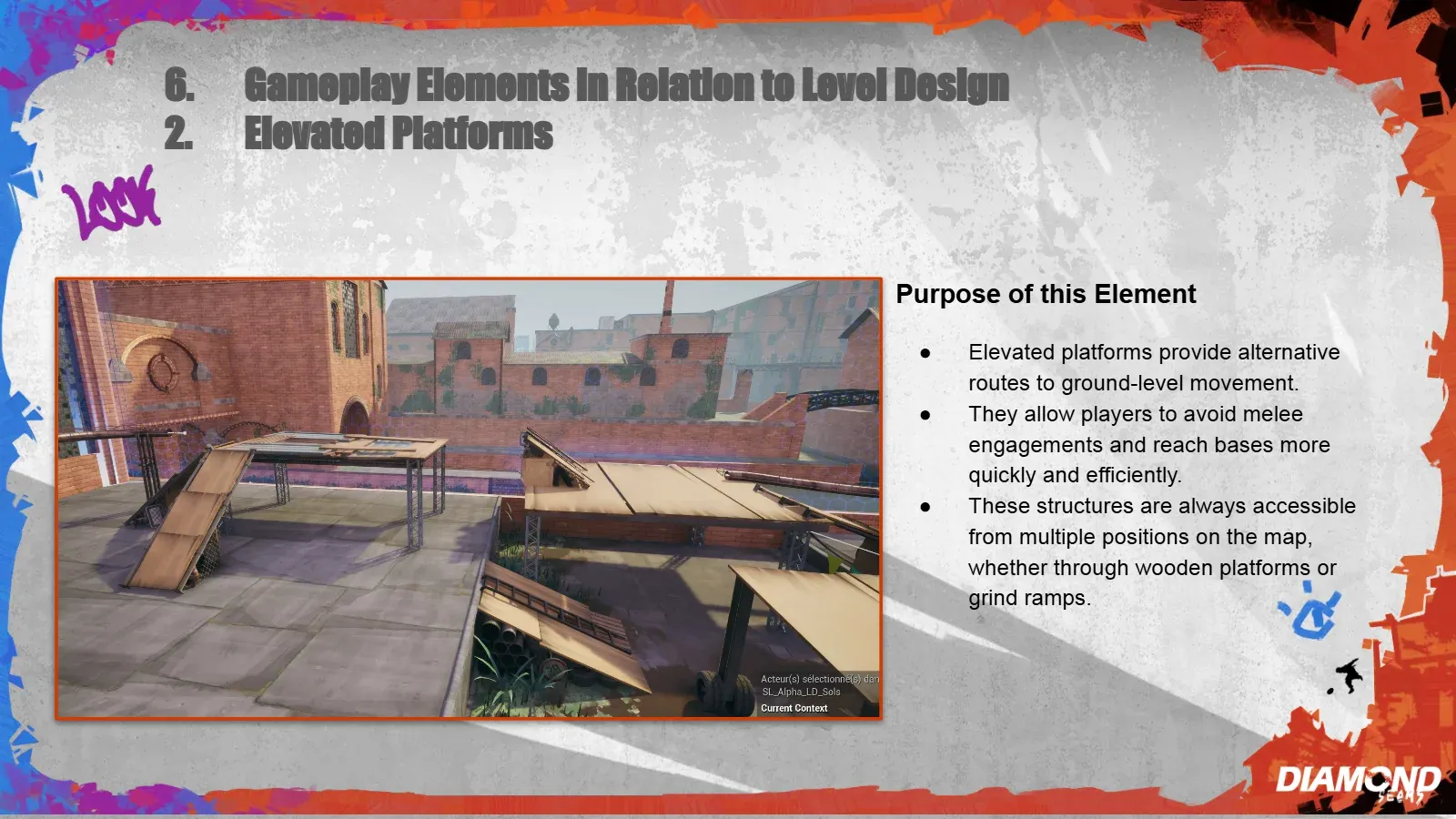
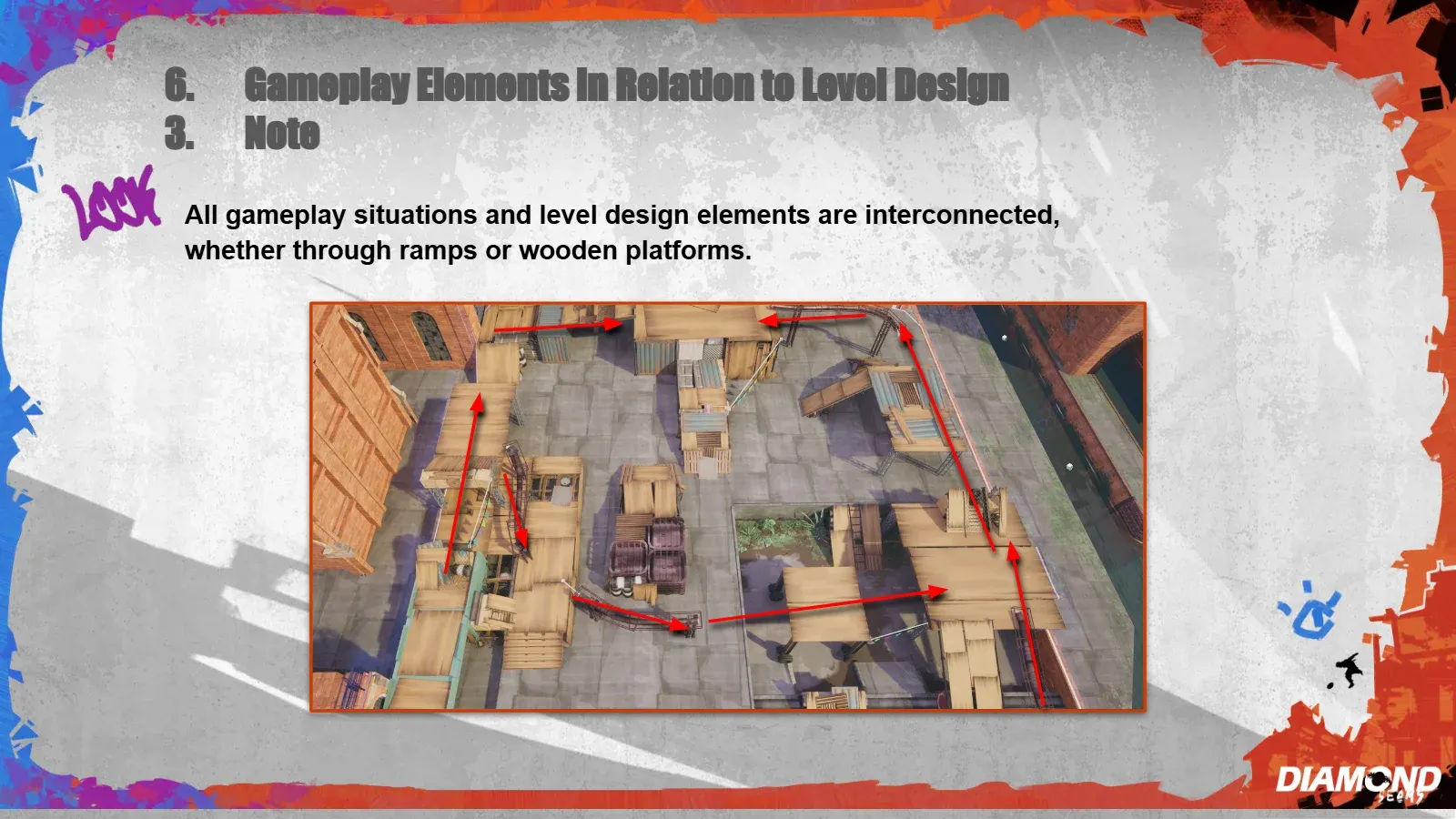
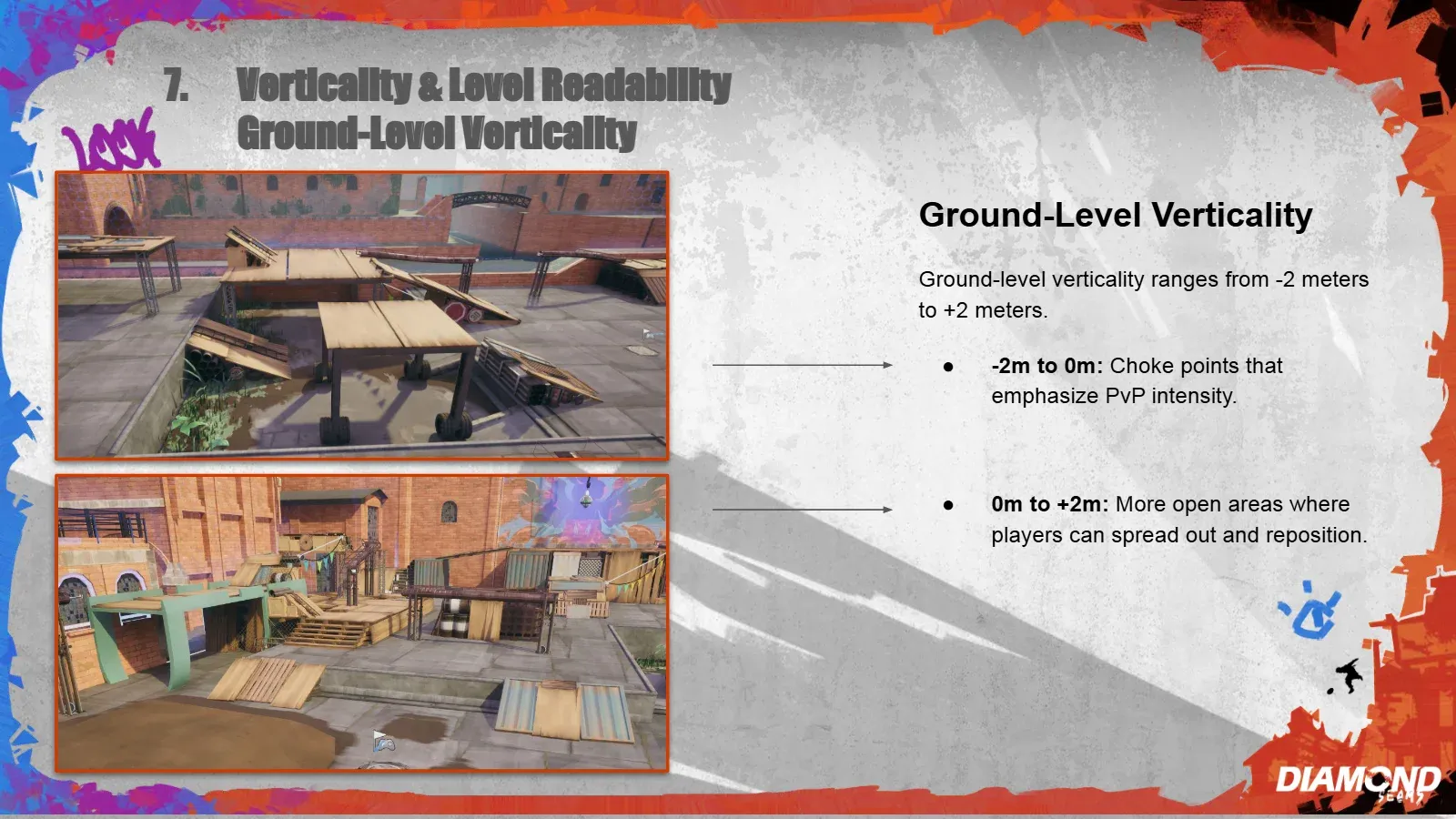
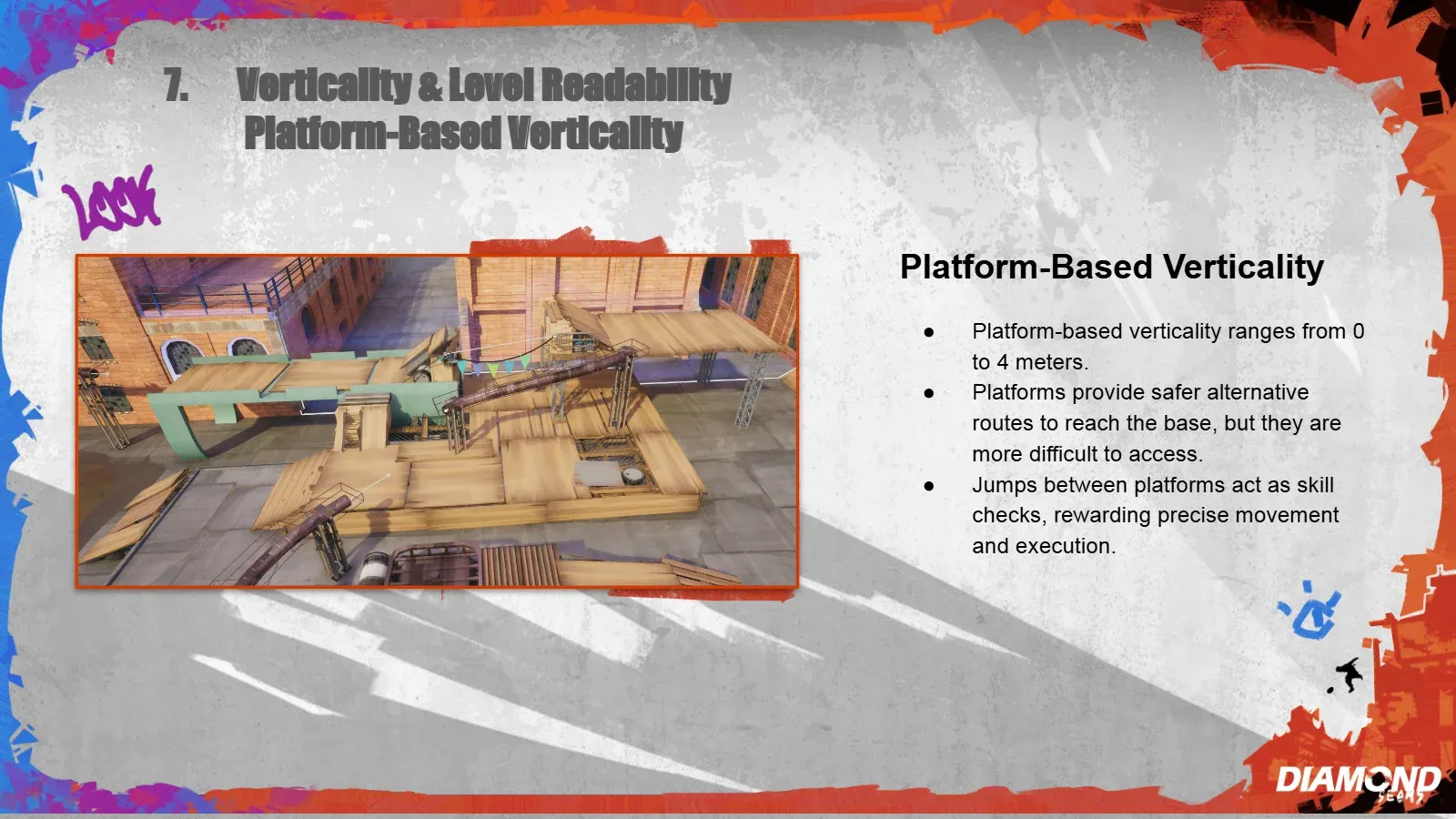
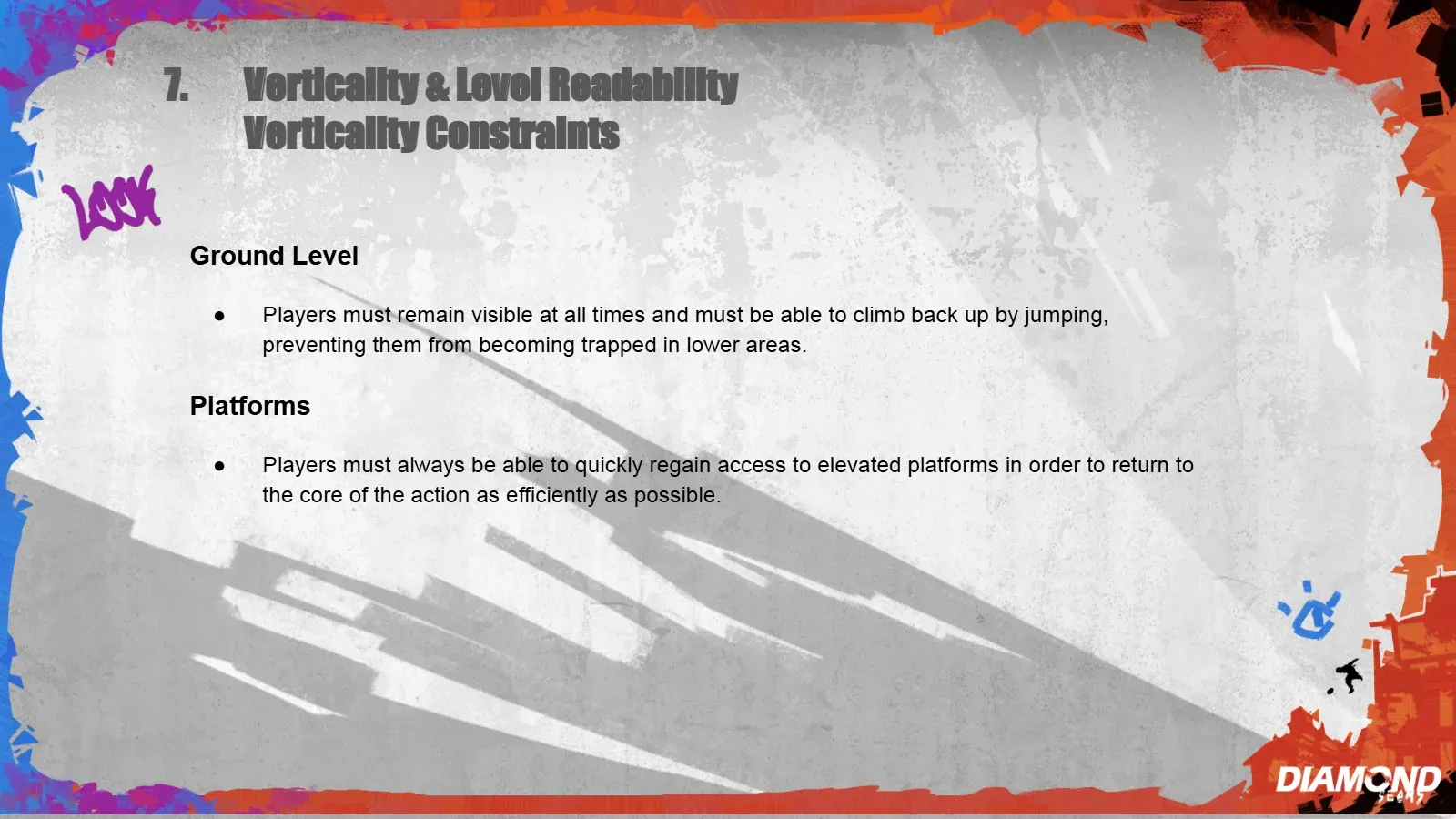
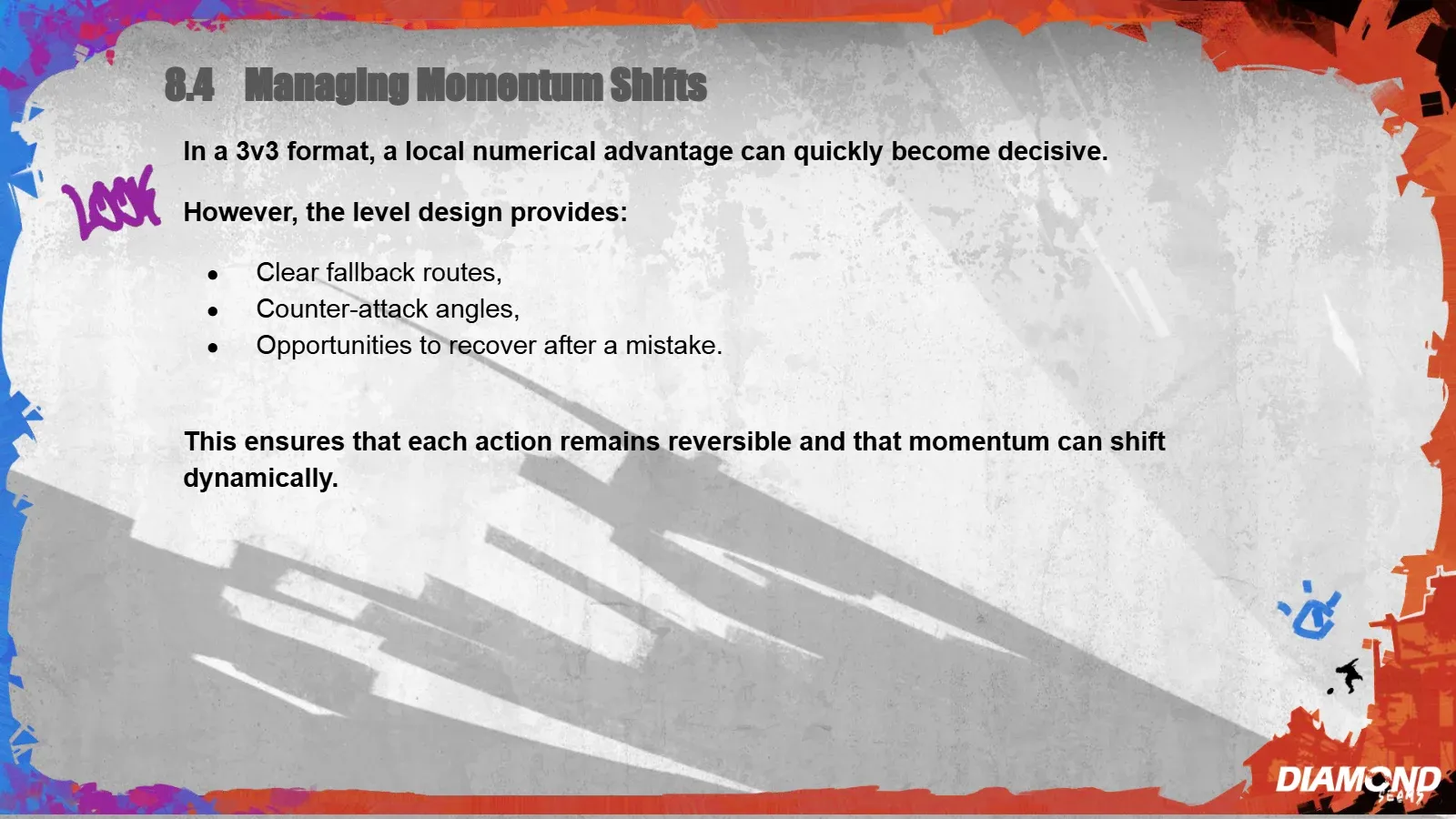
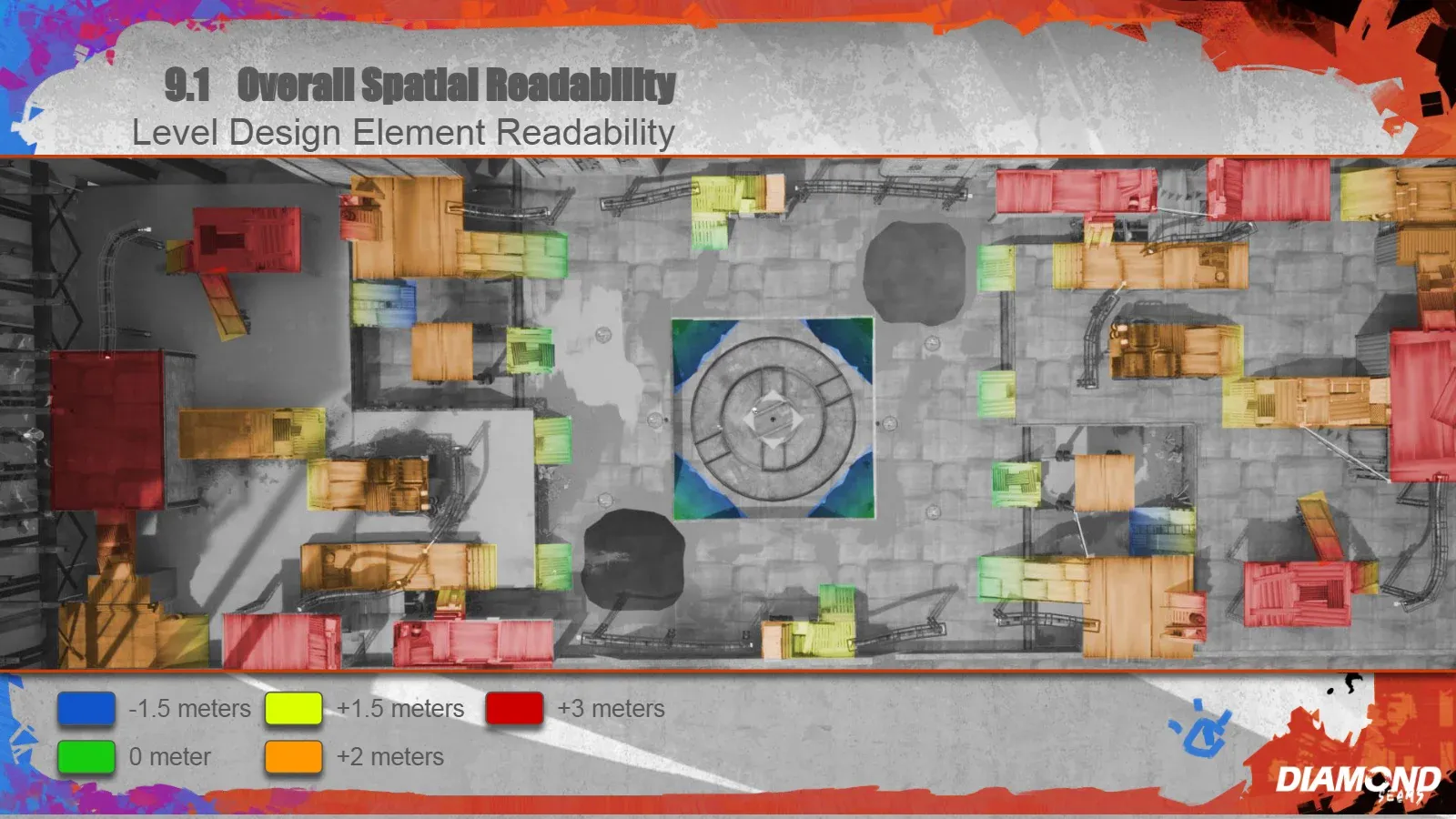
- A useful verticality: grind rails and raised structures give vision and speed, without ever being a safe spot, and you can always get back into the action from the ground.
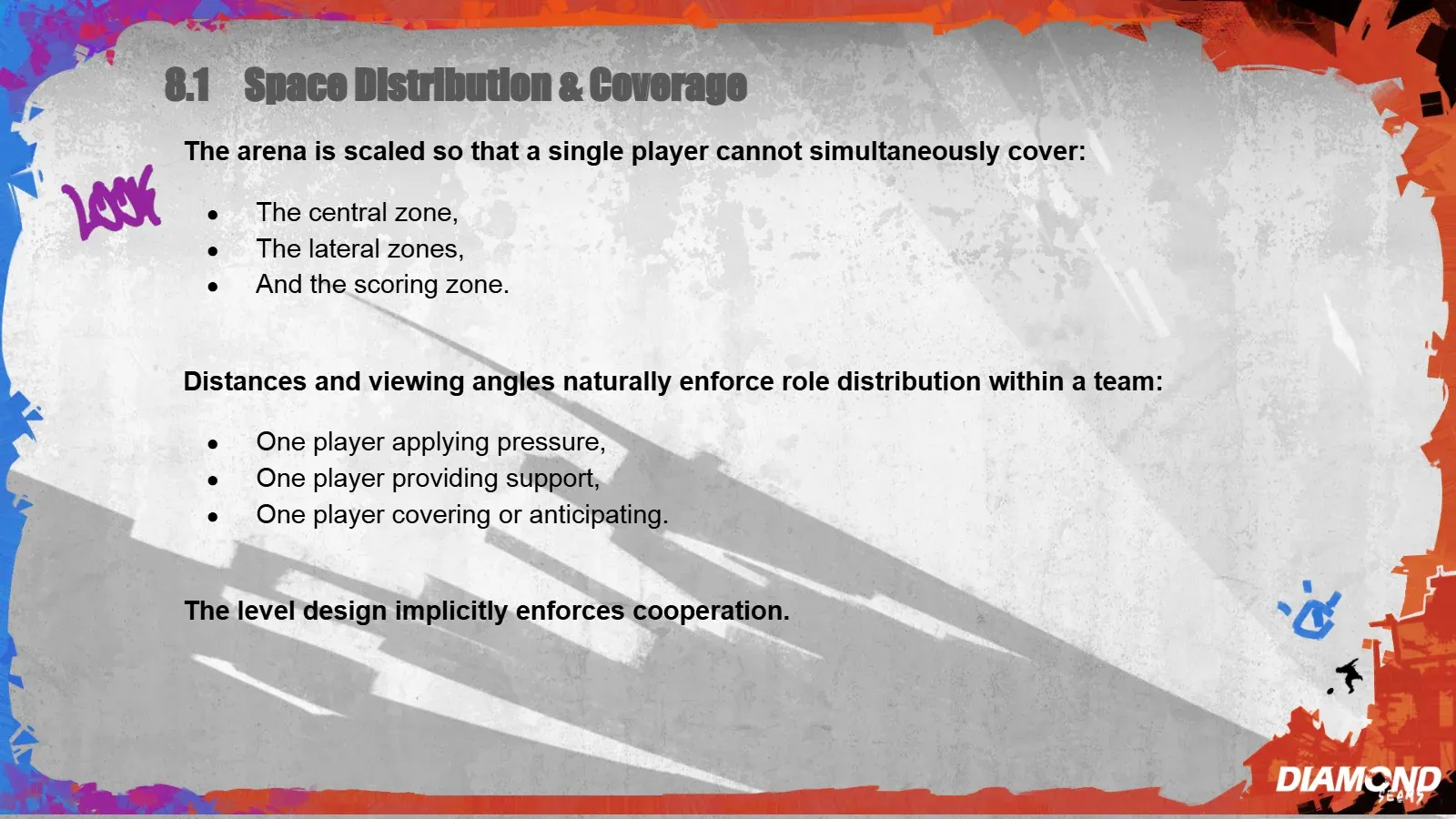
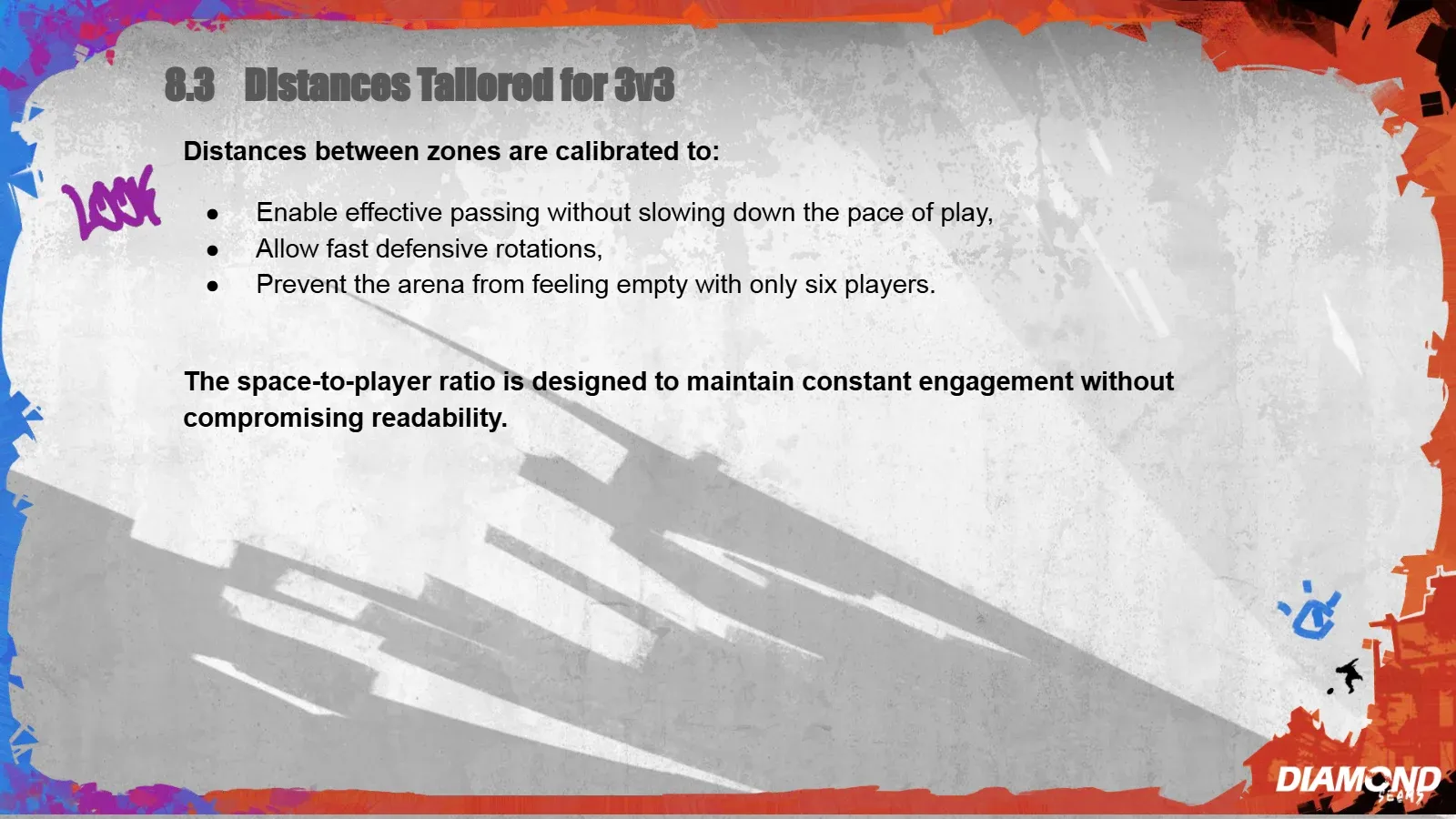
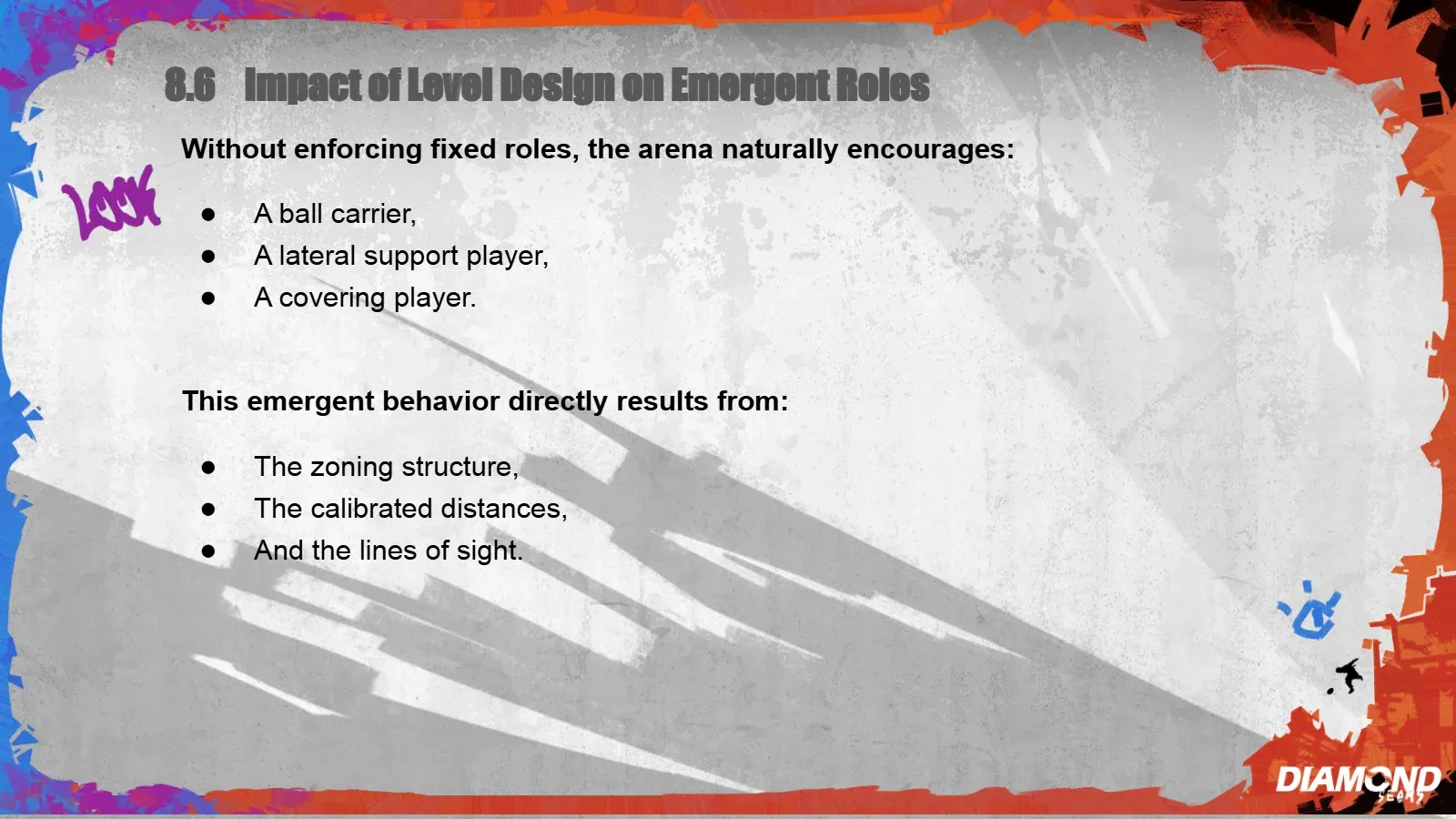
- 3v3 balance through space: distances and angles stop one player from covering several zones alone, and three roles emerge without being forced (carrier, side support, cover).
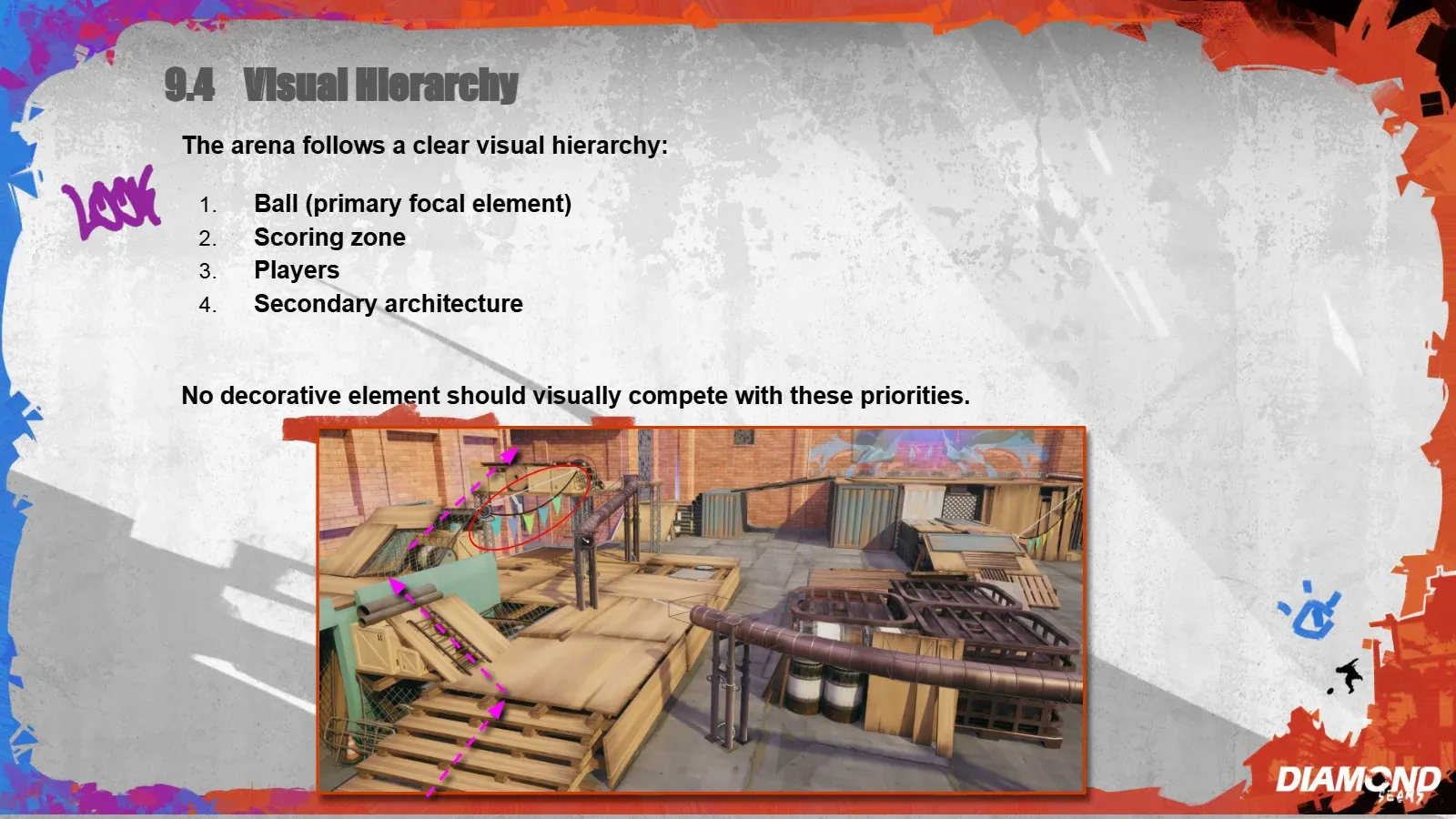
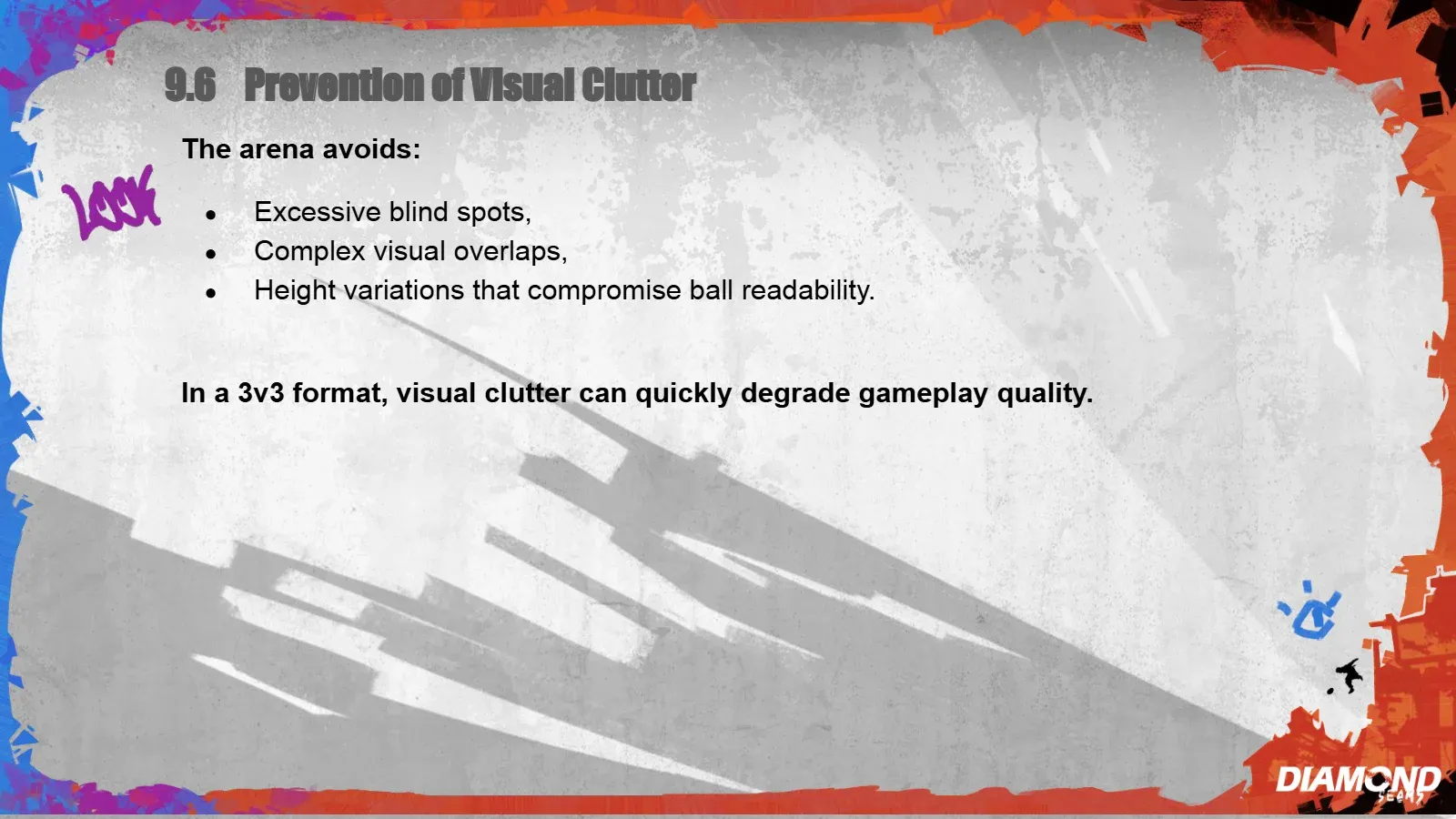
- A strict visual hierarchy: ball, scoring zone, players, then architecture. No decor competes with these priorities.
Iterations and feedback
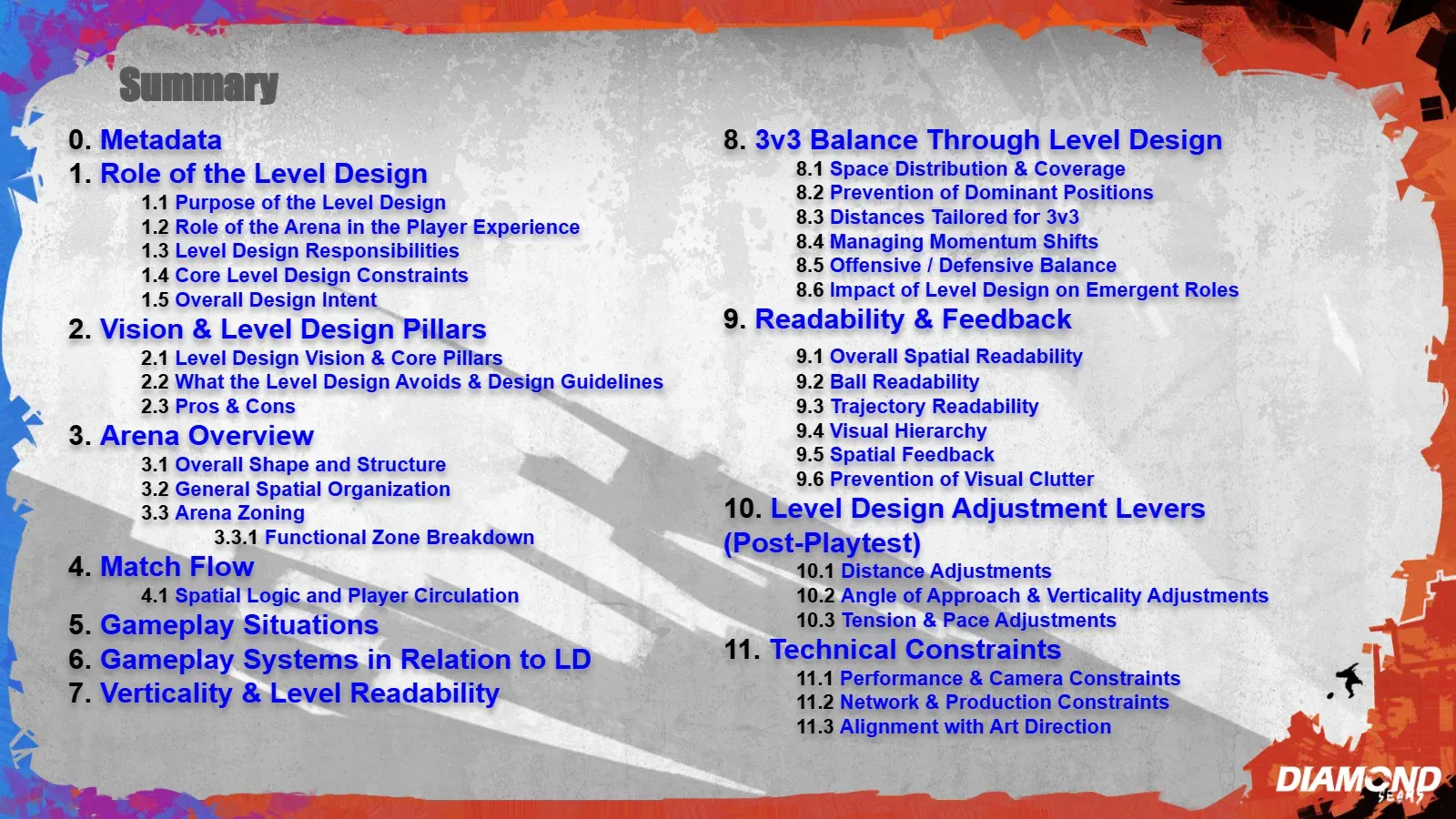
The LDD went through six versions between January and February 2026, including a level design overhaul (V0.2) after the first blockings. The LD building blocks were iterated and then validated in QA with the team.
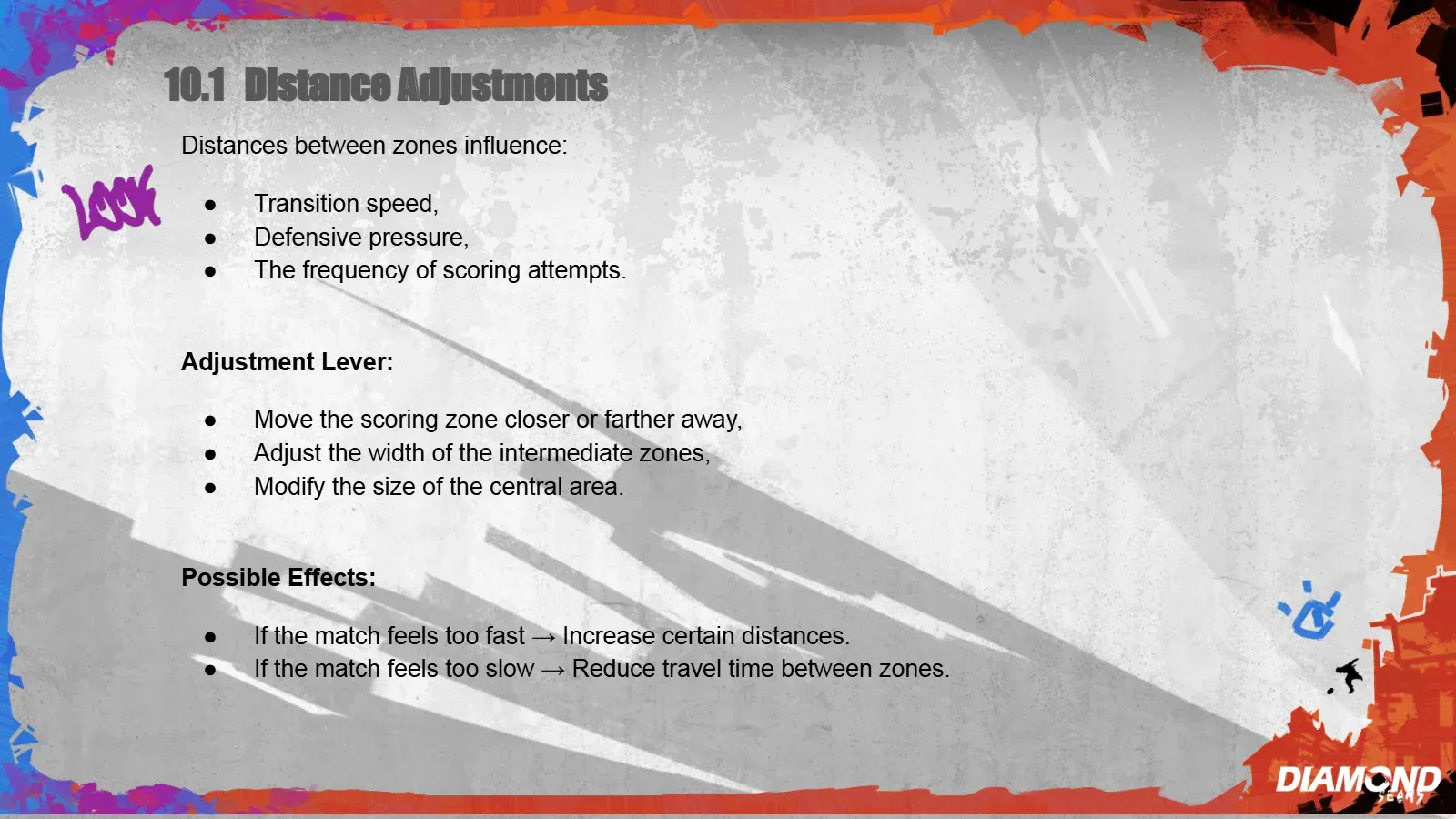
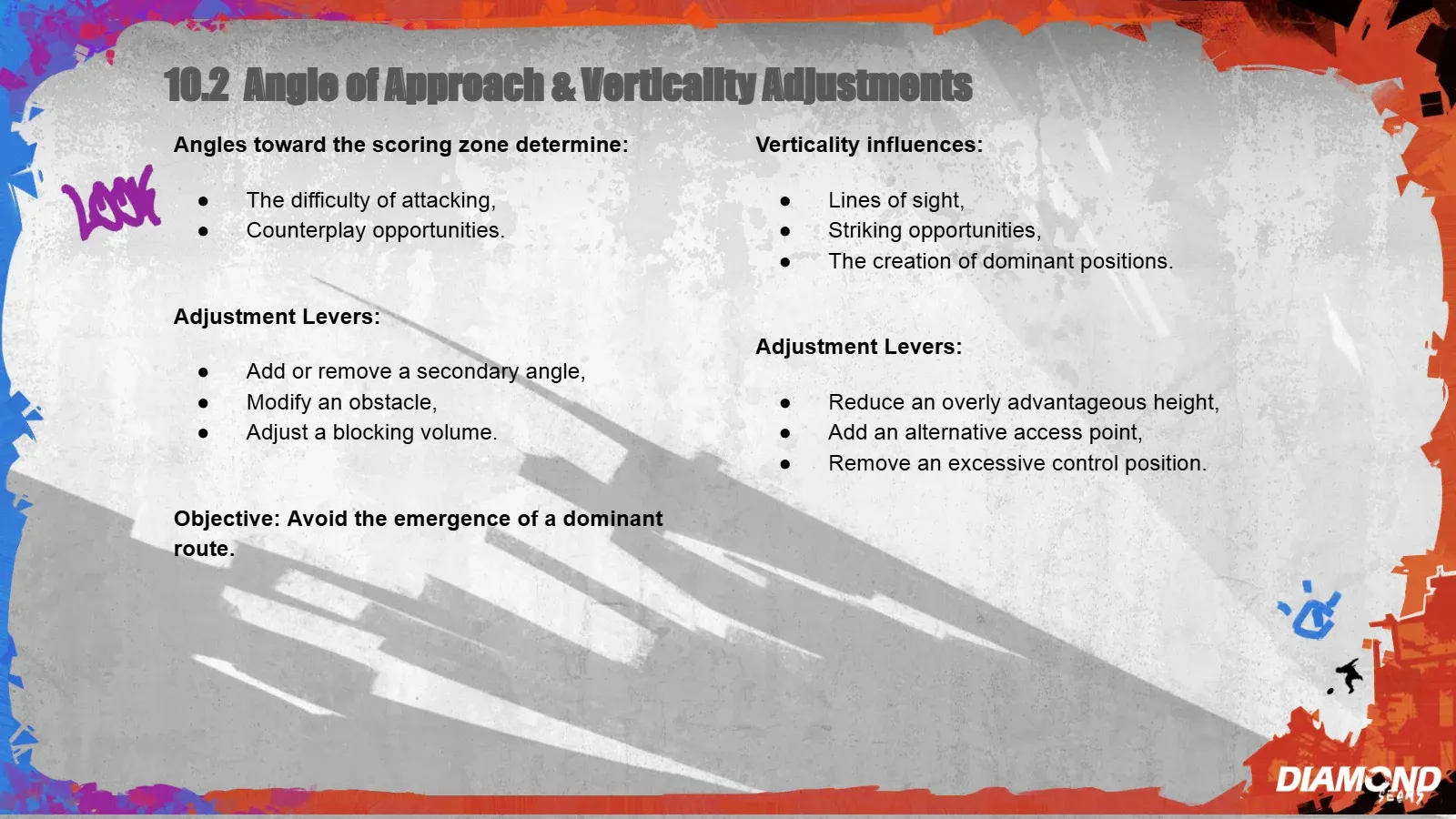
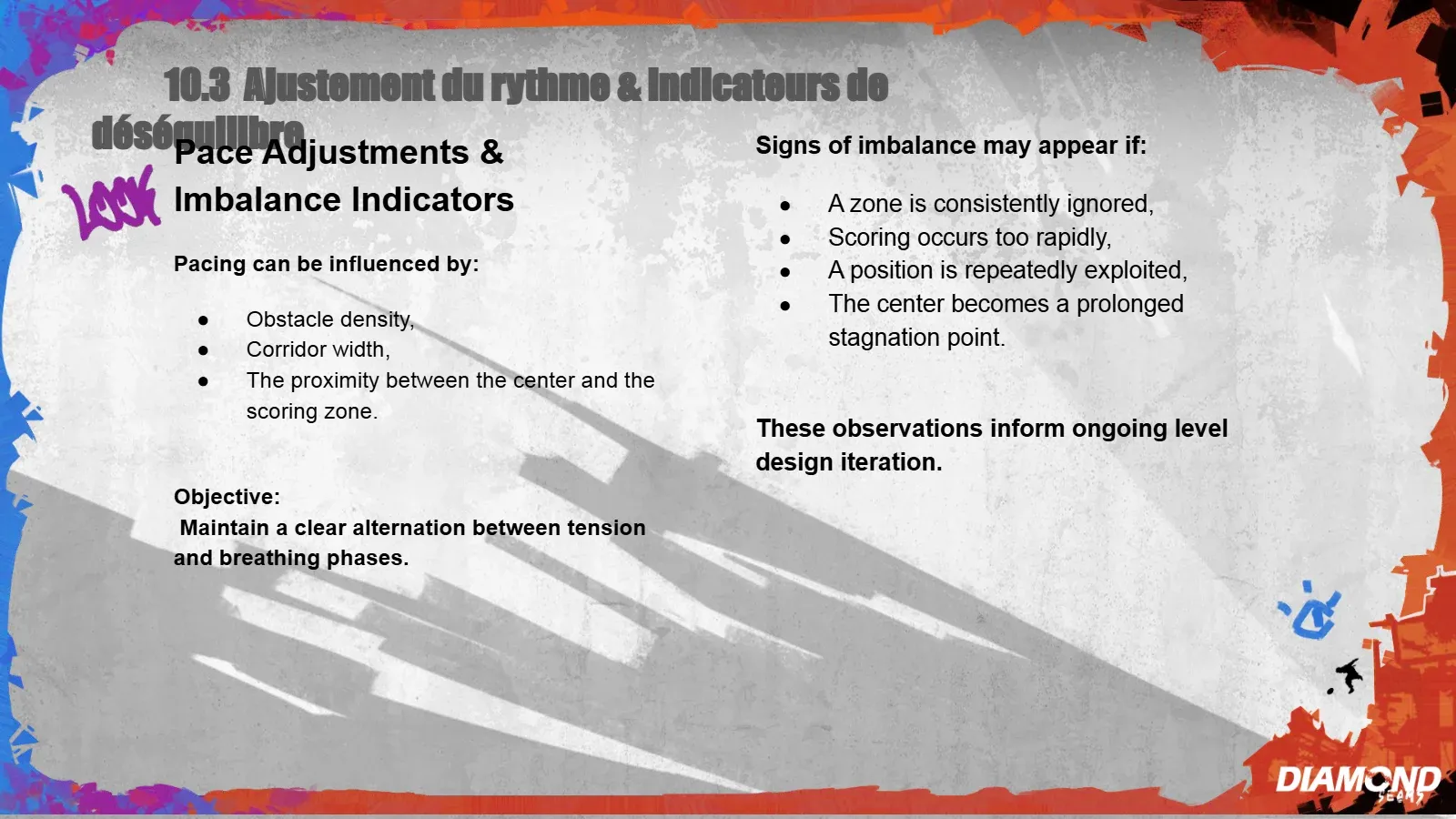
The document also plans adjustment levers after playtests: distances between zones if the match is too fast or too slow, approach angles to avoid a dominant route, and tension and rhythm tweaks.
The playtests went very well, framed by test plans and a lot of questionnaires. Their results stay internal to the project and can’t be published.
Takeaways
A taste of a studio project, very enjoyable in the form. In the substance, the organization was demanding: we were 23, all at the same level, with no lead or vision owner, and every decision was built collectively.
It was hard, but extremely formative, as much for my level design skills as for soft skills. Most of all, I learned to work every day with almost every job of the video game industry, way beyond my own specialty.